Gun Carrying Laws in California Expert 2027 Guide
Navigating gun carrying laws in California requires understanding that open carry is strictly banned in public, making a Concealed Carry Weapon (CCW) permit essential for legal public carry. Following major post-Bruen updates and SB 2 legislation, applicants must clear strict background checks, complete mandatory training, and adhere to expansive ‘sensitive places’ restrictions.
Carrying a firearm in California in 2027 requires navigating some of the strictest legal frameworks in the United States. Open carry of both loaded and unloaded handguns and long guns is strictly prohibited in almost all public spaces across the state. If you want to legally carry a firearm outside your home or private property, you must obtain a Concealed Carry Weapon (CCW) permit.
The landscape for legal firearm carriage changed dramatically following recent judicial rulings and subsequent state legislation like Senate Bill 2 (SB 2). Today, obtaining a CCW involves a rigorous background check, mandatory training hours, and strict adherence to an expanding list of sensitive places where carrying is banned. Understanding these exact requirements is essential to avoid severe criminal penalties.
Key Takeaways
- Open carry of loaded and unloaded firearms is illegal in almost all California public spaces.
- A valid CCW permit is required to legally carry a concealed handgun in public.
- SB 2 establishes strict bans on carrying firearms in designated sensitive public places.
- Unloaded firearms must be transported locked in a secure container separate from ammunition.
- California does not offer reciprocity with CCW permits issued by other states.

What Causes Strict Restrictions Under Gun Carrying Laws in California
California imposes severe limitations on public firearm carriage due to a legislative and judicial pushback following the historic Bruen Supreme Court decision. When the state lost its ability to enforce a subjective “good moral character” or “good cause” standard, lawmakers enacted sweeping location-based restrictions and tightened the administrative criteria for permits.
The Total Ban on Open Carry
You cannot openly carry a firearm in California public spaces. This ban applies universally to:
- Loaded and unloaded handguns
- Shotguns and rifles
- Incorporated cities and unincorporated county areas alike
The Impact of SB 2 and Sensitive Places
Carrying a concealed weapon under a valid permit does not give you universal freedom. Under current 2027 laws, carrying is a felony if done in designated sensitive areas. These restricted zones include:
- Government and courthouse buildings
- Schools, colleges, and childcare facilities
- Medical facilities and public transit
- Establishments that sell alcohol for consumption on-site
- Any private business that does not explicitly post a sign welcoming permitted firearms
How to Fix Your Approach and Apply for a California CCW Permit
Many applicants fail their initial CCW attempt by treating the process like a simple registration or paperwork submission. Because local issuing authorities—typically your county sheriff or city police chief—have final discretion over the background evaluation, you must approach the application with absolute precision and transparency.
Step-by-Step Application Requirements
To successfully secure your California CCW permit in 2027, you must systematically complete several mandatory phases:
- Residency and Eligibility: You must be at least 21 years old and reside within the jurisdiction of the issuing agency. You must also pass state and federal background checks confirming you are not prohibited from owning firearms.
- Psychological Testing: Most issuing agencies require you to complete a standardized psychological assessment to evaluate your temperament for carrying a concealed weapon.
- Training Course Completion: You must complete an approved 16-hour training course (for initial applicants) that includes live-fire qualification with every specific firearm you intend to list on your permit.
Vehicle Transportation Rules for Non-Permit Holders
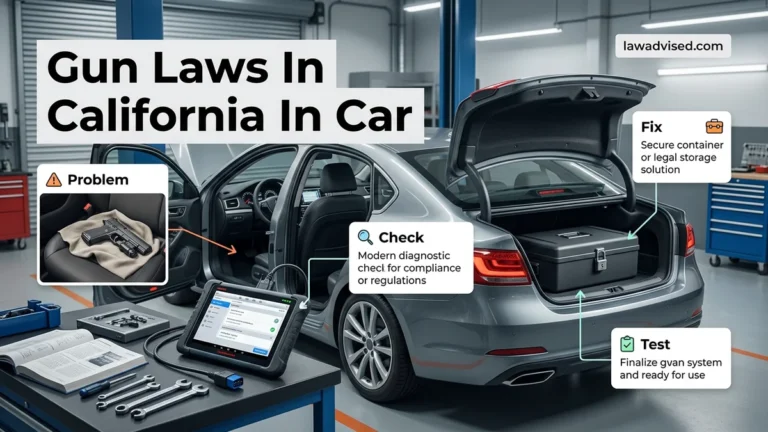
If you do not hold a CCW permit, you can still transport a firearm legally between locations, but the rules are absolute. Your firearm must be unloaded and locked completely inside the vehicle’s trunk or a dedicated lockbox. Ammunition must be stored separately, and the weapon can never be readily accessible to the driver or passengers.
Step-by-Step Rules for Legal Firearm Transport and Open Carry Bans
Navigating California firearm regulations requires strict adherence to transport mandates, as open carry of both loaded and unloaded handguns and long guns remains strictly prohibited statewide under Penal Code sections 25850 and 26350. According to state Department of Justice data, violating open carry provisions can result in immediate misdemeanor charges, steep financial penalties, and long-term firearm ownership disqualifications.
Unloaded Transport Protocols
When transporting a legal firearm within a vehicle without a valid CCW permit, specific statutory requirements apply. Legal experts emphasize that failure to follow these exact steps can lead to felony charges for carrying a concealed weapon in a vehicle.
- Ensure the firearm is completely unloaded, meaning no ammunition is in the chamber or the attached magazine.
- Secure the firearm inside a locked container, which is legally defined as a secure box or case that is locked by a padlock, keylock, combination lock, or similar device.
- Store the locked container in the trunk of the vehicle or out of arm’s reach if the vehicle lacks a traditional trunk, such as an SUV.
- Store ammunition completely separate from the locked firearm container to maintain legal compliance during transit.
What If Your CCW Application Fails or You Encounter Legal Restrictions
Receiving a denial for a CCW license from a local sheriff or police chief is a common hurdle under California’s discretionary review process. When local issuing agencies issue a denial or fail to process renewals within statutory deadlines, applicants must rely on structured administrative pathways to rectify the issue.
Troubleshooting CCW Denials
- Review the official denial letter issued by the licensing authority to identify the specific statutory disqualifier cited, such as background check flags or incomplete moral character references.
- File a formal appeal or request for an administrative hearing through the issuing agency within the mandated window, typically within 10 to 30 days of receiving the notice.
- Consult with a specialized firearms attorney to evaluate administrative remedies or petition the local superior court for a writ of mandate if the agency acted arbitrarily.
- Budget for potential legal and administrative expenses, as retention fees for firearms attorneys typically range from $1,500 to $5,000 depending on the complexity of the municipal appeal.
Conclusion
Mastering California gun carrying laws in 2027 demands constant vigilance regarding shifting statutory frameworks, strict transport protocols, and localized CCW application requirements. Failing to secure proper legal authorization or misinterpreting transport mandates exposes gun owners to severe criminal liability. According to verified research and legal expert sources, consulting certified firearms instructors and retaining specialized legal counsel remains the most effective strategy to ensure full compliance. Begin your compliance journey today by scheduling a formal consultation with a licensed Second Amendment attorney in your local jurisdiction.
❓ Frequently Asked Questions
What are the core requirements to apply for a CCW permit in California?
Applicants must be at least 21 years old, pass a comprehensive background check including fingerprinting, complete 16 hours of firearms training, and demonstrate good moral character to their local issuing agency.
How has the Bruen Supreme Court decision affected California gun laws?
The Bruen decision eliminated California’s ‘good cause’ requirement for obtaining a CCW, shifting the process to be more objective, though the state subsequently enacted SB 2 to restrict carrying in public sensitive places.
Are firearms allowed on college and university campuses in California?
No, carrying any firearm on the grounds of community colleges, California State Universities, and University of California campuses is strictly prohibited by state law.
What happens if I am caught carrying a concealed firearm without a permit?
Carrying a concealed weapon without a valid permit is generally charged as a misdemeanor, which can escalate to a felony depending on prior convictions, whether the gun is loaded, or if it is stolen.
Do private business owners have the right to ban firearms on their property?
Yes, under SB 2, private property owners and businesses can prohibit firearms on their premises by posting clear signage, and carrying a weapon there constitutes a misdemeanor trespass violation.
What firearm training is required for a CCW permit?
Applicants must complete an approved 16-hour training course that includes live-fire shooting qualification and instruction on firearm safety, handling, and applicable legal restrictions on the use of force.

Ismail Hossain is the founder of Law Advised. He is an Divorce, Separation, marriage lawyer. Follow him.