Labor Laws in Georgia for Minors: Essential Guide for 2026
Georgia is a fast-growing state with a strong economy, and many teenagers want to earn money or gain work experience early. However, not all jobs are open to minors, and the rules are strict. Understanding labor laws in Georgia for minors helps families, employers, and young people stay safe and avoid legal trouble. These laws protect the health, education, and well-being of minors while allowing them to work and learn valuable skills.
Work Permit Requirements
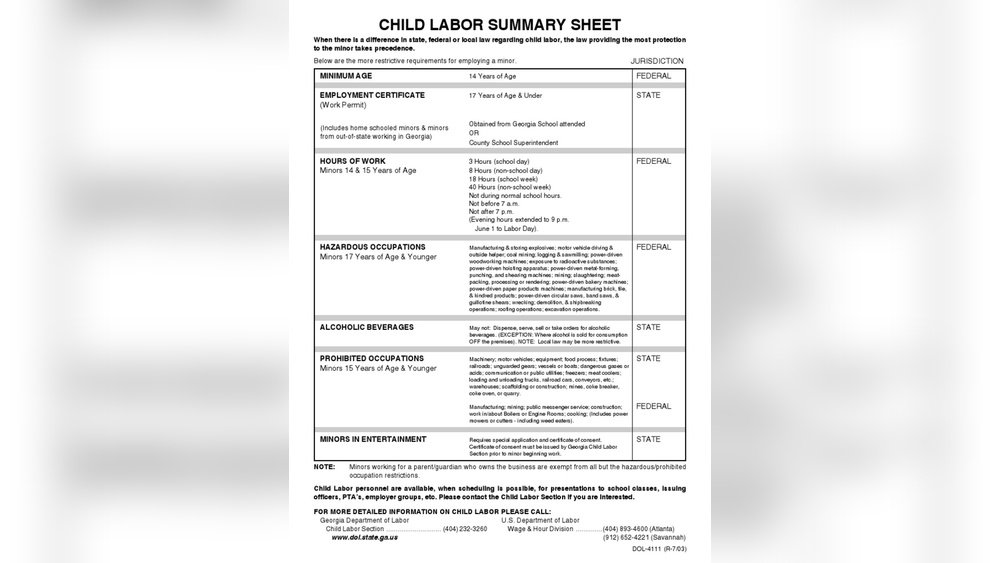
In Georgia, minors aged 14 and 15 must have a work permit before starting a job. The permit is issued by the Georgia Department of Labor and is required for most jobs. Employers must keep a copy of the permit for each minor employee.
Minors aged 16 and 17 do not need a permit, but employers must still follow all relevant labor laws. The process has moved online, making it easier for families and businesses to access the necessary forms and instructions.
Age Restrictions And Types Of Jobs
Georgia law sets clear limits on the types of jobs minors can do. Some work is completely banned for young people, while other jobs are allowed with restrictions.
| Age | Allowed Jobs | Banned Jobs |
|---|---|---|
| 14-15 | Office work, retail, food service | Hazardous jobs, construction, driving |
| 16-17 | Expanded options (with limits) | Hazardous jobs, some machinery |
Minors under 14 are not allowed to work in most businesses, with a few exceptions like acting or delivering newspapers.
Hazardous jobs are strictly off-limits for anyone under 18. This includes work with explosives, heavy machinery, and jobs in mining or demolition.
Hours Of Work
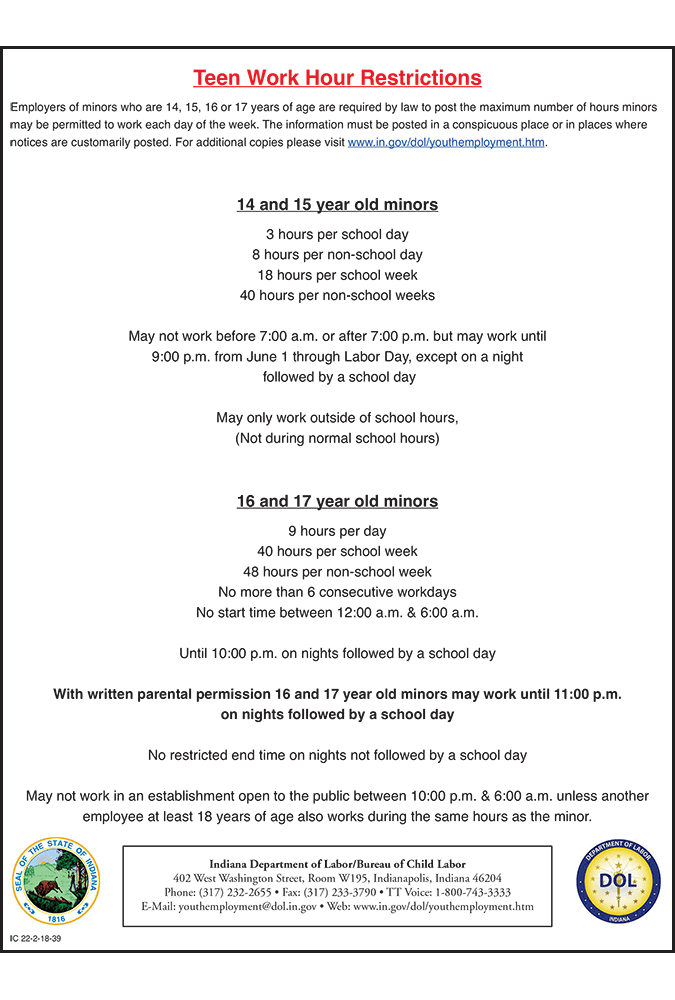
The number of hours minors can work is tightly controlled, especially during school days. Georgia follows the federal Fair Labor Standards Act (FLSA) rules for most minors.
| Age | School Days | Non-School Days | Maximum Weekly Hours |
|---|---|---|---|
| 14-15 | 3 hours/day | 8 hours/day | 18 hours (school week) |
| 16-17 | No daily limit (must not interfere with school) | No daily limit | No federal weekly limit |
For minors aged 14-15:
- Cannot work before 7 AM or after 7 PM during school year.
- Summer hours extend until 9 PM.
- No more than 6 days in a week.
For minors aged 16-17:
- No maximum hours, but work must not conflict with school attendance.
Many beginners miss that school holidays and summer break allow longer hours, but school attendance always comes first.
Wage And Compensation
Minors must be paid at least the minimum wage in Georgia, which is $7.25 per hour (as of 2026). Some exceptions apply, such as tipped jobs or certain family businesses. Employers cannot use age as a reason to pay less, except where permitted by law.
Example
A 15-year-old working at a fast food restaurant should earn at least $7. 25 per hour. If they work 10 hours in a week, their paycheck should be $72. 50, not less.
Credit: complianceposter.com
Breaks And Safety
Georgia does not require mandatory meal or rest breaks for minors, but federal law recommends proper breaks and safe working conditions. Employers must keep the workplace safe and free from hazards. If the job is physically demanding or involves hot equipment, extra caution is needed.
Many families overlook the importance of regular breaks. Even if not required by law, breaks help minors stay healthy and reduce accidents.
School And Work Balance
Work cannot interfere with a minor’s education. Employers must check school schedules before assigning shifts. If a student’s grades drop or they miss classes, parents and schools can request fewer work hours.
A common mistake is letting minors work late nights or long shifts during school periods. This can lead to poor performance or legal problems.

Credit: payrollpluscsra.com
Penalties For Violations
Employers who break Georgia’s labor laws for minors face fines and legal action. The Department of Labor investigates complaints and can suspend or revoke work permits. Repeat violations may result in criminal charges.
| Violation Type | Penalty |
|---|---|
| Working minors too many hours | Fines up to $5,000 |
| Hiring minors for hazardous jobs | Permit suspension, criminal charges |
| Not keeping records | Fines, possible closure |
Employers should always keep clear records and check the laws before hiring minors.
Non-obvious Insights
- Many families do not realize that school sports and extracurricular activities count as part of the school schedule, affecting when minors can work.
- Employers sometimes forget that state and federal rules differ. Always follow the stricter rule to avoid problems.
Where To Get Help
For more guidance, visit the official Georgia Department of Labor website or read the detailed federal guidelines at U.S. Department of Labor. This helps clarify questions about exceptions, special permits, or unique situations.
Frequently Asked Questions
Can A 13-year-old Work In Georgia?
No, except for jobs like acting, babysitting, or newspaper delivery. Most employers cannot hire anyone under 14.
Do Minors Need A Work Permit?
Yes, if they are 14 or 15 years old. Older minors (16 and 17) do not need a permit but must follow labor laws.
What Jobs Are Considered Hazardous?
Jobs with heavy machinery, explosives, mining, or demolition are hazardous and banned for anyone under 18.
How Many Hours Can A Minor Work During Summer?
Minors aged 14-15 can work up to 8 hours per day and 40 hours per week during summer, until 9 PM.
What Should Employers Do If Unsure About The Law?
Check the Georgia Department of Labor website or call their help line. It’s better to ask first than risk penalties.
Understanding Georgia’s labor laws for minors is not just about following rules. It’s about ensuring safety, education, and a positive work experience. Families and employers who know these laws can help young workers build strong foundations for the future.

Credit: georgiarecorder.com

Ismail Hossain is the founder of Law Advised. He is an Divorce, Separation, marriage lawyer. Follow him.