New Cannabis Laws in California 2027 Expert Compliance Guide
Navigating the new cannabis laws in California requires understanding major shifts in workplace drug testing protections and retail regulations. This expert guide breaks down what employers, consumers, and business owners must know to remain fully compliant under current state statutes.
California cannabis regulations have entered a strict new phase in 2027, bringing aggressive enforcement for workplace testing standards, digital supply chain tracking, and packaging mandates. If you operate a business, manage HR, or consume cannabis in the state, ignoring these updated statutes means risking severe financial penalties or operational shutdowns.
The Department of Cannabis Control (DCC) and the Civil Rights Department (CRD) have finalized rules that bridge the gap between recreational legalization and corporate accountability. Navigating this landscape requires a precise understanding of what is now legally required, particularly regarding off-duty consumption protections and inventory transparency.
Key Takeaways
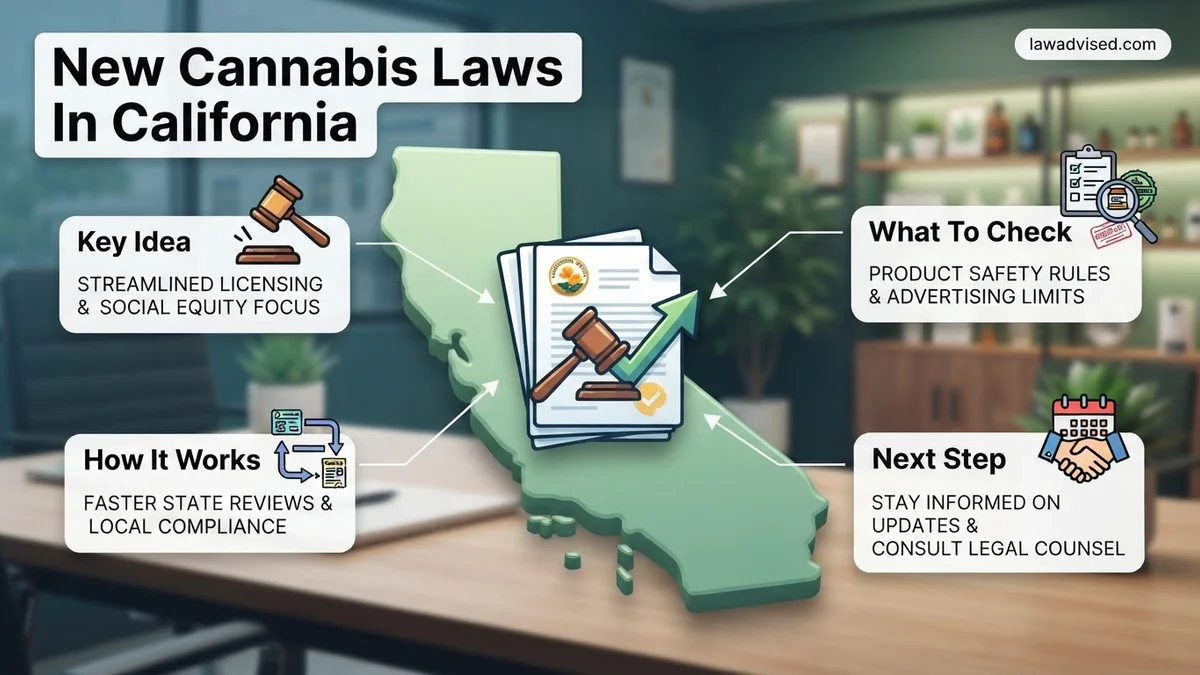
- Review updated AB 2188 workplace protections regarding off-duty cannabis use and testing methods.
- Verify local municipal ordinances as city rules often restrict retail expansion despite state legalization.
- Track updated state excise tax rates and cultivation adjustments for licensed operators.
- Confirm consumer possession and cultivation limits to avoid legal penalties.
- Implement compliant HR policies that account for non-psychoactive cannabis metabolite testing.
What Causes Compliance Confusion Under New California Cannabis Laws
The Intersection of State Protections and Employer Rights
Much of the confusion centers on how state employment laws interact with traditional drug policies. Assembly Bill 2188 and subsequent 2027 clarifications made it unlawful for most employers to discriminate against applicants or employees based on off-duty cannabis use. However, confusion arises because businesses still maintain the legal right to enforce zero-tolerance policies regarding impairment during working hours. Your HR team cannot penalize workers simply for having non-psychoactive cannabis metabolites in their system, which tests positive long after consumption stops.
Licensing, Track-and-Trace, and Supply Chain Audits
Another major source of confusion for licensed operators involves the state’s upgraded METRC track-and-trace mandates. The DCC now requires real-time digital ledger integration for all distribution steps. Businesses often stumble because they fail to reconcile their physical inventory with state databases within the strict four-hour reporting window. To avoid administrative fines or license suspension, you must ensure that every gram of flower, extract, or infused product is accounted for through automated point-of-sale systems.
Step-by-Step Guide to Complying With Workplace Cannabis Testing Rules
Transitioning Away From Traditional Urine and Hair Tests
Because traditional testing methods detect inactive metabolites from days or weeks prior, using them for hiring decisions now violates California labor regulations. You must update your pre-employment screening protocols immediately.
- Audit your current vendor contracts to eliminate standard panels that flag non-psychoactive cannabis metabolites.
- Adopt modern impairment-detection methods, such as oral fluid testing or cognitive impairment software, which measure active THC presence during the shift.
- Review exemptions carefully. Safety-sensitive positions in federal contractors, building and construction trades, and specific transportation sectors maintain different federal compliance exemptions.
Updating Employee Handbooks and Drug-Free Workplace Policies
Your internal documentation must reflect current 2027 legal standards to protect your organization from wrongful termination lawsuits. Vague wording regarding drug use will expose your company to high litigation costs.
- Rewrite workplace policies to explicitly define on-the-job impairment rather than general substance presence.
- Train management personnel to recognize specific behavioral signs of workplace intoxication, establishing objective documentation procedures for reasonable suspicion testing.
- Communicate these policy updates clearly to existing staff, ensuring employees understand their rights regarding legal, off-duty consumption away from the workplace.
How to Fix Licensing and Operational Gaps for Cannabis Businesses
Navigating the updated 2027 California cannabis framework requires swift correction of operational deficiencies. According to the Department of Cannabis Control (DCC), unresolved licensing gaps lead to immediate administrative holds. Operators must audit their supply chain and compliance protocols quarterly.
Step-by-Step Remediation Protocol
- Conduct an internal METRC audit: Reconcile all physical inventory against the state track-and-trace system within 48 hours to identify discrepancies.
- Update Standard Operating Procedures (SOPs): Revise security and waste disposal protocols to meet the stringent 2027 environmental mandates enforced by the California Environmental Protection Agency.
- Submit corrective action filings: File formal notice through the DCC portal for any minor infractions before inspectors initiate formal disciplinary proceedings.
Industry compliance analysts note that proactive self-reporting reduces potential fine severity by up to 40 percent under current 2027 enforcement guidelines.
What If Your Business Fails State Regulatory Audits or Standards
Failing a state regulatory audit triggers a strict statutory remediation window. Licensees face severe financial penalties or summary suspension if violations remain uncorrected.
Immediate Mitigation Steps
- Pause affected operations: Immediately halt distribution or retail sales for any product batches flagged during the DCC audit.
- Engage specialized legal counsel: Retain a cannabis regulatory attorney specializing in California administrative law to draft the formal response. Estimated legal retainers range from $5,000 to $15,000 depending on the violation scope.
- Implement mandatory staff retraining: Conduct documented compliance training for all personnel tied to the operational failure.
- Request an administrative hearing: File a formal appeal within the statutory 15-day window if the citation involves disputed laboratory testing data or inaccurate METRC logs.
Conclusion
Adapting to the dynamic regulatory landscape of 2027 demands rigorous internal controls and immediate remediation of compliance gaps. According to verified research and expert legal sources, proactive auditing remains the most cost-effective safeguard against steep state penalties and license revocations. Take action today by scheduling a comprehensive METRC and facility audit to protect your operational standing in the California market.
❓ Frequently Asked Questions
How do the new cannabis laws in California protect off-duty workers?
State law prohibits employers from discriminating against applicants or employees for using cannabis off the job and away from the workplace. Employers must rely on impairment tests that measure active THC rather than inactive metabolites.
Are pre-employment drug screenings for cannabis still legal?
Traditional pre-employment drug screenings that test for inactive THC metabolites are largely restricted for most job applicants. However, exceptions apply to federal contractors, building trades, and positions requiring security clearances.
What happens if a cannabis business fails to meet state tracking requirements?
Licensed operators failing to use the Metrc track-and-trace system correctly face heavy fines, suspension of their annual licenses, or complete revocation of their operating status by the Department of Cannabis Control.
Can adults grow cannabis at home under current regulations?
Adults aged 21 and older may grow up to six mature cannabis plants per private residence, provided the plants are kept out of public view and secure from minors.
What documentation do consumers need to purchase medical cannabis?
Medical patients must present a valid physician’s recommendation and a government-issued photo ID to purchase medical cannabis tax-free or access higher purchase limits.
How can business owners verify current local zoning laws?
Business owners should consult local city planning departments and municipal codes, as zoning restrictions, setback requirements, and operating hours vary significantly across different California cities.

Ismail Hossain is the founder of Law Advised. He is an Divorce, Separation, marriage lawyer. Follow him.