Tax Credits for Seniors Expert Guide to Financial 2026
Navigating retirement income can be challenging, but older adults can significantly lower their tax liability using specialized federal and state programs. Tax credits for seniors provide direct dollar-for-dollar reductions in tax owed, making it crucial to understand eligibility rules. This guide breaks down qualifying age limits, income thresholds, and specific deductions available for the 2026 tax year.
Navigating taxes as an older adult means taking advantage of specific federal tax credits, deductions, and financial relief programs designed to lower your liability and protect your retirement income. For the 2026 tax year, federal guidelines offer distinct financial advantages for taxpayers aged 65 and older, yet millions of seniors routinely overpay simply because they miss these specialized provisions.
Maximizing your tax savings requires a clear breakdown of age-based deductions, income thresholds, and eligibility criteria so you can claim every dollar you deserve. Skipping the guesswork starts with understanding where older adults typically leave money on the table.
Key Takeaways
- Seniors aged 65 and older qualify for a higher standard deduction on federal taxes.
- The Credit for the Elderly or the Disabled targets low-income retirees.
- State-level homestead exemptions and property tax credits offer major local savings.
- Check Adjusted Gross Income (AGI) limits carefully before filing.
- Keep thorough records of medical expenses to maximize potential deductions.
What Causes Seniors to Overpay Taxes Without Knowing It
Many retirees assume that shifting from a salary to Social Security, pensions, or withdrawals from retirement accounts means they no longer need to pay attention to complex tax code changes. Unfortunately, this passive approach leads to significant overpayment. Without realizing how the rules apply to fixed incomes, seniors often miss out on valuable thresholds.
Missing the Additional Standard Deduction for Age 65 and Older
One of the most common reasons seniors overpay is failing to claim the additional standard deduction granted to individuals who turn 65 before the end of the tax year. For 2026, the tax code provides a higher basic standard deduction for older adults, which directly lowers your taxable income before any specific credits are even applied. If you file as single or married filing jointly, crossing that 65-year threshold automatically boosts your sheltered income, but software errors or manual filing mistakes frequently bypass this adjustment.
Ignoring Adjusted Gross Income (AGI) Limits on Specialized Credits
Another major pitfall involves ignoring Adjusted Gross Income limits attached to specific federal programs. Many targeted financial relief programs feature strict AGI caps. If your retirement distributions push your income slightly over the threshold, you might assume you qualify for nothing. However, strategic management of your withdrawals—such as balancing traditional IRA distributions with Roth conversions or tax-exempt municipal bond interest—can keep your AGI low enough to unlock these lucrative credits.
How to Fix Your Tax Strategy Using Senior Credits and Deductions
Correcting your tax strategy for 2026 means moving beyond standard filing habits and actively integrating senior-specific provisions into your financial plan. By targeting the exact federal credits designed for your demographic, you can dramatically reduce what you owe.
Claiming the Credit for the Elderly or the Disabled
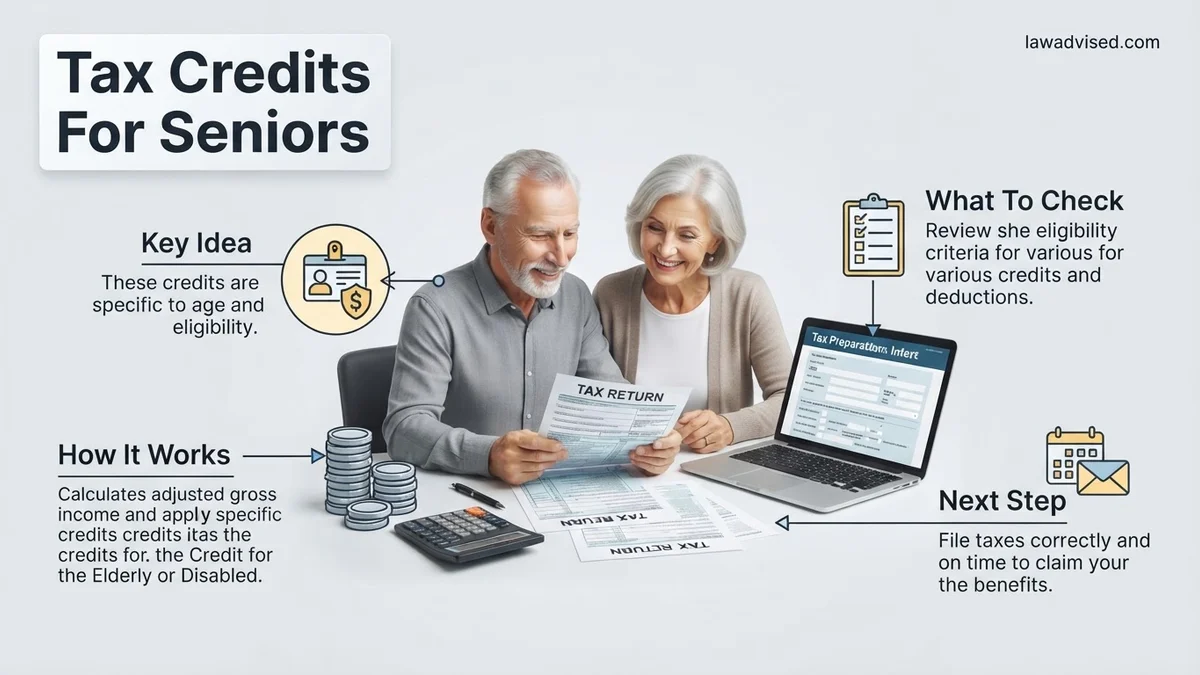
If you are 65 or older by the end of 2026, you may qualify for the federal Credit for the Elderly or the Disabled. This credit provides a direct dollar-for-dollar reduction of your tax liability, making it far more valuable than a standard deduction.
- Age Requirement: You must be 65 or older by January 1, 2027 (meaning you turned 65 during the 2026 tax year).
- Income Limits: Your Adjusted Gross Income and your nontaxable Social Security or pension benefits must fall below specific statutory caps (typically a $17,500 AGI limit for single filers and up to $25,000 for married couples filing jointly, depending on your nontaxable benefits).
- Calculation: The base amount ranges from $3,750 to $7,500, from which your nontaxable Social Security benefits are subtracted.
Utilizing Caregiver and Medical Expense Deductions
If you are caring for an aging spouse, or if you incurred steep out-of-pocket medical and dental expenses in 2026, you can leverage these costs to lower your tax burden. Qualified medical expenses that exceed the standard percentage of your AGI can be itemized.
- Calculate your total unreimbursed medical expenses for 2026, including long-term care insurance premiums and home modifications.
- Compare that total against the current AGI floor to determine your deductible amount.
- Explore state-level caregiver tax credits if you employ a family member or purchase specialized senior care equipment.
Step-by-Step Guide to Claiming Federal and State Tax Relief
Successfully claiming your maximum financial relief for the 2026 tax year requires careful organization and adherence to IRS and state filing procedures. Missing a single form can delay your refund by weeks.
1. Gather Your Essential Financial Documents
Before beginning your return, assemble all Form SSA-1099 statements for Social Security benefits, 1099-R forms for retirement distributions, and W-2 forms if you still earn employment income. Additionally, collect documentation for medical expenses, property tax receipts, and charitable donations if you plan to itemize.
2. Select the Appropriate Tax Software or Professional Service
Choose an IRS-approved electronic filing software that specifically flags senior tax credits, such as the Additional Standard Deduction and state-specific property tax rebates. According to the IRS, electronic filing reduces mathematical errors significantly and ensures faster direct deposit of your refund.
3. Complete Schedule R for the Credit for the Elderly or the Disabled
If you qualify based on age and adjusted gross income limits, fill out Schedule R (Form 1040) to calculate your credit. Double-check that your non-taxable social security benefits are properly accounted for in the preliminary worksheets to avoid underreporting or overclaiming.
4. File Both Federal and State Returns Together
Submit your federal return alongside your state tax forms to ensure seamless processing of local senior homestead exemptions or circuit breaker reliefs. Keep copies of all submitted documents and electronic confirmation receipts for a minimum of three years.
What If Your Income Exceeds Standard Senior Tax Credit Limits
If your 2026 adjusted gross income surpasses the phase-out thresholds for standard senior tax credits, you still have viable avenues to lower your tax liability. High-income seniors often miss out on alternative strategies that bypass traditional income ceilings.
Maximize Contributions to Tax-Advantaged Accounts
If you are still working part-time, maximize your contributions to traditional IRAs or employer-sponsored plans to reduce your adjusted gross income. Lowering your AGI can bring you back under the eligibility threshold for specific state-level property tax credits.
Utilize Strategic Charitable Giving
Make Qualified Charitable Distributions directly from your traditional IRA to eligible nonprofit organizations. According to financial planning experts, this strategy satisfies your required minimum distributions while excluding the donated amount from your taxable income entirely.
What If It Still Doesn’t Work?
If automated tax software rejects your senior credit claims or your calculations yield unexpected tax dues, specific troubleshooting steps can resolve the discrepancy:
- Review IRS Notice 2026-X: Check current IRS guidelines for updated inflation adjustments to senior deduction thresholds.
- Utilize VITA Programs: Contact the IRS Volunteer Income Tax Assistance program for free, certified tax help tailored to seniors.
- Consult a Certified Public Accountant: Engage a licensed tax professional specializing in senior finances; professional consultation fees typically range from $200 to $500 depending on complexity.
- File an Amended Return: If you discover an error after filing, submit Form 1040-X within the three-year statutory window to claim missed credits.
Conclusion
Navigating senior tax credits for the 2026 fiscal year demands precision, awareness of updated income thresholds, and strategic documentation. By systematically utilizing federal provisions and state-level exemptions, you can significantly reduce your overall tax burden. According to verified research and expert financial sources, proactive tax planning remains the most effective method for preserving retirement income. Take the next actionable step today by scheduling a consultation with a certified tax professional or reviewing your preliminary 2026 tax documents.
❓ Frequently Asked Questions
What are the income limits for the Credit for the Elderly or the Disabled?
The credit has strict Adjusted Gross Income (AGI) limits and caps on nontaxable social security income, varying by filing status. Single filers generally must have an AGI under $17,500, with even lower limits on nontaxable pensions.
How does the extra standard deduction for seniors work?
If you are 65 or older and do not itemize deductions, you are entitled to an additional standard deduction amount added to your base standard deduction, reducing your taxable income.
Are medical and dental expenses deductible for seniors?
Yes, you can deduct unreimbursed medical expenses that exceed 7.5% of your Adjusted Gross Income if you choose to itemize your deductions on Schedule A.
Can caregivers claim tax credits for taking care of aging parents?
Caregivers may qualify for the federal Child and Dependent Care Credit if they pay someone to care for a dependent parent so they can work, alongside potential state-level caregiver tax credits.
What property tax relief programs are available for older homeowners?
Many local governments offer property tax freezes, deferral programs, or homestead exemptions that reduce the assessed value of a senior’s primary residence.
Do I need to file a tax return if my only income is Social Security?
If Social Security is your absolute only source of income and it falls below the IRS gross income filing threshold, you generally do not need to file a tax return.

Ismail Hossain is the founder of Law Advised. He is an Divorce, Separation, marriage lawyer. Follow him.