Taxes for Influencers Expert Guide for 2026
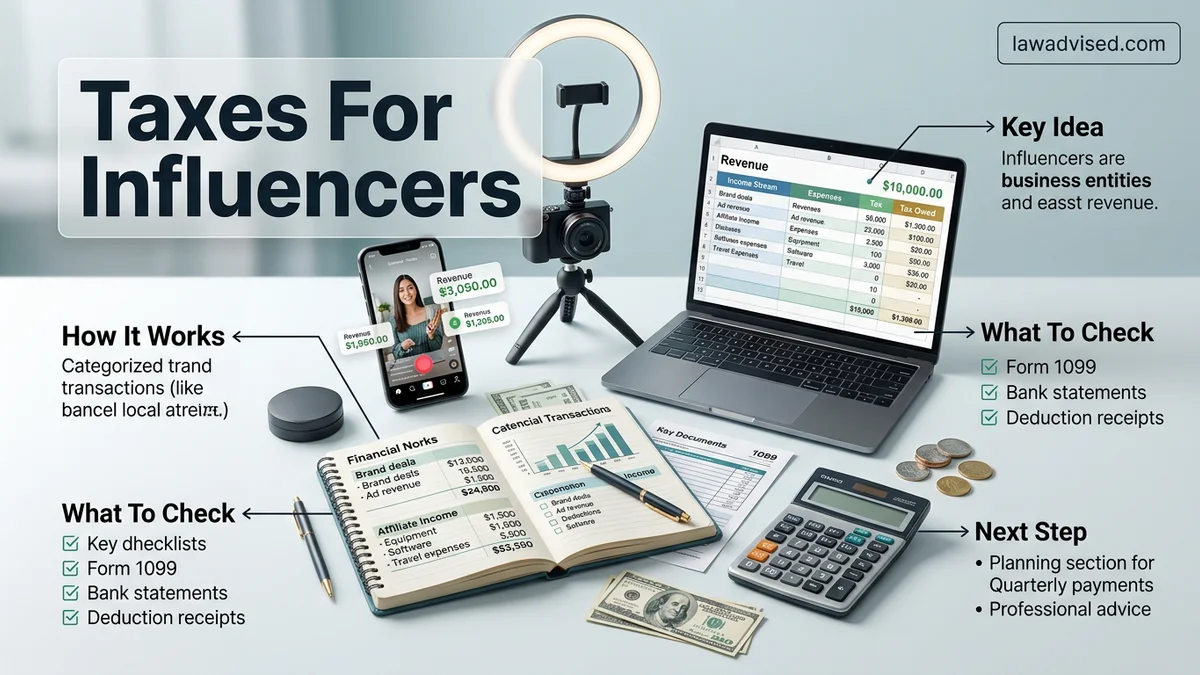
Navigating taxes for influencers requires managing self-employment obligations, quarterly estimated payments, and tracking business write-offs properly. Creators must classify all platform payouts, brand deals, and gifted products to stay compliant with the IRS.
As a content creator in 2026, you are running a digital business, meaning every brand deal, affiliate payout, and gifted product must be reported to the IRS. You pay taxes on your net creator income by filing as self-employed, which requires you to track revenue, make quarterly estimated payments, and leverage specific business deductions like gear and home studios to lower your tax bill.
Ignoring these obligations leads to aggressive IRS audits, expensive penalties, and back taxes. Setting up your financial foundation correctly right now protects your hard-earned brand revenue and keeps your creator business legally compliant.
Key Takeaways
- Pay quarterly estimated taxes to avoid IRS underpayment penalties.
- Deduct equipment like cameras, lighting, and phones used for content.
- Report gifted products as taxable income based on fair market value.
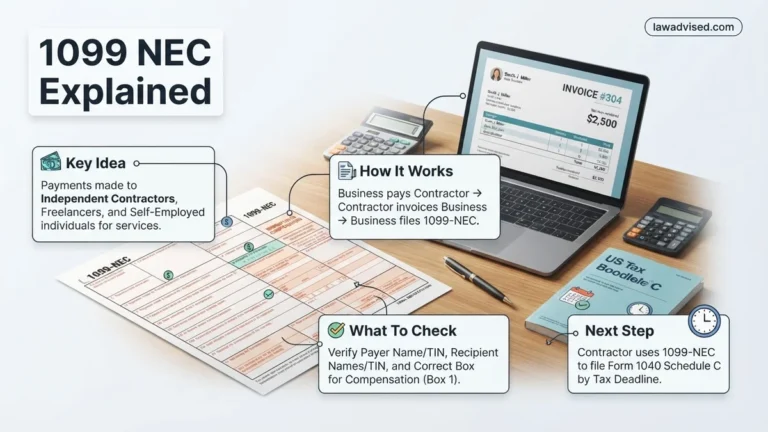
- Track brand deal income using 1099-NEC forms and direct invoices.
- Establish an LLC to protect personal assets and simplify finances.
What Causes Creator Tax Penalties and Audits
The IRS heavily scrutinizes content creators because personal and business expenses often overlap. Mixing your lifestyle spending with legitimate deductions is the fastest way to trigger a flag on your 2026 return.
Personal Expenses Disguised as Business Write-Offs
You cannot write off everyday living costs just because you post them on social media. The IRS requires business expenses to be both ordinary and necessary for your trade.
- Deductible: A dedicated ring light used strictly for filming sponsored TikTok videos.
- Not Deductible: A designer outfit worn to a brunch that you happened to take a photo in for Instagram.
- The Rule: If you use an asset like a smartphone or laptop for both personal and business use, you must calculate and deduct only the exact business-use percentage.
Failing to Report Non-Cash Compensation
Brand deals do not always pay out in cash. If a brand sends you free PR packages, luxury trips, or expensive tech in exchange for a dedicated post, the IRS considers that taxable bartering income.
- You must report the fair market value of gifted items on your tax return.
- Brands will often issue a 1099 form for the retail value of major PR trips or product seeding campaigns.
How to Fix Your Self-Employment Tax and Quarterly Payments
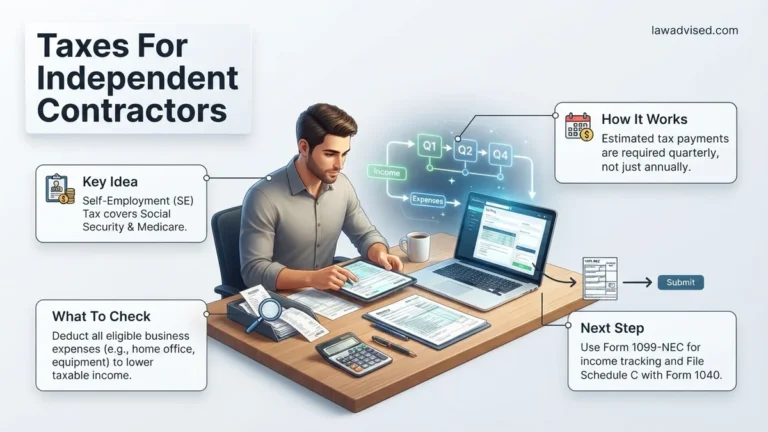
When you work with brands and platforms, nobody withholds taxes for you. Operating as a sole proprietor or single-member LLC means you are personally responsible for paying income tax plus the 15.3 percent self-employment tax.
Mastering Quarterly Estimated Tax Deadlines
Waiting until April to pay your taxes results in underpayment penalties. The IRS expects you to pay as you go throughout the 2026 tax year.
- Quarterly payments are generally due on April 15, June 15, September 15, and January 15.
- Calculate your payments based on your net profit from the previous quarter, or use the safe-harbor rule to avoid penalties.
- Set aside 25 to 30 percent of every brand payout into a separate digital tax savings account immediately.
Sole Proprietorship vs. LLC for Influencers
Most creators start as sole proprietors by default, which is simple to manage but exposes your personal assets to liability.
- Sole Proprietorship: Easy setup and zero state filing fees, but your personal savings are vulnerable if you face a lawsuit.
- Single-Member LLC: Offers legal protection for your personal assets without changing how your income is taxed.
- S-Corp Election: Once your creator business consistently nets over 60,000 to 80,000 dollars a year, electing S-Corp status can dramatically lower your self-employment tax burden.
Step-by-Step Guide to Claiming Influencer Write-Offs
Maximizing business deductions requires strict adherence to IRS guidelines for the 2026 tax year. Creators must separate personal assets from business assets to withstand potential audits. According to tax compliance experts, accurate record-keeping is the single greatest defense against costly IRS penalties.
1. Audit Your Receipts and Digital Invoices
Gather all receipts for equipment, software subscriptions, and professional services purchased throughout 2026. Digital tools like QuickBooks Self-Employed or Keeper Tax automatically flag qualifying creator expenses. Maintain these records for at least three years, as IRS regulations mandate retention periods for small business filers.
2. Calculate the Business-Use Percentage for Mixed Assets
Many influencers use smartphones, home internet, and personal vehicles for both content creation and personal use. Calculate the exact business-use percentage based on documented logs. For instance, if a ring light or camera lens is used 80 percent of the time for brand deals, deduct exactly 80 percent of the total purchase price.
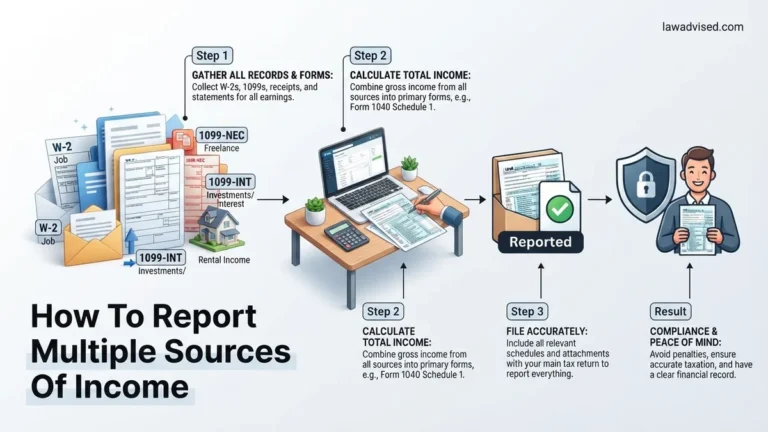
3. File Schedule C Along with Your Form 1040
Report all gross influencer income and corresponding business deductions on Schedule C (Profit or Loss From Business). Subtract total allowable write-offs from your gross earnings to determine your net self-employment income. This net figure dictates your final income tax liability and the 15.3 percent self-employment tax for Social Security and Medicare.
What If It Still Doesn’t Work: Handling Missing 1099s and IRS Notices
Failing to receive a Form 1099-NEC from a brand or platform management agency does not excuse creators from reporting income. The IRS cross-references digital payments from platforms like PayPal, Stripe, and YouTube. Creators facing missing tax forms or unexpected IRS discrepancy notices must act methodically to resolve compliance issues.
- Reconcile Platform Payout Reports: Log directly into every creator dashboard, affiliate portal, and brand dashboard to download annual earnings statements for 2026.
- Report Income Anyway: File taxes using your self-generated accounting records rather than waiting indefinitely for a missing 1099 document.
- Respond Promptly to IRS Notices: If you receive a CP2000 notice regarding unreported creator income, mail a written response with your matching bank statements within 30 days.
- Consult a Certified Public Accountant: If an audit or complex mismatch involves more than $10,000 in disputed creator earnings, hire a licensed CPA or Enrolled Agent immediately. Professional representation fees typically range from $300 to $1,500 depending on the complexity of the case.
Conclusion
Navigating taxes as a creator in 2026 requires strict organization, accurate expense tracking, and proactive reporting of all digital revenue streams. By properly filing Schedule C and claiming legitimate equipment and travel write-offs, influencers can significantly lower their overall tax liability while staying fully compliant. According to verified research and tax professional standards, automating your bookkeeping today prevents costly audits tomorrow. Take your next actionable step by opening a dedicated business bank account to separate all future creator income and expenses.
❓ Frequently Asked Questions
What business expenses can social media influencers legally write off?
Influencers can deduct ordinary and necessary business expenses including cameras, lighting, editing software, home studio setups, a portion of phone and internet bills, and travel expenses for sponsored content.
How should I handle income from international brand deals or platforms?
International income must still be reported on your US tax return. Platforms may require you to submit a W-8BEN form to verify your foreign or domestic tax status depending on your entity.
Should content creators form an LLC for their tax setup?
Forming an LLC can provide legal liability protection and allows you to elect S-corp taxation once your net income reaches a certain threshold, potentially lowering your self-employment tax burden.
What happens if I don’t receive a 1099 from a brand or platform?
You are still legally required to report all income even if a company fails to issue a 1099-NEC or 1099-K. Rely on your bank statements, PayPal/Stripe records, and direct invoices to calculate your total earnings.
Are TikTok Creator Fund and YouTube AdSense earnings taxable?
Yes, all payouts from platforms like TikTok, YouTube, Twitch, and Patreon are considered taxable business income and must be reported on Schedule C.
How do I calculate the home office deduction as an influencer?
You can claim the home office deduction if you use a specific space in your home exclusively and regularly for filming, editing, or running your creator business, using either the simplified or standard method.

Ismail Hossain is the founder of Law Advised. He is an Divorce, Separation, marriage lawyer. Follow him.