Vacation Laws in California 2027 Expert Step-by-Step Guide
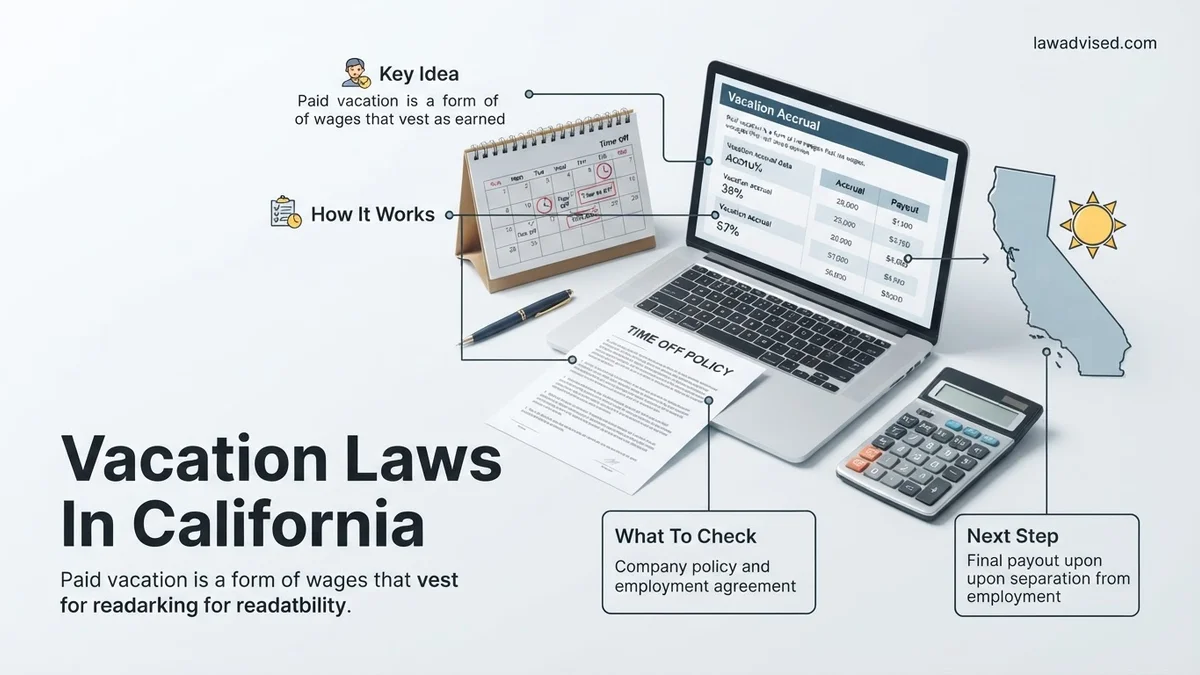
Under California labor law, vacation time is considered earned wages that cannot be forfeited through standard use-it-or-lose-it policies. Employers must pay out all accrued, unused vacation time at the final rate of pay upon termination or resignation.
Under California labor law, vacation time is treated as a form of wages you have already earned once you perform the work. Because the state views vacation days as earned compensation, traditional “use-it-or-lose-it” policies are strictly illegal for California employers. If you do not use your accrued time by the end of the year, it cannot simply vanish.
Navigating these rules in 2027 requires strict adherence to state standards that heavily favor employees. Whether you are drafting a handbook or auditing your payroll, understanding how accruals, legal caps, and final payouts work will protect you from costly wage claims and statutory penalties.
Key Takeaways
- Vacation time vests as it is earned and cannot be taken away.
- Traditional use-it-or-lose-it vacation policies are strictly illegal in California.
- Employers can legally implement reasonable caps on vacation accrual.
- Unused vacation must be paid out in full on the final day of termination.
- Companies have the right to set waiting periods and manage scheduling.
What Causes Violations of Vacation Laws in California
Most employers violate California vacation laws not out of malice, but through outdated policy templates and poor payroll tracking. Because federal law permits policies that California explicitly bans, national employee handbooks frequently trigger state-level labor violations.
Enforcing Illegal Use-It-or-Lose-It Policies
The single most common violation occurs when companies tell employees they must use their vacation time by December 31 or forfeit it. California Labor Code Section 227.3 prohibits this practice entirely. Vacation is earned incrementally as you work, making those hours your property. Forcing forfeiture is legally equivalent to withholding earned wages from a paycheck.
Failing to Pay Out Accrued Time at Separation
Another major violation happens the moment an employee quits or gets fired. Employers frequently miss the strict California deadlines for paying out accrued, unused vacation. Key triggers for these violations include:
- Failing to include accrued vacation on the immediate final paycheck upon termination
- Ignoring the 72-hour window required when an employee quits without notice
- Attempting to deduct vacation payouts to cover company property losses
How to Fix Non-Compliant Vacation and Accrual Policies
Bringing your business into full compliance with 2027 California labor standards requires overhauling how your handbook handles time off. You must replace forfeiture models with lawful alternatives that still protect your business scheduling needs.
Implementing Lawful Accrual Caps
While you cannot use-it-or-lose-it, California does allow you to cap how much vacation an employee can accumulate. To remain compliant, your policy must meet specific legal thresholds:
- Set a reasonable maximum cap, typically starting around 1.5 to 2 times the annual accrual rate
- Enforce a pause on further accrual once the cap is reached (known as a waiting period or cliff)
- Ensure accrual automatically restarts the moment the employee uses some of their time and dips below the cap
Calculating Correct Payouts at Termination
When an employee leaves your company, every single hour of unused, accrued vacation must be paid out at their final rate of pay. To fix errors in your separation workflow, audit your payroll software to guarantee that vacation calculations automatically factor in recent raises, commissions, or shift differentials earned up to the final day of employment.
Step-by-Step Guide to Calculating Final Vacation Payouts
Calculating the exact final vacation payout requires precise mathematics under California Labor Code Section 227.3. When employment ends in 2027, human resources departments must factor in every single hour of earned, unused time. Expert payroll auditors recommend following a standardized formula to prevent costly wage claim penalties.
1. Gather Your Final Pay Period Data
First, pull your most recent pay stub to verify your total accrued hours balance up to your official separation date. Employers cannot retroactively alter this balance. Next, determine your exact final rate of pay, including any nondiscretionary bonuses earned prior to termination that must legally be factored into the hourly rate calculation.
2. Apply the Daily Rate Formula
To calculate the gross payout amount, multiply your total unused accrued hours by your final hourly rate. If you were paid on a salary basis, divide your annual salary by 2,080 hours to determine your baseline hourly rate. Expert employment attorneys emphasize that any fractional hours must be paid out accurately down to the minute, rather than rounded down to the nearest whole hour.
What If Your Employer Refuses to Pay Out Accrued Vacation
Some employers unlawfully attempt to withhold accrued vacation time or mistakenly enforce illegal “use-it-or-lose-it” policies. If your employer refuses to disburse your earned wages upon separation, you have strong legal protections under California law. You must act decisively to recover the compensation you rightfully earned.
1. Send a Formal Written Demand
Submit a certified letter to your former employer citing California Labor Code Section 227.3 and demanding immediate payment of your final vacation wages. Include your calculation of the exact hours owed and the monetary total.
2. File a Wage Claim
If the employer fails to pay within a reasonable window, file a formal wage claim with the California Division of Labor Standards Enforcement (DLSE). According to verified research from the Labor Commissioner’s Office, filing a claim online or at a local office initiates an official investigation without requiring an upfront filing fee.
3. Seek Legal Representation
For high-value vacation disputes exceeding standard small claims thresholds, consult a licensed employment attorney. Expert legal counsel typically charges an hourly rate ranging from $300 to $500 per hour, or operates on a contingency fee arrangement where they collect 30% to 40% of the final recovered settlement.
What If It Still Doesn’t Work?
When informal demands and initial DLSE filings stall, navigating stubborn employer resistance requires escalated enforcement steps. Verified labor experts recommend executing the following fallback strategies to secure your owed compensation:
- Request an in-person or virtual settlement conference through the DLSE to compel the employer into binding mediation.
- File a formal complaint with the California Attorney General’s office if the employer demonstrates a systemic pattern of wage theft and labor law violations.
- Retain a private labor attorney to file a civil lawsuit in municipal or superior court, which allows you to pursue statutory interest and waiting time penalties.
- Anticipate estimated total legal costs between $1,500 and $5,000 if the dispute proceeds to formal civil litigation, though prevailing plaintiffs often recover attorney fees from the employer under California law.
Conclusion
Navigating California vacation laws in 2027 requires a clear understanding of your rights regarding accrual caps, payout timelines, and prohibited “use-it-or-lose-it” policies. When employers unlawfully withhold earned paid time off upon separation, structured enforcement through formal demands and the DLSE provides a reliable path to recovery. According to verified research and expert sources from the California Department of Industrial Relations, taking prompt, documented action is the most effective way to secure your full financial compensation. Review your final pay stub today to ensure your accrued vacation balance is accounted for accurately.
❓ Frequently Asked Questions
How does California law handle PTO versus separate vacation and sick leave?
If an employer uses a combined Paid Time Off (PTO) plan that lumps vacation and sick leave together, the entire balance is subject to California’s strict vacation payout rules upon termination.
What happens to my accrued vacation if my employer changes the policy?
Employers can modify future vacation accruals, but they cannot retroactively take away or erase vacation time that has already been earned and accrued by the employee.
Can an employer force me to take a vacation?
Yes, California employers generally have the right to manage work schedules and can require employees to take accrued vacation time, provided they give reasonable notice.
What rate of pay must be used for vacation payouts?
Unused vacation time must be paid out at the employee’s final regular hourly or salary rate of pay effective on their last day of active employment.
Can employers round vacation accrual hours?
Employers can use reasonable methods to calculate accruals, but any rounding system must not systematically shortchange employees on the total vacation time they have earned.
What legal steps can I take if my employer fails to pay my accrued vacation?
You can file a formal wage claim with the California Division of Labor Standards Enforcement (DLSE) or pursue a private lawsuit to recover unpaid vacation wages plus potential penalties.

Ismail Hossain is the founder of Law Advised. He is an Divorce, Separation, marriage lawyer. Follow him.