Driving Age Laws in California 2027 Step-by-Step Guide
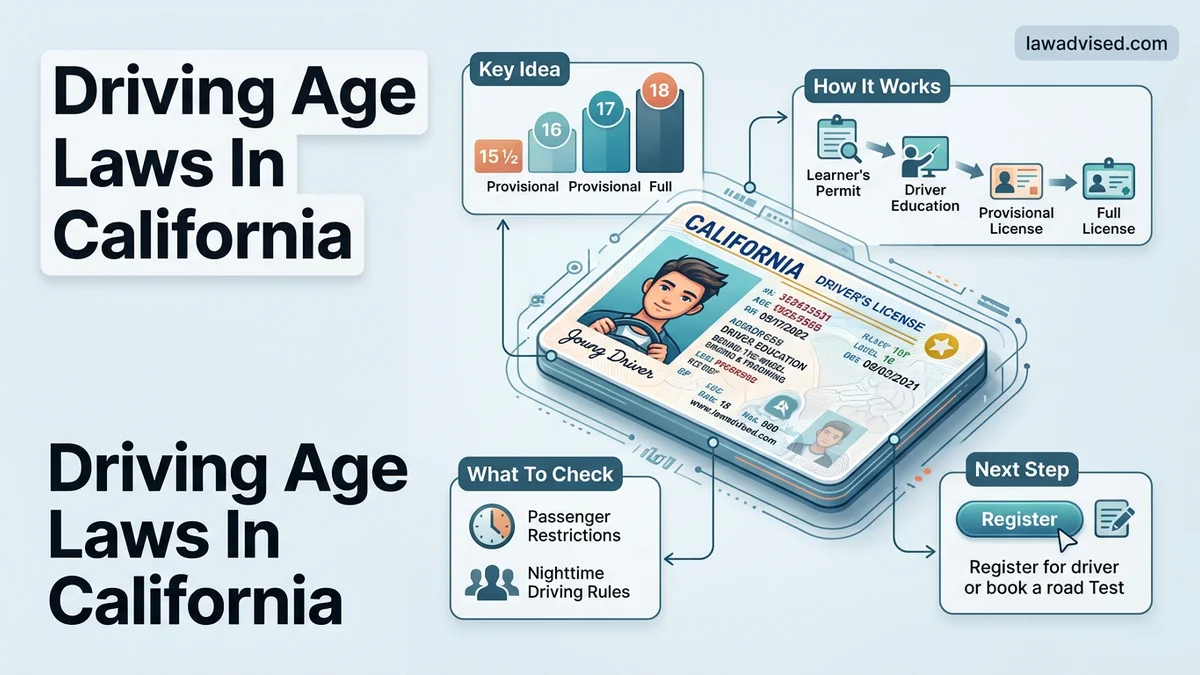
Navigating driving age laws in california requires strict adherence to the state’s Graduated Driver Licensing (GDL) program for minors. California teens can apply for a learner’s permit at age 15½, a provisional license at age 16, and unrestricted driving privileges at age 18.
California operates on a strict graduated driver licensing system for teenagers. If you want to get behind the wheel in 2027, you must follow a precise timeline of age milestones, classroom instruction, and supervised behind-the-wheel practice before earning full driving privileges.
Navigating these rules correctly prevents costly delays at the Department of Motor Vehicles. Whether you are a teenager eager to gain independence or a parent helping your child through the process, understanding these exact age requirements and phase restrictions ensures a smooth path to a California driver license.
Key Takeaways
- Teens can apply for a provisional learner’s permit at age 15½ after completing driver education.
- A minimum of 50 hours of supervised driving practice, including 10 hours at night, is mandatory.
- Provisional license holders cannot drive between 11 PM and 5 AM for the first 12 months.
- Minors may not transport passengers under 20 unless a licensed driver aged 25 or older is present.
- Adults aged 18 and older do not need driver education or provisional restrictions to get a license.
What Causes Confusion With California Driving Age Laws and Requirements
Many families struggle with California driving regulations because the state splits the teen licensing process into rigid age-based phases. Mixing up the exact month requirements for your permit versus your provisional license will automatically reset your waiting period at the DMV.
The Permit Age Versus the Driving Test Age
A common misconception is that you can take your driving test the moment you turn 16. In reality, California law requires you to hold your instruction permit for a mandatory minimum period, regardless of when your birthday falls. If you get your permit at age 15 and a half, you can graduate to a provisional license at 16. However, if you delay getting your permit, the provisional phase rules and age restrictions still apply.
Misunderstanding the Classroom Versus Online Education Mandates
Another frequent point of confusion involves the exact education hours required for minor applicants. California law sets strict standards that standard high school courses do not always meet.
-
Driver Education: You must complete 30 hours of classroom instruction (or an equivalent online course approved by the DMV) before taking the written permit test.
Behind-the-Wheel Training: You need 6 hours of professional driving instruction with a licensed instructor before you can schedule your DMV driving test.
How to Get Your Permit, Provisional License, and Full License Step-by-Step
Earning your driver license in California requires hitting three distinct age milestones. Each step builds on the previous one, demanding specific hours of practice and compliance with state tracking rules.
Step 1: The Instruction Permit at Age 15½
Your journey begins the day you turn 15 and a half. You cannot legally practice driving on public roads until you pass the written knowledge test at the DMV.
-
Complete your 30-hour approved driver education course.
Visit the DMV with a parent or legal guardian to submit your application and pass the vision and written tests.
Begin driving with a licensed adult age 25 or older sitting in the front passenger seat.
Complete 50 hours of practice driving, including 10 hours at night, before moving to the next phase.
Step 2: The Provisional License at Age 16
Once you turn 16 and have held your instruction permit for at least six months, you can take your behind-the-wheel driving test. Passing this test grants you a provisional driver license.
During your first 12 months with this license, California law enforces strict safety restrictions to protect young drivers. You cannot drive between the hours of 11:00 PM and 5:00 AM, and you cannot transport passengers under the age of 20 unless a licensed driver aged 25 or older is present in the vehicle.
Step 3: Unrestricted Full License at Age 18
The provisional restrictions automatically lift on your 18th birthday, or once you have held the provisional license for a full year. At this point, you hold a standard, unrestricted California driver license and are no longer bound by state curfews or passenger limits.
How to Navigate Teen Provisional Restrictions and Passenger Limits
California imposes strict provisional driver license restrictions during the first twelve months of issuance to curb crash statistics among novice drivers. According to the California Department of Motor Vehicles (DMV) and traffic safety research from the Insurance Institute for Highway Safety (IIHS), teenage drivers face a significantly higher risk of collision when transporting peers. Navigating these rules successfully requires strict adherence to both passenger and time limitations.
Passenger Limitations
During the first 12 months, provisional drivers cannot transport passengers under the age of 20 unless a licensed driver aged 25 or older is present in the vehicle. Verified research indicates that teen crash rates increase exponentially with each additional young passenger in the vehicle. Parents or guardians must supervise when teens drive outside permitted hours or with underage friends.
Curfew Restrictions
Provisional drivers are prohibited from operating a motor vehicle between the hours of 11:00 PM and 5:00 AM for the first year. Complying with these operational boundaries prevents license suspension and ensures insurance policy validity. Exceptions exist for medical necessity, school-sanctioned events, or employment, provided the teen carries a signed note from the relevant authority.
-
Steps to track and maintain restriction compliance in 2027:
- Review the provisional license issue date printed on the physical card to calculate the exact 12-month expiration of passenger and curfew rules.
- Maintain a written or digital log of any necessary late-night work or school travel, including signed authorization letters from employers or principals.
- Download a reputable teen driving safety app approved by safety authorities to monitor vehicle usage and ensure adherence to passenger limits.
What If You Are 18 or Older: Adult California Driving Requirements
Adults aged 18 and older in California face a streamlined licensing process compared to teenagers, though foundational safety mandates still apply. According to California Vehicle Code regulations, drivers turning 18 are exempt from mandatory driver education classroom hours and the six-hour behind-the-wheel professional training requirement. However, passing both the written knowledge test and the behind-the-wheel driving test remains mandatory for first-time adult applicants.
Application and Testing Steps
Adult applicants must initiate the process by completing the online DL 44 application form and visiting a DMV field office. Proper identification, residency documents, and payment for the application fee are required at the appointment. Adult drivers receive an instruction permit immediately after passing the written test, allowing them to practice driving on public roads with any licensed California driver aged 18 or older.
-
Follow these steps to secure an adult driver license:
- Complete the online application via the official California DMV portal and pay the mandatory application fee of $45.
- Schedule and pass the written knowledge examination at a local DMV office, utilizing up to three allowed attempts.
- Practice driving on public roadways accompanied by an adult possessing a valid California driver license while awaiting the behind-the-wheel test appointment.
- Schedule and successfully pass the practical driving test to receive the official plastic driver license card in the mail.
What If It Still Doesn’t Work?
Applicants facing persistent administrative hurdles, test failures, or document rejections at the California DMV must utilize structured fallback strategies to resolve licensing delays. Navigating bureaucracy requires understanding escalation pathways and leveraging professional resources when standard procedures fail.
- Consult DMV Tier-2 Support: If an online application stalls or document verification is rejected, schedule an in-person appointment or call the main DMV helpline to speak with a senior technician.
- Engage Professional Driving Instructors: For repeated behind-the-wheel test failures, hire a state-licensed driving school instructor for targeted corrective lessons, with professional rates typically ranging from $60 to $100 per hour.
- Verify Document Compliance: Ensure all residency and identity proofs match REAL ID standards precisely to prevent automated system rejections at the service counter.
- Utilize Legal or Advocacy Services: For complex residency or legal status verification issues, consult legal aid services specializing in California transit regulations.
Conclusion
Navigating California driving age laws in 2027 requires meticulous attention to age-specific prerequisites, provisional restrictions, and mandatory testing phases. Securing legal driving privileges safeguards young and adult motorists against costly fines, extended license suspensions, and elevated insurance premiums. According to verified research and expert sources from the California DMV and highway safety organizations, strict adherence to graduated licensing steps reduces fatal teen crashes by up to 30 percent. The single most important next action is to schedule your written knowledge test online today and begin studying the official California Driver Handbook.
❓ Frequently Asked Questions
What paperwork is needed to apply for a permit at age 15½?
You must submit form DL 44, provide proof of identity and residency, pass a written knowledge test, and show a certificate of completion for driver education.
How long must a California teen hold a learner’s permit?
A teen must hold their provisional instruction permit for a minimum of six months before they are eligible to take the behind-the-wheel driving test.
Are there exceptions to the teen curfew law?
Yes, exceptions include medical necessity, school-authorized activities, employment necessity, or driving immediate family members, provided you carry a signed note explaining the circumstance.
What happens if a provisional driver gets a traffic ticket?
Accumulating traffic violations can result in license suspension, mandatory traffic school, and required attendance at a DMV hearing with a parent or guardian.
Can out-of-state driver’s licenses be transferred to California?
Yes, new California residents over 18 must apply for a California license within 10 days of moving, while minors face specific document and testing evaluations based on age.
What tests are required to upgrade from a permit to a provisional license?
You must pass the DMV behind-the-wheel driving performance test, which evaluates your ability to safely operate a vehicle in real-world traffic conditions.

Ismail Hossain is the founder of Law Advised. He is an Divorce, Separation, marriage lawyer. Follow him.