Alcohol Laws in California 2027 Expert Compliance Guide
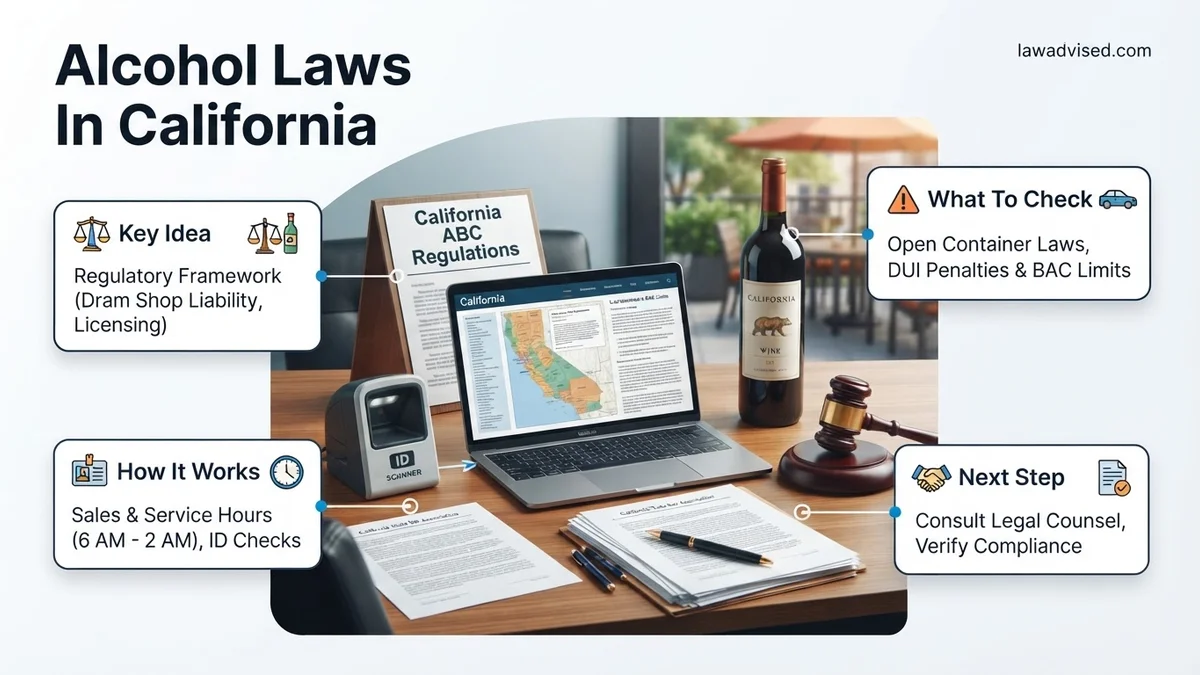
Navigating alcohol laws in California requires understanding strict age limits, purchasing hours, and public consumption rules. The legal drinking and purchasing age is 21, and retail sales are strictly permitted between 6:00 AM and 2:00 AM statewide.
California alcohol laws establish strict boundaries around purchasing ages, legal sales hours, open container restrictions, and DUI thresholds that every resident and visitor must follow in 2027. Whether you are stocking up for a weekend gathering or navigating public spaces, compliance with the state’s Department of Alcoholic Beverage Control (ABC) regulations is mandatory to avoid heavy fines or misdemeanor charges.
Navigating these rules practically protects your business, your event, or your personal record. Local municipalities often layer their own ordinances on top of state mandates, meaning enforcement can shift noticeably depending on whether you are in Los Angeles, San Francisco, or a rural county.
Key Takeaways
- The legal drinking and purchasing age in California is strictly 21 years old.
- Alcohol sales are legally permitted daily from 6:00 AM to 2:00 AM.
- Open container laws prohibit drinking in public spaces and most parked or moving vehicles.
- The legal blood alcohol concentration (BAC) limit for driving is 0.08% for adults.
- Serving alcohol to visibly intoxicated individuals or minors carries severe legal penalties.
What Causes Confusion With California Alcohol Regulations
Conflicting Local Ordinances Versus State Baseline Laws
State law sets the absolute baseline for alcohol control, but California cities and counties hold the power to impose stricter local restrictions. This dynamic frequently trips up both consumers and business owners operating in 2027.
- State law permits alcohol sales until 2:00 AM, but specific cities can mandate earlier cutoffs for off-sale retail.
- Certain public parks, beaches, and historic districts enforce total year-round bans on public consumption despite state legality.
- Permit requirements for temporary events vary wildly from one municipality to the next, requiring careful advance research.
Misunderstandings Around Public Consumption and Delivery Rules
The rules governing where you can drink outside of a licensed establishment or private residence create frequent compliance gray areas.
- Consuming alcohol on public streets, sidewalks, and transit systems is generally illegal unless explicitly authorized by a local permit.
- Alcohol delivery services must verify that the recipient is at least 21 years old with a valid government-issued ID upon drop-off, and cannot deliver to visibly intoxicated individuals.
- Private property owners and event hosts can still face civil liability if they serve alcohol to obviously intoxicated minors or guests who later cause harm.
How to Follow Purchasing, Hours, and Open Container Rules
Legal Purchasing Hours and Age Limits
Strict age verification and time windows dictate every retail and commercial alcohol transaction across the state. Retailers face severe penalties, including license suspension, for failing to adhere to these boundaries.
- The minimum legal drinking and purchasing age is strictly 21, requiring a valid driver license, passport, or military ID for verification.
- Licensed establishments, including bars, restaurants, and clubs, may legally sell and serve alcohol between 6:00 AM and 2:00 AM daily.
- Grocery stores, convenience stores, and liquor stores can sell packaged alcohol for off-site consumption during those exact same hours (6:00 AM to 2:00 AM).
Public Open Container and Vehicle Restrictions
Carrying open alcohol outside of designated zones or inside a motor vehicle carries immediate legal consequences under California vehicle and penal codes.
- Open containers of beer, wine, or spirits are strictly prohibited in public spaces like downtown sidewalks, municipal parks, and beaches unless a specific local exemption or special event permit applies.
- Drivers and passengers cannot possess open containers of alcohol anywhere inside the passenger area of a motor vehicle, even if the car is parked on the side of the road.
- Transporting open bottles is only legally permitted in the trunk of a vehicle or in an area without a trunk, provided the container is kept in a locked container or behind the last upright seat.
What If Establishment Licensing and DUI Penalties Still Apply
Navigating California alcohol regulations in 2027 requires constant vigilance regarding ABC licensing rules and strict enforcement of driving under the influence laws. Even with proper compliance measures, businesses and individuals frequently encounter operational bottlenecks or legal infractions that demand immediate corrective action.
Commercial Licensing and Permitting Pitfalls
Securing and maintaining a Type 41 or Type 47 ABC license involves stringent zoning approvals, public notices, and background checks. If an establishment faces license suspension, revocation, or delayed renewals, administrative remedies are available through the California Department of Alcoholic Beverage Control.
Business owners must follow precise protocols to resolve licensing disputes:
- Request an administrative hearing within the statutory window specified on the official ABC accusation notice, typically within 15 days of receipt.
- Audit internal employee training records to ensure all staff maintain valid RBS (Responsible Beverage Service) certifications mandated by California law.
- Retain specialized legal counsel experienced in California administrative law to negotiate potential offers in compromise or settlement terms.
Strict Enforcement of DUI Penalties
California maintains zero-tolerance policies for minors and strict blood alcohol concentration limits of 0.08% for adult drivers. In 2027, enhanced penalties apply for repeat offenders, high-BAC incidents exceeding 0.15%, and accidents resulting in injury. Administrative license suspension by the DMV occurs independently of criminal court proceedings, requiring swift legal intervention.
Drivers facing citations must adhere to strict procedural timelines:
- Request a DMV administrative per se hearing within 10 days of the arrest to contest the automatic driver’s license suspension.
- Comply with mandatory ignition interlock device (IID) installation requirements if ordered by the court or DMV administration.
- Fulfill all court-ordered alcohol education program requirements and pay statutory reinstatement fees promptly.
What If It Still Doesn’t Work?
When initial compliance appeals or administrative defenses fail to resolve California alcohol law violations or licensing disputes, escalated measures become necessary. Resolving complex regulatory disputes or severe criminal charges requires specialized professional intervention to protect operational continuity and personal liberties.
Consider the following fallback steps if standard compliance procedures fail:
- Engage a certified expert or legal specialist immediately. For ABC licensing appeals, retain an attorney specializing in California liquor law. For DUI charges, secure a dedicated criminal defense attorney. Professional fees typically range from $2,500 to $10,000+ depending on case complexity.
- File a formal petition for writ of administrative mandamus in the California Superior Court to challenge unfavorable final decisions rendered by the ABC or DMV.
- Conduct a comprehensive compliance audit with third-party industry consultants to overhaul operational protocols, security measures, and point-of-sale ID verification systems.
- Explore corporate restructuring or partnership adjustments if personal licensing disqualifications threaten the entire operational viability of a hospitality business.
Conclusion
Mastering California alcohol laws in 2027 demands rigorous adherence to evolving ABC licensing mandates, robust staff training programs, and strict compliance with state DUI statutes. Failing to address regulatory warnings or legal notices promptly can result in severe financial penalties, license revocations, or criminal prosecution. According to verified research and expert legal sources, proactive compliance audits and immediate legal intervention remain the most effective safeguards for consumers and industry operators alike. Take action today by reviewing your organization’s current ABC licensing status and scheduling a comprehensive compliance check with a qualified legal professional.
❓ Frequently Asked Questions
Can passengers drink alcohol inside a vehicle in California?
No, open containers of alcohol are strictly prohibited in the passenger area of any motor vehicle, regardless of whether the vehicle is moving or parked on a public highway.
What are the penalties for selling alcohol to a minor?
Selling or furnishing alcohol to anyone under 21 is a misdemeanor punishable by fines, community service, and potential suspension of the establishment’s liquor license.
Can you bring your own wine to a restaurant in California?
Yes, many restaurants allow patrons to bring their own wine, a practice known as ‘Corkage,’ provided the establishment holds an ABC license that permits wine consumption and charges a corkage fee.
What happens if a driver under 21 is caught with alcohol?
California enforces a strict ‘Zero Tolerance’ law for drivers under 21, meaning any measurable amount of alcohol (0.01% BAC or higher) results in an immediate license suspension.
Do grocery stores and gas stations sell hard liquor?
Yes, unlike some states, California permits grocery stores, convenience stores, and gas stations to sell beer, wine, and distilled spirits 24 hours a day, provided checkout sales occur within legal trading hours.
Who enforces alcohol regulations in California?
The California Department of Alcoholic Beverage Control (ABC) regulates licensing and retail rules, while local law enforcement agencies handle public consumption and DUI enforcement.

Ismail Hossain is the founder of Law Advised. He is an Divorce, Separation, marriage lawyer. Follow him.