Booster Laws in California 2027 Expert Safety Guide
California car seat regulations mandate that children under 8 years old must ride in the back seat secured in an approved car seat or booster seat. Children must remain rear-facing until age 2 unless they reach specific height or weight milestones. Non-compliance results in hefty fines and penalty points on your driving record.
Under California booster laws, children must remain in a rear-facing car seat, forward-facing car seat, or booster seat in the back seat until they reach 8 years of age or a height of 4 feet 9 inches. Once a child hits that 4-foot-9-inch height milestone, they can legally transition to a standard adult seat belt, provided it fits them correctly across the collarbone and upper thighs.
Navigating these regulations is critical for California parents and caregivers operating in 2027. Law enforcement issues strict fines for non-compliance, but more importantly, getting the stages right prevents catastrophic injuries during a collision. California highway patrol and local police actively enforce these milestones, making it essential to understand the exact legal thresholds.
Key Takeaways
- Children under 2 must ride rear-facing unless they weigh 40+ pounds or are 40+ inches tall.
- Children under 8 must be secured in a car seat or booster seat in the back seat.
- A child reaching 4 feet 9 inches in height may transition to an adult seat belt.
- First-time violation fines exceed $475 plus court fees and a point on your license.
- Rideshares and taxis in California do not exempt children from car seat requirements.
What Causes Child Passenger Safety Violations Under California Booster Laws
Most child passenger safety violations in California happen because parents transition their children out of specific seats too early. Drivers often assume that age alone dictates when a child can drop the booster seat. In reality, California law uses a dual requirement of both age and height, catching many families off guard during routine traffic stops.
Premature Graduation to Adult Seat Belts
The single biggest violation occurs when children under 4 feet 9 inches tall use only a standard vehicle lap and shoulder belt. Without a booster seat, the vehicle lap belt rides up over the child’s soft abdomen, and the shoulder belt cuts across their neck. This positioning causes severe internal injuries during a sudden stop or crash. Even if your child turns 8 years old, they must stay in a booster seat if they have not reached the 4-foot-9-inch height requirement.
Incorrect Seating Position and Front-Seat Violations
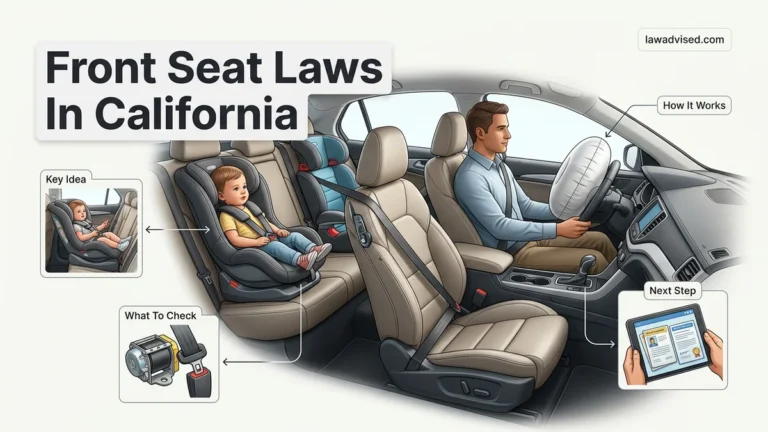
Another frequent violation involves seat placement. California law mandates that children under the age of 8 must be secured in the back seat of the vehicle in almost all circumstances. Putting a young child in the front seat violates state law unless all rear seats are occupied by younger children. Additionally, turning a child forward-facing too soon violates the state-mandated rear-facing age limit.
- Children under 2 years old must ride rear-facing unless they weigh 40 pounds or more, or are 40 inches or taller.
- Placing a rear-facing seat in front of an active airbag results in heavy fines and extreme safety risks.
- Failing to properly tether forward-facing car seats according to manufacturer limits can lead to citation.
How to Fix Car Seat Stages and Comply With California Booster Laws Step-by-Step
Bringing your vehicle setup into full compliance requires evaluating your child against the current 2027 California legal benchmarks. You must look past generic age estimates and measure both height and weight accurately. Follow a structured progression to ensure your child occupies the correct seat for their exact developmental stage.
Evaluating Rear-Facing and Forward-Facing Compliance
Start by checking the youngest passengers in your vehicle. If your child is under 2, they belong in a rear-facing seat. Do not rush to turn them around just because they hit a birthday milestone. Measure their height and weight against the limits printed on your car seat shell.
- Keep toddlers rear-facing until they reach age 2, or until they outgrow the maximum rear-facing limits of their convertible seat.
- Transition to a forward-facing harness seat only after the child exceeds rear-facing limits, keeping them harnessed until they reach the maximum weight or height specified by the manufacturer.
- Ensure the top tether is firmly secured to the vehicle anchor point for every forward-facing installation.
Transitioning to the Booster Seat Stage
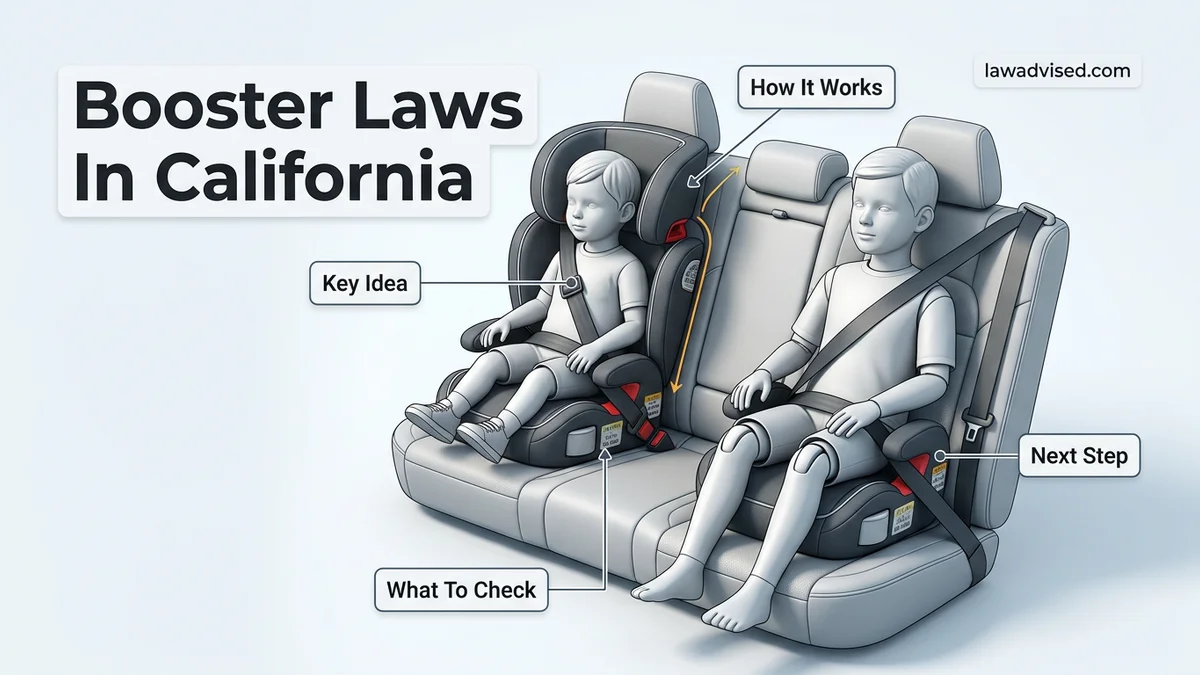
Once your child outgrows the harness limits of their forward-facing seat, they must transition to a belt-positioning booster seat. High-back and backless boosters lift the child so the vehicle seat belt crosses the correct skeletal parts. You must keep your child in this booster until they hit the magic 4-foot-9-inch threshold, regardless of whether they test into it before or after turning 8.
- Verify that the lap belt lies low and flat across the child’s upper thighs, not their stomach.
- Check that the shoulder belt crosses the center of the child’s chest and shoulder, away from the neck.
- Perform the “five-step test” to confirm they are ready for a regular seat belt: back flat against the vehicle seat, knees bending comfortably at the edge, belt resting properly, and able to maintain that posture for the entire ride.
What If It Still Doesn’t Work And You Face Legal Fines Or Exemptions
Navigating California’s child passenger safety regulations in 2027 can present challenges, especially when equipment compliance issues arise or law enforcement questions a specific setup. According to the California Highway Patrol (CHP), parents who receive a citation for improper booster seat use face base fines starting at $100 for a first offense, which can easily exceed $475 once state and county penalty assessments are added.
Furthermore, a conviction adds one point to a driving record, potentially impacting auto insurance rates. When standard booster seat installations fail due to unique vehicle configurations, child restraint incompatibility, or specific medical needs, drivers must take immediate corrective action to maintain legal compliance.
Handling Citations and Equipment Incompatibility
If a child refuses to use the mandated booster seat, or if standard seat belt geometry fails to fit the child properly despite meeting age and size requirements, drivers must address the issue systematically. Certified Child Passenger Safety Technicians (CPSTs) note that forcing an improper fit creates severe safety hazards during a collision.
Drivers facing legal disputes or equipment failures should follow specific steps to resolve the issue and potentially have citations dismissed:
- Schedule an immediate appointment with a nationally certified Child Passenger Safety Technician at a local fire station, hospital, or CHP office to document correct equipment usage.
- Purchase an alternative booster model—such as a high-back booster transitioning to a backless version—if shoulder belt positioning remains misaligned.
- Obtain a signed medical exemption form from a licensed physician if a physical or medical condition prevents the child from using a standard booster seat, as permitted under California Vehicle Code Section 27360.
- Present proof of correct equipment correction or medical exemption to the court clerk before the designated court appearance date to request fine dismissal or reduction.
- Consult a traffic attorney specializing in California vehicle code violations if contesting a complex citation involving multi-child transport setups.
Professional diagnostic consultations with a certified CPST typically range from free community-sponsored checks to $50 for private one-on-one appointments. Professional legal defense consultations for traffic infraction disputes generally cost between $150 and $350.
Conclusion
Staying compliant with California booster laws in 2027 requires constant vigilance as children grow past height and weight thresholds. The primary solution involves matching the child’s exact physical measurements against the manufacturer’s maximum limits while ensuring proper vehicle seat belt routing across the collarbone and lap. According to verified research and expert sources from the National Highway Traffic Safety Administration (NHTSA), correct booster seat usage reduces the risk of serious injury by 45 percent for children aged four to eight compared to seat belts alone. As an immediate next step, measure your child today and verify that their current restraint system meets the stringent 2027 standards.
❓ Frequently Asked Questions
Do California booster seat laws apply to out-of-state visitors?
Yes, anyone driving a vehicle with child passengers within California state lines must adhere to California child passenger safety laws, regardless of where the vehicle is registered.
Where must booster seats be installed according to California law?
California law strictly requires that any child under the age of 8 using a car seat or booster seat must be seated in the rear seat of the vehicle.
Can a 7-year-old use a standard seat belt if they are very tall?
If a child is 7 years old but has reached a height of 4 feet 9 inches, they are legally permitted to use an adult lap-and-shoulder seat belt without a booster seat.
What happens if I receive a ticket for a car seat violation?
You will face a substantial fine, mandatory court appearance or traffic school, and one point added to your California DMV driving record, which can impact insurance rates.
Are there medical exemptions to California car seat laws?
Yes, a licensed physician can provide a signed medical exemption for a child who cannot safely use a standard car seat or booster due to medical conditions.
How do I know if my booster seat meets California legal standards?
All booster seats used in California must meet federal motor vehicle safety standards (FMVSS 213) and bear the manufacturer’s label confirming compliance.

Ismail Hossain is the founder of Law Advised. He is an Divorce, Separation, marriage lawyer. Follow him.