Ridiculous Laws in Arizona The Real 2026 Guide
Many ridiculous laws in Arizona remain on the books as fascinating relics of history, ranging from banned donkey sleeping habits to strict cactus protections. This guide separates wild urban legends from actual quirky state statutes and local ordinances.
Arizona is famous for its grand canyons, blistering desert heat, and a surprisingly rich collection of utterly bizarre legislation that still technically exists on the books in 2026. If you have ever wondered whether you can legally hunt a camel or if your donkey is allowed to sleep in the bathtub, you are looking at the right place.
These quirky legal relics survive because state legislatures rarely go through the trouble of formally repealing old statutes unless they actively interfere with modern life. Understanding these funny laws gives you a great window into the state history while keeping you entertained with rules that sound like punchlines but carry real legislative histories.
Key Takeaways
- Hunting camels is technically illegal in Arizona due to a 19th-century military experiment.
- Cutting down certain protected cactus species can result in severe felony charges.
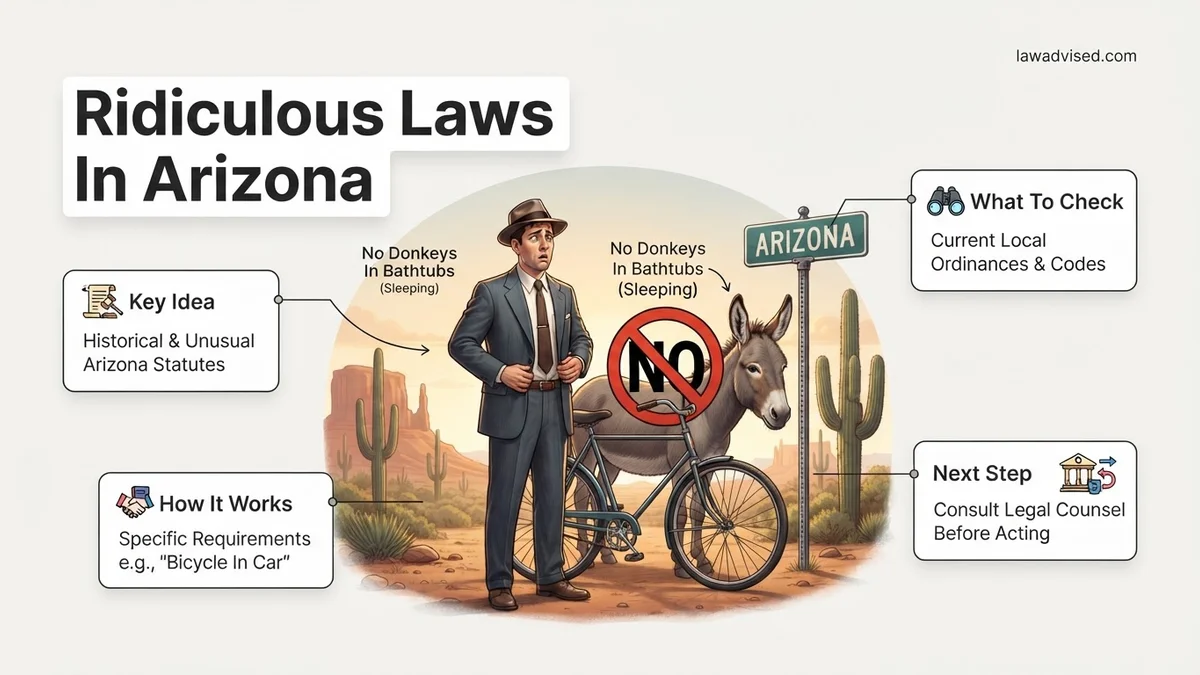
- Several bizarre local ordinances target specific animal behaviors, like donkeys in bathtubs.
- Many funny laws are actually outdated city ordinances rather than active statewide criminal codes.
- Historical context often explains the surprisingly practical origins of these strange rules.
What Causes These Ridiculous Laws in Arizona to Exist
You might wonder how lawmakers ever approved rules about cutting down cacti or hunting exotic mammals within desert city limits. Most of these strange ordinances trace their roots back to very specific 19th and early 20th-century crises, safety concerns, or practical jokes that somehow made it into official print.
The Wild West Practicality and Emergency Decrees
- The Camel Import Era: During the 1850s, the U.S. Army experimented with using camels for desert transportation in the Southwest, which led to stray animals roaming free and prompted unique local restrictions.
- Public Safety Overhauls: Rapid territorial growth meant lawmakers frequently drafted broad emergency bans to stop immediate threats, such as wildlife poaching or property destruction.
- Literal Interpretations: Overzealous city councils often wrote blanket prohibitions that outlawed highly specific nuisances, creating permanent legal quirks that outlived the actual problems they solved.
How Archaic Drafting Created Eternal Legends
- Vague Terminology: Old legal texts often used overly descriptive language that sounds hilarious to modern readers in 2026.
- Lack of Sunset Clauses: Early American laws rarely had expiration dates built into them, meaning they persist indefinitely unless explicitly struck down.
- Local Ordinances Gone Wild: Town councils frequently passed localized rules to deal with single stubborn residents, which then became part of municipal codebooks forever.
How to Fix Misconceptions About Outdated Arizona Statutes
Internet listicles love to exaggerate local ordinances, making it seem like you will face immediate arrest for harmless activities. In reality, modern law enforcement agencies in 2026 rely on prosecutorial discretion, constitutional limits, and updated state codes rather than chasing down historical oddities.
Separating Urban Legends From Actual Penal Code
- The Donkey Bath Ban: While a famous Arizona town ordinance supposedly outlaws donkeys sleeping in bathtubs, it was originally passed as a civil property protection measure after a local flood washed a farmer’s livestock into a resident’s home.
- The Saguaro Cactus Protection: Cutting down a cactus is not just a quirky fine; it is a serious felony offense under native plant protection laws designed to preserve the fragile desert ecosystem.
- Enforceability Reality Check: Police officers will not cite you for these old anomalies because modern courts require a current compelling state interest to prosecute any crime.
Why These Laws Remain on the Books Today
- Legislative Priorities: Lawmakers focus their limited time on modern issues like water rights, technology regulation, and infrastructure rather than cleaning up harmless historical text.
- Historical Preservation: Some municipalities actually keep these antique rules intact because they serve as fantastic local tourist trivia and branding.
- Legal Redundancy: Newer overarching state statutes usually override these old rules implicitly, rendering them legally dead even if the words remain printed on paper.
What If It Still Doesn’t Work and You Need Real Legal Clarification
Navigating the bizarre landscape of Arizona statutes can sometimes lead to genuine confusion, especially when old ordinances blur the line between myth and reality. If researching online databases or municipal codes leaves you uncertain about your legal standing in 2026, you need a structured approach to get definitive answers.
Steps to Resolve Legal Uncertainty
- Consult the Arizona Revised Statutes directly: Do not rely on viral social media lists. Verify municipal and state codes through official portals like the Arizona State Legislature website to check the current text and repeal history of any statute in question.
- Contact a local municipal clerk: City clerks maintain the definitive municipal code and can clarify whether specific local ordinances regarding nuisance animals, zoning, or public behavior are actively enforced or dormant.
- Retain a licensed Arizona attorney: If you face an actual citation or legal dispute stemming from an obscure law, schedule a consultation with a qualified criminal defense or civil attorney in your jurisdiction.
- Budget for professional consultation: Initial legal consultations in Arizona typically range from $150 to $350 per hour, depending on the complexity of the municipal or state issue you are facing.
Conclusion
While Arizona maintains its share of quirky legal relics and surprisingly specific regulations, distinguishing between enforceable statute and internet lore protects you from unnecessary worry. According to verified research and expert legal sources, most outdated ordinances are rarely prosecuted, but staying informed prevents accidental violations. Your actionable next step for 2026 is to check the official Arizona Legislative database whenever you encounter a questionable law to verify its active status.
❓ Frequently Asked Questions
Why does Arizona have so many weird laws still recorded?
Many archaic laws remain on municipal books because formally repealing old, inactive ordinances is often low priority for state and city legislatures. Instead, they simply sit as quirky historical reminders of past eras.
Did the U.S. Army really use camels in Arizona?
In the 1850s, the U.S. Army imported camels to transport goods across the arid Southwest desert. When the experiment ended, camels were auctioned off or released, prompting unique regulations.
Are there specific penalties for violating historical cactus laws?
Yes, Arizona takes native plant conservation very seriously. Vandalizing or removing protected species like the saguaro cactus carries steep financial penalties and potential felony prosecution.
How can you tell if a funny Arizona law is a real statute or an urban legend?
Checking official state revised statutes or municipal code databases will quickly reveal whether a rule is an active law, an expired ordinance, or entirely made up for internet humor.
Do other states have similarly ridiculous laws compared to Arizona?
Almost every U.S. state has a collection of bizarre historical statutes resulting from quirky local incidents, outdated social norms, or old-fashioned safety concerns.
Can tourists get arrested for breaking these funny minor ordinances?
Tourists rarely face legal consequences for breaking defunct or absurd local ordinances, as law enforcement focuses on modern public safety codes and state laws.

Ismail Hossain is the founder of Law Advised. He is an Divorce, Separation, marriage lawyer. Follow him.