Knife Length Laws in California 2027 Expert Legal Guide
Navigating knife length laws in California requires understanding strict statewide restrictions on concealed versus open carry. While folding pocket knives generally have no length limit when carried openly, hidden blades and specific types like switchblades face rigorous statutory boundaries.
California does not have a statewide length limit for folding pocket knives or properly carried fixed blades, but it does heavily restrict switchblades and how you carry certain designs. Under California Penal Code, you can legally carry most standard pocket knives of any blade length in your pocket or clipped to your belt, provided they are folded and not concealed as a switchblade or dirk. However, the exact legality changes dramatically depending on whether the knife is a folder, a switchblade, or a fixed blade, and whether you choose open or concealed carry.
Navigating these rules in 2027 requires understanding how local ordinances, blade deployment mechanisms, and carry methods intersect. Penalties for carrying an illegal knife or concealing a restricted blade improperly can range from heavy fines to misdemeanor or felony charges, making precise compliance essential for everyday carriers, hikers, and outdoor enthusiasts.
Key Takeaways
- Folding pocket knives carried openly have no statewide length limits.
- Concealed non-locking folding knives of any size are strictly prohibited.
- Switchblades must have a blade length strictly under 2 inches.
- Fixed-blade knives must be carried openly in a sheath, never concealed.
- Local municipal ordinances can enforce stricter limits than state laws.
What Causes Confusion in California Knife Laws
The primary source of confusion in California knife laws stems from the outdated and often misunderstood distinction between folding knives, switchblades, and “dirks or daggers.” Many people mistakenly believe that California enforces a universal three-inch or four-inch blade limit, much like some city ordinances do for firearms or specific municipal codes. In reality, state law treats folding knives and fixed-blade tools through entirely different legal frameworks.
Folding Knives and Pocket Knife Lengths
If you carry a standard folding pocket knife, you generally do not need to worry about a statewide length limit. You can carry a folder with a three-inch, four-inch, or even six-inch blade, as long as two conditions are met:
- The knife is kept in the folded position when not in use.
- The knife is not classified as a switchblade or automatic opener.
For example, carrying a large folding utility knife openly in your pocket or clipped to your waistband is completely legal under California state law, though you must still remain mindful of local city or county ordinances that might impose tighter restrictions in public buildings.
Switchblade and Automatic Knife Restrictions
California law draws a very strict line regarding automatic opening mechanisms. Under current 2027 regulations, owning or carrying a switchblade with a blade length of two inches or more is illegal. This creates a trap for many buyers:
- Switchblades with blades under two inches are technically legal to carry under state law.
- Switchblades with blades measuring two inches or longer are completely prohibited for public carry or possession.
- Assisted-opening knives, which require manual pressure on the blade stub before a spring takes over, typically fall outside the switchblade ban if they require a manual push, but law enforcement scrutiny remains high.
How to Comply With California Fixed Blade Regulations
Fixed-blade knives, such as hunting knives, boot knives, and tactical daggers, are subject to California’s strict “dirk or dagger” statutes. A dirk or dagger is legally defined as any knife or other instrument with a blade that is fitted or designed primarily for stabbing, whether it is folding or fixed. Compliance with fixed-blade laws depends almost entirely on how you choose to transport the tool.
Open Carry vs. Concealed Carry for Fixed Blades
The method of carry dictates whether a fixed-blade knife is legal or illegal in California. The state differentiates between carrying a knife openly versus carrying it concealed on your person:
- Open Carry Legal: You may legally carry any fixed-blade knife openly on your belt in a sheath. As long as the knife is fully visible and not hidden by a jacket, shirt, or bag, there is no state-mandated length limit.
- Concealed Carry Illegal: Carrying any fixed-blade knife (dirk or dagger) in a concealed manner on your body is a wobbler offense, meaning it can be prosecuted as a misdemeanor or a felony. This includes putting a fixed-blade knife inside a backpack, inside your waistband under a sweatshirt, or inside a boot.
Practical Application for Outdoor and Utility Use
If you are heading out for a camping or hiking trip in 2027, you must ensure your fixed-blade survival knife remains visible. For practical compliance, always wear your sheath on the outside of your clothing or belt where law enforcement can clearly see it. If you need to pack a fixed-blade knife for transport in a vehicle, place it securely in the trunk or inside a locked container separate from the driver compartment to avoid accidental concealed carry violations.
Step-by-Step Rules for Folding and Pocket Knives
Folding knives and everyday carry (EDC) pocket knives operate under a different legal framework in California compared to fixed blades. According to California Penal Code Section 21510, the definition of a switchblade specifically targets blades that open automatically via a button, switch, or other mechanism. However, as of recent legislative updates carrying into 2027, the total prohibition on possessing switchblades of any length has shifted, provided they do not meet specific restricted classifications.
To ensure your everyday carry complies with 2027 legal standards, follow this evaluation procedure:
- Check the opening mechanism: Verify whether your folding knife requires manual thumb assistance or opens automatically. Traditional manual folders and assisted-opening knives without fully automatic spring releases are legal to carry concealed or openly across most of the state.
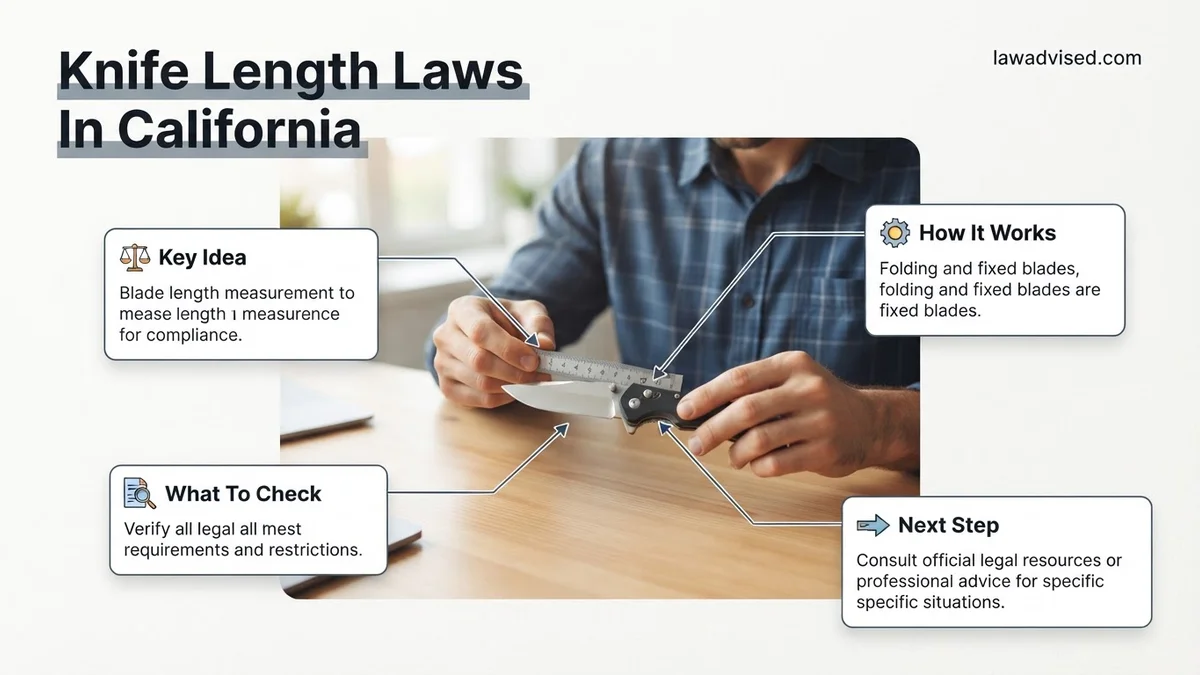
- Measure the blade length: While folding knives generally do not have a statutory length limit for open carry under state law, hidden or concealed folders must strictly adhere to concealed carry rules depending on local ordinances.
- Inspect locking features: Ensure that your locking mechanism does not categorize the tool as a prohibited ballistic knife or a disguised weapon under California Penal Code Section 16590.
Law enforcement agencies emphasize that intent matters significantly. Even with a legal folding knife, brandishing the tool in a threatening manner violates state disorderly conduct statutes.
What If Local Ordinances Are Stricter Than State Law
Navigating California knife laws requires understanding a complex hierarchy of regulations. State preemption does not completely cover all municipal jurisdictions. Individual cities and counties maintain the legal authority to enact ordinances that are significantly stricter than California Penal Code guidelines.
Navigating City and County Restrictions
Many metropolitan areas in California enforce municipal codes that restrict blade lengths in public buildings, parks, and schools far beyond state requirements. For instance, carrying a pocket knife with a blade exceeding 3 inches might be entirely legal under state law while violating municipal transit or park codes.
- Research municipal codes: Review the specific city or county municipal code where you intend to travel before carrying any knife.
- Identify restricted zones: Locate designated sensitive areas such as government buildings, public schools, and municipal event spaces where absolute zero-tolerance policies apply.
- Comply with the strictest standard: Always default to the most restrictive law applicable to your immediate geographical location to prevent accidental misdemeanor citations.
What If It Still Doesn’t Work?
If you remain uncertain about your knife’s legality or face conflicting local ordinances in 2027, standard carrying methods may not suffice. Consider these professional fallback steps to avoid legal penalties:
- Secure the item in transport: Store the knife securely in a locked container inside your vehicle’s trunk, completely separated from your person, to satisfy legal transport exemptions under California law.
- Consult a legal professional: Speak with a criminal defense attorney specializing in California weapons laws to review your specific carry habits and local municipal codes. Legal consultations typically range from $150 to $350 per hour.
- Contact local law enforcement non-emergency lines: Reach out directly to your local police department or sheriff’s office to inquire about specific municipal knife length ordinances in your exact ZIP code.
- Transition to a non-threatening EDC tool: Replace ambiguous folding blades with standard multi-tools featuring blades under 2 inches or utility tools explicitly marketed for non-tactical everyday tasks.
Conclusion
California knife length laws involve a delicate balance between state statutes and strict municipal ordinances that fluctuate heading into 2027. Misunderstanding folding blade classifications or concealed carry rules can lead to serious criminal charges and expensive legal fees. According to verified research and expert legal sources, the safest approach is to verify local municipal codes and secure questionable blades properly during transport. Make your next actionable step reviewing your local city or county municipal code to ensure your everyday carry items fully comply with regional regulations.
❓ Frequently Asked Questions
What are the exact length rules for folding knives in California?
Folding knives that lock have no length restrictions when carried openly. However, if a folding knife is non-locking, it can generally be carried concealed regardless of size, while locking folding knives cannot be carried concealed at all unless categorized strictly as a pocketknife.
How does California define a concealed weapon regarding knives?
A knife is considered concealed if it is hidden from public view on your person or within a vehicle in a way that requires searching to find it. Carrying a fixed blade in a backpack or under a jacket constitutes concealed carry, which is illegal.
What are the penalties for violating California knife laws?
Carrying a concealed dirk, dagger, or illegal fixed blade is a wobbler offense in California, punishable as either a misdemeanor or a felony leading to jail time and fines. Violating local municipal blade length ordinances typically results in misdemeanor charges.
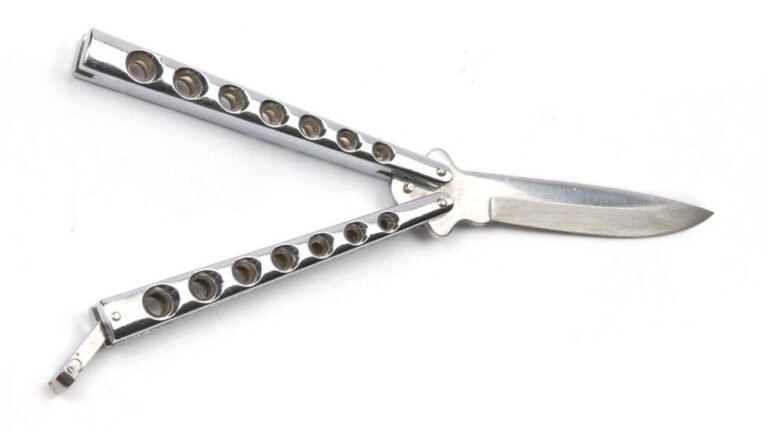
Are butterfly knives (balisongs) legal to carry?
Butterfly knives are classified similarly to switchblades under California law. If the blade length is under 2 inches, possession may be permitted, but standard-sized balisongs are generally restricted.
Can I keep a large knife in my car in California?
You can transport a legal knife in your vehicle, but it must not be carried concealed on your person or readily accessible as a concealed weapon. Keeping a fixed blade locked in the trunk is typically the safest compliance method.
Are utility knives and box cutters subject to these laws?
Standard utility knives and box cutters used for work purposes are generally exempt from strict concealed carry penalties when carried for employment or practical tasks, provided they are not used as weapons.

Ismail Hossain is the founder of Law Advised. He is an Divorce, Separation, marriage lawyer. Follow him.