Self Defence Laws in California Expert 2027 Legal Guide
Navigating self defence laws in california requires understanding the strict boundaries of proportional force and the legal duty to retreat outside the home. Residents must objectively prove a reasonable belief of imminent death or great bodily harm before deploying deadly force. California jury instructions provide specific frameworks for evaluating whether a defender acted lawfully or used excessive force during an altercation.
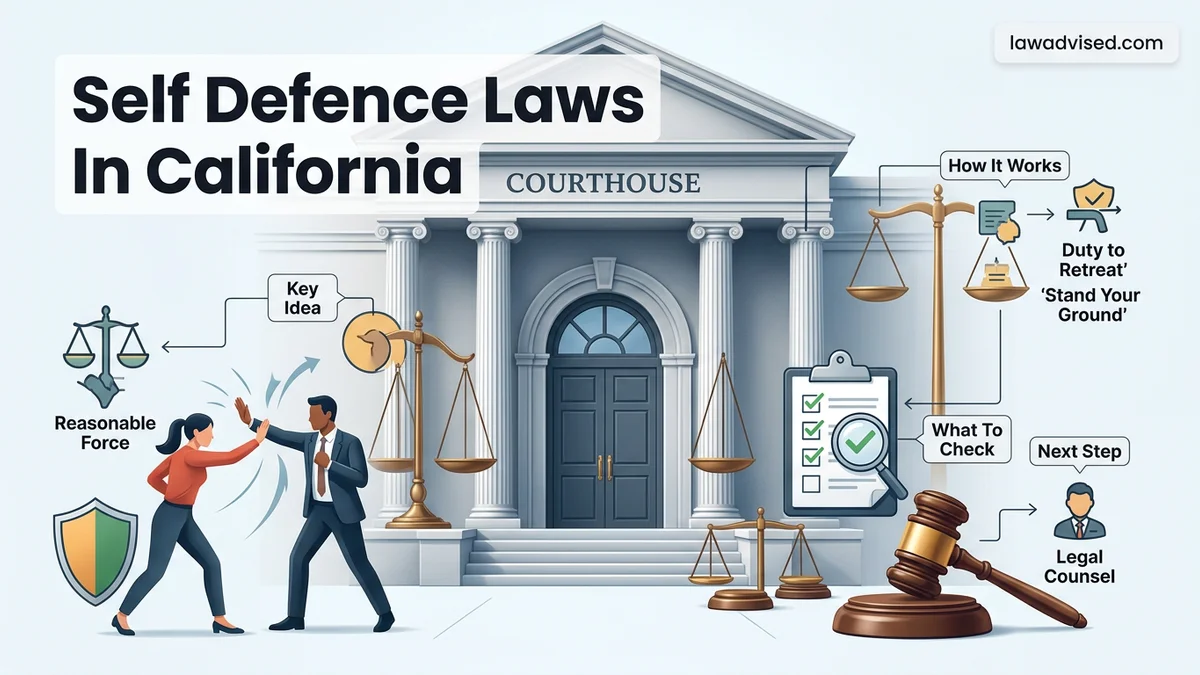
California self-defense laws hinge entirely on your immediate perception of danger and your use of proportional force. If you face an unprovoked attack in 2027, the state legal framework grants you the right to protect yourself, provided your response matches the severity of the threat you encounter.
Navigating these statutes requires absolute precision because prosecutors scrutinize split-second decisions. Knowing the strict boundaries between lawful protection and criminal liability protects your freedom, your assets, and your future.
Key Takeaways
- Proportional force means you can only use the level of force necessary to stop the threat.
- California follows a Stand Your Ground rule, meaning no duty to retreat exists in public spaces.
- The Castle Doctrine allows deadly force to protect your home from unlawful intruders.
- Initial aggressors generally lose the legal right to claim self-defense in court.
- The prosecution carries the burden of proof to disprove self-defense beyond a reasonable doubt.
What Causes Legal Liability in California Self-Defense Cases
The Initial Aggressor Disqualification
You lose your legal right to self-defense the moment you instigate the physical confrontation. If you start a fight, throw the first punch, or aggressively escalate a verbal dispute into a physical one, you cannot claim self-defense later. The law demands that you attempt to disengage or withdraw entirely before you can legally justify using force in return. Prosecutors in 2027 will pull surveillance footage and witness testimony to determine who truly started the incident.
- Verbal insults do not justify a physical response under California law.
- If you pursue an individual who is trying to flee, you legally transition from a defender to an aggressor.
- Mutual combatants generally forfeit standard self-defense claims unless both parties clearly and mutually abandon the fight first.
Proportional Force Violations
Your defensive reaction must always match the level of danger presented to you. Applying excessive force—such as using a firearm against someone who merely shoves you or verbally threatens you—creates immediate legal liability. California penal codes penalize defenders who overreact, transforming a justified protective action into assault or homicide charges.
- Non-deadly threats require non-deadly defensive responses, such as pushing or blocking.
- Using a weapon against unarmed minor threats almost always guarantees criminal charges.
- Continuing to strike an attacker who is already incapacitated or unconscious destroys your self-defense defense.
2026 Self Defence Laws in California Expert Practical Guide
Navigating the complex legal landscape of personal protection in the Golden State requires a precise understanding of your rights and limitations. This comprehensive guide breaks down the core tenets of California self-defense jurisprudence into actionable steps, ensuring you know how to protect yourself legally, physically, and financially. Whether you are at home, in public, or inside your vehicle, following these structured steps will help you evaluate threats accurately, respond with proportional force, and protect yourself after the incident concludes.
Step 1: Understand the Core Principle of Reasonable Belief
What you need: Situational awareness, basic knowledge of California Penal Code sections 197 and 198.5, and a clear mind.
Instructions: Before deploying any form of physical defense, you must establish a reasonable belief of imminent danger. In California, you are legally justified in using force only if you honestly and reasonably believe that you—or another person—are in imminent danger of suffering death, great bodily injury, or being subjected to a forcible and atrocious crime. The standard is objective: would a reasonable person in the exact same circumstances, with the same knowledge, perceive the same level of threat? If the answer is no, your defensive actions may be classified by prosecutors as an assault.
Pro Tip: Never rely on a gut feeling of general unease; look for overt, objective indicators of imminent harm, such as a raised weapon, verbal threats of violence, or aggressive, unprovoked advancement.
Step 2: Master the Rules of Proportionality and Escalation
What you need: Assessment skills to gauge the attacker’s weapon, size, and level of aggression.
Instructions: California law strictly mandates that the force you use must be proportional to the threat you face. If someone pushes you or uses non-deadly physical force, you cannot immediately respond with lethal force (such as a firearm, knife, or striking vital areas with lethal intent). You may only match the level of force necessary to neutralize the immediate threat. If the attacker is unarmed and smaller, your physical defense must remain within non-lethal boundaries. Once the attacker is subdued, incapacitated, or retreating, you must immediately cease all defensive actions.
Pro Tip: Continuing to strike or attack a threat that has surrendered or is already incapacitated instantly strips away your legal claim of self-defense.
Step 3: Recognize Your Rights Under Stand Your Ground and Duty to Retreat
What you need: Understanding of California jury instructions (specifically CACI or CALCRIM 505).
Instructions: Unlike “Castle Doctrine” applications outside the home in other states, California courts follow the “Stand Your Ground” doctrine when you are in a place you have a lawful right to be. This means you have no legal duty to retreat from a public sidewalk, park, or place of business before using reasonable force in self-defense. You are legally entitled to stand your ground and defend yourself. However, even when standing your ground, the force used must still remain strictly necessary and proportional to repel the specific attack you are facing.
Pro Tip: Just because you can legally stand your ground in public does not mean you should; tactical retreat is always the safest legal and physical outcome if an escape route is available.
Step 4: Apply the Strict Protections of the Castle Doctrine at Home
What you need: Knowledge of California Penal Code 198.5 and home security layout awareness.
Instructions: The rules shift significantly in your favor when you are inside your residence. Under California’s version of the Castle Doctrine, the law presumes that you hold a reasonable fear of imminent death or great bodily injury if an intruder unlawfully and forcibly enters your home. You do not have to wait to see if the intruder is armed before using deadly force, provided the entry was forced and unlawful, and you genuinely believed the intruder intended to commit a violent felony or harm someone inside. This presumption provides robust legal protection during home invasion scenarios.
Pro Tip: This doctrine does not apply if the person entering has a legal right to be there, such as an invited guest or a co-resident.
Step 5: Navigate Non-Lethal Weapons and Legal Restrictions
What you need: Permitted self-defense tools such as pepper spray (OC spray), stun guns, or personal alarms.
Instructions: If you choose to carry non-lethal self-defense tools, you must ensure they comply with California statutes. For example, tear gas and pepper spray canisters are legal for personal self-defense, but they must not exceed 2.5 ounces in weight. Stun guns and tasers are generally legal for adults to purchase and carry in public, though specific local ordinances or school/government building zones may prohibit them. Using these tools still requires adherence to the principles of proportionality—you cannot deploy pepper spray for a minor verbal insult.
Pro Tip: Regularly check the expiration dates on your pepper spray canisters, as propellant pressure degrades over time and can fail during an emergency.
Step 6: Handle the Immediate Aftermath and Law Enforcement Interaction
What you need: Composure, a phone to dial 911, and understanding of your constitutional rights.
Instructions: The moment the threat is neutralized, your immediate priority changes to reporting the incident and securing medical help. Call 911 immediately to establish yourself as the victim who requested assistance. When law enforcement arrives, remain calm, keep your hands visible, and clearly identify yourself as the victim of the attack. State the basic facts necessary for officer safety (e.g., “I was attacked, that person is the assailant, and my weapon is secured here”). Immediately invoke your right to silence regarding detailed statements without legal counsel present.
Pro Tip: Avoid making spontaneous, rambling explanations or apologies to police officers while suffering from adrenaline shock; anything you say can be misinterpreted and used against you in court.
✅ Final Checklist
- Verified that your perception of the threat meets the objective “reasonable person” standard.
- Ensured the physical force used matched the exact severity of the incoming threat.
- Confirmed whether the event occurred in a public space (“Stand Your Ground”) or inside your residence (“Castle Doctrine”).
- Checked that all carried non-lethal tools comply with weight, type, and local California restrictions.
- Prepared a post-incident strategy focused on immediate 911 reporting and invoking the right to counsel.
Important Notes:
- Self-defense laws carry profound criminal implications; a mistake in judgment can result in felony assault or homicide charges.
- Seek professional legal counsel immediately if you are involved in a self-defense incident that results in injury or police investigation.
- This guide is for informational and educational purposes only and does not constitute formal legal advice. Legal outcomes depend heavily on specific case facts.
How to Fix Misunderstandings About Reasonable and Deadly Force
The Standard of Reasonable Belief
A common misconception is that you can use force simply because you feel scared. California law evaluates your actions through the lens of a reasonable person placed in your exact circumstances. You must honestly and reasonably believe that you are in imminent danger of suffering death or great bodily harm. Subjective paranoia or unreasonable panic will not shield you from a felony conviction in a 2027 court of law.
- The threat must be imminent, meaning happening right now, not at an unspecified point in the future.
- Great bodily harm involves significant or substantial physical injury, such as broken bones or severe concussions.
- Juries will evaluate what an average, prudent person would have done in your exact shoes.
The Castle Doctrine and Deadly Force Realities
Inside your home, California’s Castle Doctrine provides powerful legal protections without a traditional duty to retreat. If an intruder breaks into your residence unlawfully, you possess a legal presumption that you faced an imminent threat of death or great bodily harm. However, this rule does not grant unlimited immunity. You still must demonstrate that your use of deadly force was immediately necessary to prevent injury or death to yourself or another household member.
- The presumption applies strictly to your inhabited dwelling, attached garage, or immediate appurtenant property.
- If an invited guest or family member with legal access is inside, the standard rules of engagement shift.
- Shooting a fleeing trespasser outside your home who poses no physical threat will result in criminal prosecution.
Step-by-Step Guide to Applying the Castle Doctrine and Stand Your Ground Rules
Navigating California’s legal protections during a violent encounter requires strict adherence to procedural and tactical realities. According to criminal defense specialists and the 2027 California Judicial Council jury instructions, invoking the Castle Doctrine or Stand Your Ground correctly dictates whether an individual faces felony charges. Applying these frameworks demands a systematic approach.
Step 1: Verify the Location Status
Determine whether the confrontation occurs inside a residence, place of business, or occupied vehicle. Under the Castle Doctrine, occupants enjoy a legal presumption of reasonable fear of imminent death or great bodily injury when an intruder unlawfully forces entry. Outside these defined zones, the standard shifts to evaluating objective reasonableness under general self-defense statutes.
Step 2: Assess Proportionality and Immediacy
Evaluate the threat level in real time to ensure the response matches the incoming danger. Lethal force remains strictly prohibited for purely property defense. California penal code interpretations require the threat to be immediate, meaning the aggressor possesses the capability and intent to inflict severe harm at that exact moment.
Step 3: Document the Scene and Cooperate Within Limits
Following an incident, contact law enforcement immediately to report the defensive action. When police arrive, identify yourself as the victim, state clearly that a crime was committed against you, and request medical attention if necessary. Legal experts strongly advise providing basic identifying details while declining to give a detailed statement without a defense attorney present.
What If Your Defense Claim Is Challenged by Prosecutors
District attorneys across California frequently scrutinize self-defense claims, occasionally filing charges despite clear invocations of the Castle Doctrine. When prosecutors challenge a defense claim, defendants must pivot quickly to protect their liberty. A contested claim requires robust legal strategy and immediate financial planning.
What If It Still Doesn’t Work?
- Secure specialized legal representation immediately: Retain a certified criminal defense specialist with a proven track record in California self-defense cases. Avoid relying solely on a public defender for complex affirmative defenses.
- Deploy forensic experts and reconstructionists: Hire independent crime scene investigators and ballistics experts to map the confrontation and refute the prosecution’s timeline. Expert testimony frequently costs between $5,000 and $15,000 depending on court appearances.
- File a pretrial motion for dismissal: Instruct counsel to file a Penal Code section 995 motion or a specialized immunity hearing if the evidence conclusively establishes lawful self-defense before trial.
- Prepare for a total financial investment: Anticipate comprehensive defense costs ranging from $25,000 for preliminary hearings up to $100,000 or more if the case proceeds to a full jury trial.
Conclusion
Understanding the nuances of California self-defense laws in 2027 prevents catastrophic legal missteps during life-or-death emergencies. While the Castle Doctrine provides robust protections within the home, mounting a successful defense requires absolute proportionality, clear threat assessment, and immediate expert legal intervention when prosecutors push back. According to verified research and judicial sentencing data, individuals who secure specialized counsel early significantly improve their chances of avoiding wrongful conviction. The mandatory next step is to consult with a qualified criminal defense attorney to review your personal protection plan and ensure total compliance with current state statutes.
❓ Frequently Asked Questions
Can an initial aggressor ever claim self-defense in California?
Generally, someone who starts a fight cannot claim self-defense unless they first try to stop fighting, clearly communicate their withdrawal to the opponent, and the opponent continues the attack.
How do California jury instructions define great bodily injury?
Great bodily injury refers to a significant or substantial physical injury, going beyond minor cuts and bruises, such as broken bones or injuries requiring surgery.
Does California recognize verbal threats as grounds for deadly force?
Mere words alone are never enough to justify the use of deadly force. There must be an overt act or physical demonstration indicating an immediate ability to inflict severe harm.
What happens if a defender uses excessive force?
If a defender uses more force than is reasonably necessary to stop a threat, they can be held criminally liable for assault, battery, or manslaughter.
Does the Castle Doctrine apply to hotel rooms or workplaces?
Yes, the legal protections of the Castle Doctrine extend to any temporary dwelling, workplace, or occupied vehicle where a person has a legal right to be.
How are CALCRIM jury instructions applied in self-defense cases?
CALCRIM instructions guide the jury on how to evaluate the reasonableness of the defendant’s beliefs, the proportionality of the force used, and whether the prosecution met its burden of proof.

Ismail Hossain is the founder of Law Advised. He is an Divorce, Separation, marriage lawyer. Follow him.