Pet Deposit Laws in California Expert 2027
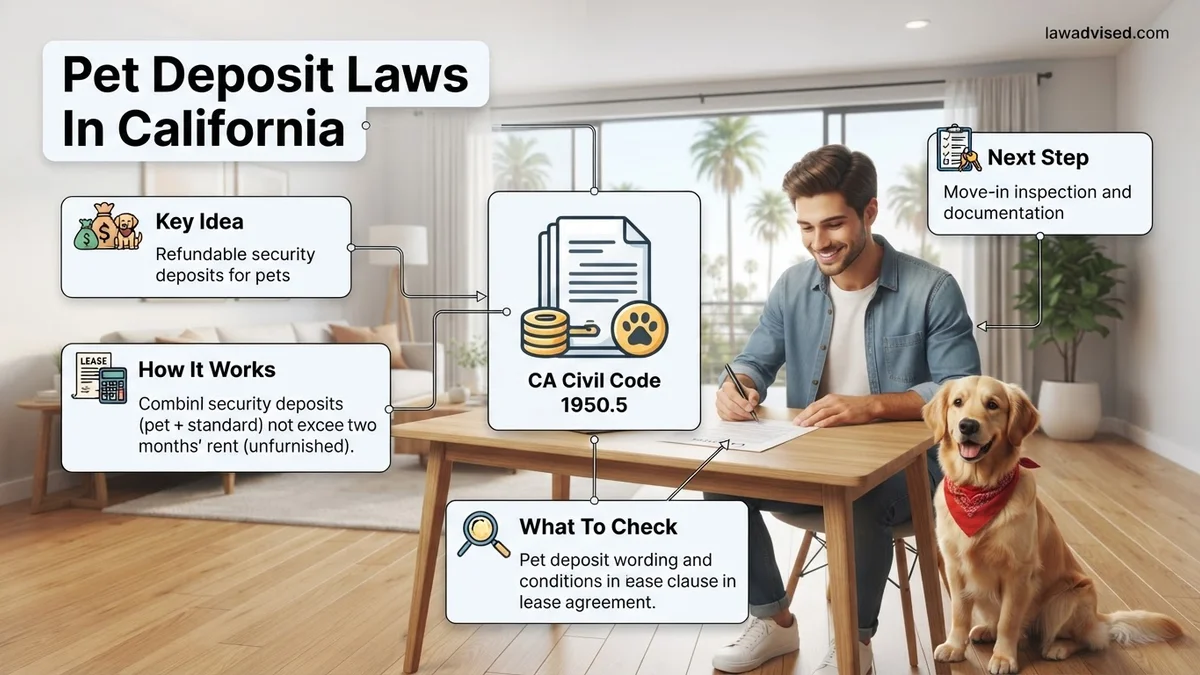
Under California law, Assembly Bill 12 strictly caps total move-in security and pet deposits at one month’s rent. Landlords cannot charge separate non-refundable pet fees, though monthly pet rent remains legally permitted and separate from deposit caps.
California law strictly caps total move-in security and pet deposits at a maximum of one month’s rent for both unfurnished and furnished units. Under Assembly Bill 12, which went into effect in July 2024 and remains the standard for 2027, landlords can no longer charge separate, additional pet deposits that push the combined upfront deposit total past this strict one-month threshold.
This sweeping legislative change completely altered how property owners structure pet policies. If you are renting a home with a cat or dog in California, you need to know exactly how these statutory limits apply to your wallet so you do not fall victim to illegal overcharging by landlords.
Key Takeaways
- California law caps total security and pet deposits at one month’s rent.
- Non-refundable pet fees and deposits are strictly illegal under California statutes.
- Monthly pet rent is allowed because it is a recurring fee, not a deposit.
- Service animals and emotional support animals are legally exempt from pet deposits.
- Landlords must itemize and return all refundable deposits within 21 days of move-out.
What Causes Confusion Over Pet Deposit Laws in California
The primary source of confusion for renters and landlords alike stems from the historic distinction between general security deposits and specific pet deposits. For decades, California landlords routinely charged an extra security deposit specifically designated for pet damages, often adding an extra five hundred to one thousand dollars on top of the standard security deposit.
The Impact of AB 12 on Legacy Pet Practices
Landlords accustomed to pre-2024 rules frequently struggle to adapt to the current 2027 legal landscape. They often attempt to skirt the rules by labeling standard charges as pet-specific fees. However, the law looks at the total amount of money collected at lease signing, regardless of what the line item is called on your invoice.
- Total Deposit Cap: The absolute maximum a landlord can collect for security, cleaning, and pets combined is one month of rent.
- No Special Exemptions: Having a pet does not grant landlords the legal right to bypass the one-month total deposit limit.
- Enforcement Realities: Landlords who demand extra pet deposits above one month of rent face severe statutory penalties under California civil code.
Misunderstandings Involving Multiple Pets
Another major point of confusion involves renters who own more than one animal. Property managers frequently try to collect a separate pet deposit for each individual dog or cat living in the rental unit.
- Single Pool of Funds: Regardless of whether you own one dog or three cats, the collective total of all refundable deposits cannot exceed one month’s rent.
- Cumulative Limits Apply: You cannot be charged a separate deposit per pet if it pushes the aggregate total past the monthly rent cap.
How to Calculate Legal Pet Deposits and Fees Under AB 12
Calculating what you can legally be charged requires looking at the baseline monthly rent for the property. Because the law ties deposits directly to the monthly rental rate, your maximum potential outlay is easy to determine once you know the base rent figure.
Crunching the Numbers: A Practical Example
Imagine you are signing a lease in 2027 for a Los Angeles apartment where the monthly rent is set at two thousand five hundred dollars. Under California law, the absolute maximum amount the landlord can collect for all refundable deposits combined is two thousand five hundred dollars.
- Base Rent: $2,500 per month.
- Maximum Allowable Deposit: $2,500 total for security and pets combined.
- Illegal Scenario: If the landlord asks for a $2,500 security deposit plus a $500 pet deposit, you are being overcharged by $500.
Distinguishing Deposits from Pet Rent and Fees
Landlords often use alternative revenue streams like monthly pet rent or non-refundable pet fees to compensate for the loss of heavy upfront pet deposits under current laws.
- Pet Rent Legality: Monthly pet rent is completely legal in California because it is considered ongoing rent for a service rather than a refundable deposit.
- Non-Refundable Fees: True non-refundable pet fees occupy a legal gray area, but courts generally scrutinize them heavily to ensure they do not violate the spirit of deposit caps.
- The Bottom Line: Always calculate your total upfront move-in costs to ensure your refundable money never crosses the one-month rent threshold.
How to Fix Illegal Pet Charges and Enforce Tenant Rights
When a California landlord demands excessive upfront fees or mislabels a standard security charge, tenants possess strong legal recourse under state housing codes. Resolving these discrepancies quickly prevents financial loss and establishes a clear paper trail for future tenancy protection. Real estate attorneys and tenant defense organizations emphasize that documentation remains the single most effective tool for rectifying unlawful charges.
Step-by-Step Resolution Process
- Review the Total Financial Cap: Calculate the cumulative amount paid for all deposits. Under Civil Code Section 1950.5, combined move-in fees cannot exceed two months’ rent for unfurnished units or three months’ rent for furnished properties in 2027.
- Issue a Written Demand Letter: Draft a formal notice citing specific California civil codes. Request an immediate refund or credit of the illegal overage within a strict 14-day window.
- Withhold Unlawful Payments: Refuse to pay any pet deposit demanded mid-lease unless a valid written agreement modifies the original tenancy terms. Landlords cannot unilaterally alter deposit structures after lease execution.
- File a Local Housing Board Complaint: Escalate the matter to your city housing department if the landlord ignores the written demand. Municipal tenant boards can investigate violations and issue formal warnings or penalties.
What If Your Landlord Still Refuses to Follow California Pet Deposit Laws
If a landlord ignores written demands and refuses to refund illegal pet deposits, tenants must escalate beyond informal negotiations. Stubborn landlords often misinterpret state security deposit caps or rely on tenant ignorance to retain unlawful funds. Utilizing formal legal channels ensures compliance with 2027 California rental regulations and recovers withheld money.
Escalation Strategies
- File a Small Claims Court Action: Sue for the return of the illegal deposit plus statutory damages of up to twice the amount wrongfully withheld under California Civil Code Section 1950.5. Filing fees range from $30 to $100 depending on the claim amount.
- Consult a Tenant Defense Attorney: Engage legal counsel for formal mediation or representation if the landlord employs retaliatory tactics or withholds substantial sums. Initial consultations typically cost between $150 and $350.
- Contact Local Legal Aid Organizations: Utilize free or low-cost tenant assistance clinics available in most California counties to review your lease documents and court filings.
Conclusion
Navigating pet deposit laws in California requires vigilance regarding strict statutory caps and permitted fee structures. Landlords cannot circumvent state limits simply by labeling a charge as non-refundable or designating it exclusively for animal care. According to verified research and expert housing authorities, proactive documentation and swift written challenges successfully resolve the vast majority of unlawful deposit disputes. Take action today by reviewing your initial lease ledger and calculating your total move-in payments against current legal thresholds.
❓ Frequently Asked Questions
How does Assembly Bill 12 affect pet deposits in California?
AB 12, which took effect July 1, 2024, and applies through 2027, prohibits landlords from charging security or pet deposits that exceed one month’s rent, regardless of whether the unit is furnished or unfurnished.
Can a landlord require a separate deposit for each pet?
No, the total combined amount for all security deposits, key deposits, and pet deposits combined cannot exceed the statutory limit of one month’s rent.
What recourse do tenants have if charged an illegal pet fee?
Tenants can request a refund in writing citing California Civil Code Section 1950.5. If the landlord refuses, tenants can file a claim in small claims court for up to twice the amount wrongfully withheld in bad faith.
Are pet deposits held in a separate escrow account?
California law does not require landlords to keep security or pet deposits in a separate interest-bearing account, but they must return the full refundable portion within 21 days of lease termination.
Can a landlord increase the pet deposit mid-lease?
Generally, a landlord cannot change the terms of a fixed-term lease agreement mid-term unless the original contract explicitly allows for periodic fee adjustments with proper notice.
What documentation is required to exempt an emotional support animal from pet deposits?
Tenants must provide a valid ESA letter from a licensed mental health professional to lawfully request an exemption from pet fees and deposit restrictions under state and federal housing laws.

Ismail Hossain is the founder of Law Advised. He is an Divorce, Separation, marriage lawyer. Follow him.