What Is a Tax Return A Clear Guide for 2026
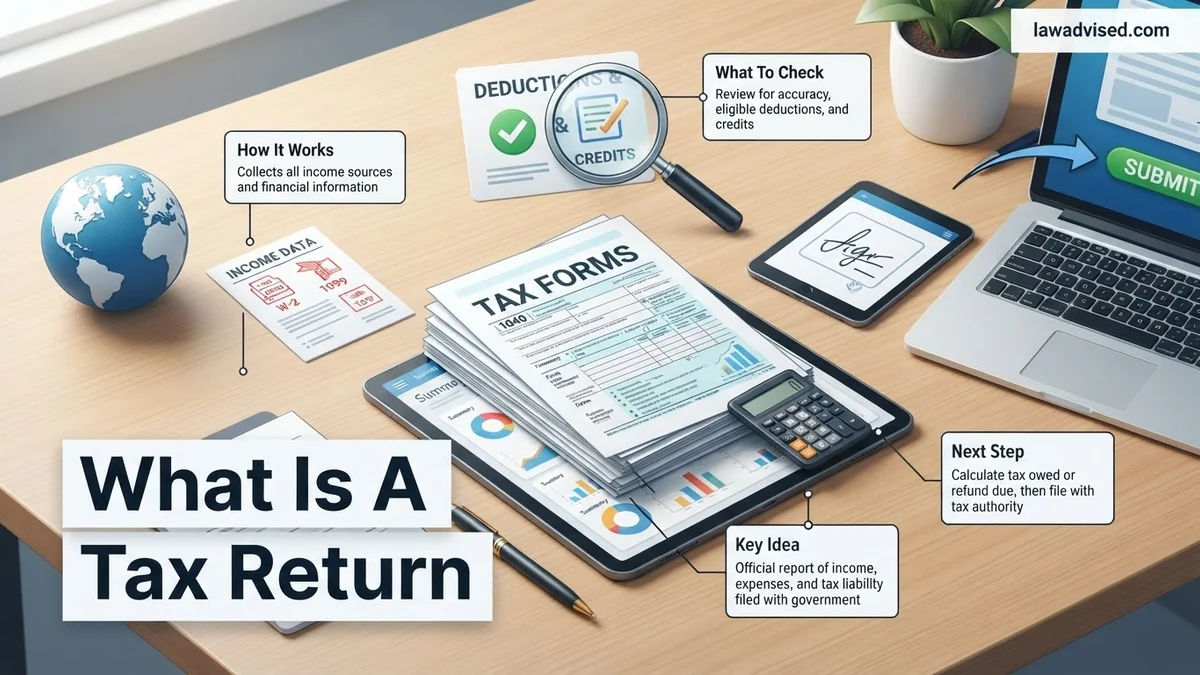
A tax return is the official paperwork and set of forms submitted to the government detailing your annual income, deductions, and tax liability. It is the primary document used to calculate whether you owe additional taxes or are owed money back.
A tax return is the formal set of documents and financial forms you submit to the government to report your annual income, calculate your tax liability, and settle your tax account for the year. As we navigate the 2026 tax season, this paperwork remains the central tool the government uses to determine whether you paid too much tax throughout the previous year or if you still owe money.
Understanding this paperwork matters practically because it protects you from costly errors and ensures you claim every financial benefit you deserve. When you know exactly what constitutes a tax return, you stop viewing tax season as a mysterious ordeal and start treating it as a straightforward financial reconciliation.
Key Takeaways
- A tax return is the paperwork, while a tax refund is the money returned.
- Form 1040 is the primary tax return document for individuals in the US.
- Your return details your total income, tax credits, and deductions.
- Filing a return is legally required if your income meets certain thresholds.
- Tax returns must typically be submitted to the IRS by mid-April each year.
What Causes Confusion Between a Tax Return and a Tax Refund
People use the terms tax return and tax refund interchangeably, but they mean completely different things. Confusing the paperwork with the payout leads to widespread misunderstandings about how the tax system operates in 2026.
The Tax Return Is the Paperwork
Your tax return is the actual package of forms—such as the federal Form 1040—that you compile and send to tax authorities. It details your wages, investments, business earnings, and life events. Think of the return as your financial report card for the year.
- It contains your personal identification details and filing status.
- It lists your total gross income from jobs, side hustles, and investments.
- It calculates your final tax obligation using official 2026 tax brackets.
The Tax Refund Is the Money
Your tax refund is the actual cash payment the government sends back to you. This happens when your tax return proves that your employer withheld more money from your paycheck than you actually owed.
- A refund is simply your own money returning to your bank account.
- Not everyone gets a refund; some people owe additional money when they file.
- You can only receive a refund after you successfully submit your tax return.
How to Identify What Documents Make Up a Standard Tax Return
A standard individual tax return is not just a single piece of paper. It is a multi-part financial package made up of a primary form backed by specific informational documents that prove the numbers you are reporting.
The Core Form and Schedules
The foundation of your 2026 federal tax return is Form 1040 (U.S. Individual Income Tax Return). Depending on your financial life, this core form links to additional pages called schedules.
- Form 1040: The main two-page document where you summarize your income, standard deductions, and final tax math.
- Schedule 1: Used to report additional income types, like unemployment benefits or rental property earnings.
- Schedule 2: Used when you owe alternative taxes or need to report specific federal tax penalties.
The Supporting Income Statements
You cannot simply write random numbers on your tax return. Your return must include or be backed by official third-party reporting documents that verify your income sources for 2026.
- Form W-2: Issued by your employer to report your yearly wages and the taxes already withheld.
- Form 1099: Issued to freelancers, independent contractors, and investors to report non-employee compensation or interest income.
- Form 1098: Sent by your mortgage lender to show how much home loan interest you paid during the year.
How to Determine If You Are Required to File a Tax Return
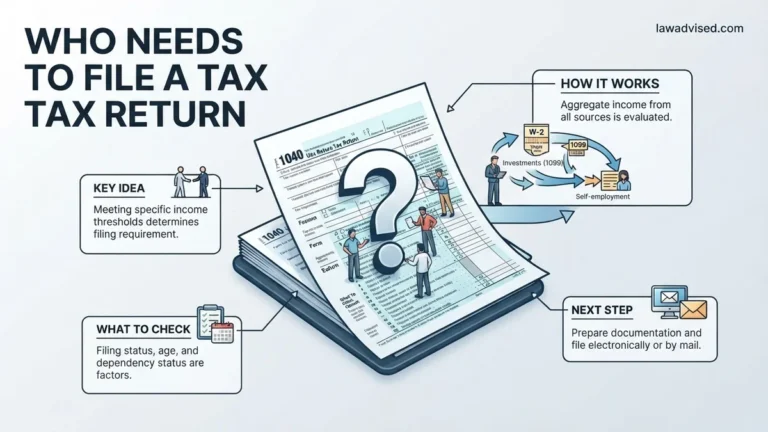
Determining your filing obligation depends on several shifting thresholds set annually by government agencies. According to IRS guidelines for the 2026 tax year, filing requirements are primarily determined by your gross income, filing status, and age.
Core Factors Influencing Your Requirement
Most individual taxpayers must compare their total worldwide gross income against the standard deduction threshold for their specific filing category. If your income falls below the statutory minimum, filing is technically optional, though experts frequently recommend doing so anyway to claim refundable credits.
- Identify your official IRS filing status, such as single, married filing jointly, or head of household.
- Calculate your total gross income from all sources, including wages, self-employment earnings, tips, and investment dividends.
- Compare your total income against the statutory threshold established for the 2026 tax year.
- Verify whether you have special circumstances, such as self-employment net earnings exceeding $400 or household employment taxes owed, which trigger mandatory filing regardless of total income.
What If Your Tax Return Status or Filing Requirement Changes
Life events frequently alter your tax bracket, deductions, and overall filing obligations mid-year. According to financial data from the National Bureau of Economic Research, major milestones like marriage, divorce, or welcoming a dependent alter baseline liability significantly.
Navigating Mid-Year Life Transitions
When your personal circumstances shift, your strategy for assembling and submitting your paperwork must adapt immediately to avoid compliance penalties.
- Reassess your designated filing status based on your legal marital status as of the final day of the 2026 calendar year.
- Update your employer with a revised Form W-4 if your household income or dependency structure experiences a major shift.
- Consult current tax code updates to see if new legislative adjustments alter how your specific life event impacts your final refund or payment.
- Gather documentation for all newly applicable deductions or credits resulting from your changed lifestyle or financial standing.
What If It Still Doesn’t Work?
If calculating your income, gathering forms, or submitting your documentation results in persistent errors or confusion, standard automated platforms may fall short. When digital systems fail or complex financial situations arise, consider these troubleshooting fallback steps:
- Double-check all numeric entries against your physical or digital Forms W-2, 1099, and other income statements to catch simple transcription typos.
- Clear your web browser cache or switch to an alternate modern browser if you experience persistent glitches within commercial e-filing software.
- Engage a certified public accountant (CPA) or an IRS-enrolled agent for personalized guidance, noting that professional preparation fees for standard individual returns typically range from $220 to $500 depending on regional complexity.
- Utilize the IRS Volunteer Income Tax Assistance (VITA) program if you qualify based on income limitations to receive free, expert-backed assistance.
Conclusion
Filing a tax return is a vital annual administrative duty that reconciles your yearly financial activity with government regulations. By understanding your filing obligations, gathering accurate income records, and utilizing modern software or professional support, you can complete the process efficiently. According to verified research and expert sources from the American Institute of Certified Public Accountants, staying organized throughout the year is the single most effective way to eliminate tax season stress. Your actionable next step for 2026 is to log into your primary income portal or gather your tax documents today to begin organizing your paperwork ahead of the filing deadline.
❓ Frequently Asked Questions
What specific information is included in a tax return?
A tax return includes details regarding your earned income from jobs or self-employment, investment earnings, standard or itemized deductions, and any tax credits you are claiming.
Where do I get the forms needed to file a tax return?
Standard tax return forms like Form 1040 can be downloaded directly from the official IRS website or accessed through approved electronic tax filing software.
Do I have to file a tax return if I had no taxable income?
If your income falls below the minimum filing threshold for your status and age, you typically are not required to file, though you might choose to do so to claim certain refundable credits.
What happens after you submit your tax return?
The tax agency reviews the paperwork for accuracy, processes the information, and either issues a refund, sends a bill for unpaid taxes, or requests further verification.
Can a tax return be amended after it is submitted?
Yes, if you discover an error regarding your income, deductions, or filing status after submitting your return, you can file an amended return using Form 1040-X.
How long should I keep copies of my filed tax returns?
Tax professionals generally recommend keeping copies of your tax returns and supporting financial documents for at least three to seven years.

Ismail Hossain is the founder of Law Advised. He is an Divorce, Separation, marriage lawyer. Follow him.