Why Do You Need to File a Tax Return The 2026 Expert Guide
Filing a tax return is a legal requirement for individuals meeting specific income thresholds, and a financial opportunity to claim valuable refunds and credits. Neglecting this obligation can result in severe IRS penalties, interest charges, and the permanent loss of withheld money.
You need to file a tax return primarily because federal law requires it once your income crosses a specific threshold, and failing to do so invites severe financial penalties. Beyond avoiding audits and fines, filing is the only way to claim thousands of dollars in government refunds, refundable tax credits, and financial benefits you have already earned.
For the 2026 tax season, staying compliant protects your financial standing while unlocking cash injections like the Child Tax Credit and the Earned Income Tax Credit. Whether you work a traditional W-2 job or manage freelance income, knowing your exact legal obligations prevents costly compliance mistakes.
Key Takeaways
- Filing is legally mandatory if your gross income exceeds specific IRS threshold amounts.
- You must file to claim tax refunds from income taxes withheld from your pay.
- Valuable credits like the EITC require a filed return to receive payment.
- Failing to file a required return triggers expensive IRS failure-to-file penalties.
- Non-filers forfeit unclaimed refunds after a strict three-year window expires.
What Causes the Requirement to File a Tax Return
The Internal Revenue Service bases your legal obligation to file primarily on your gross income, filing status, and age. If your total income for the year exceeds the standard deduction for your specific demographic, you must submit a return.
Income Thresholds and Filing Statuses
Your filing status sets the baseline for whether the IRS expects paperwork from you. For the 2026 tax year, the thresholds shift to account for inflation adjustments.
- Single filers earning above the basic standard deduction limit must file.
- Married couples filing jointly face a higher combined income threshold before filing becomes mandatory.
- Heads of household occupy a middle tier that balances dependents and income limits.
- Seniors aged 65 and older receive a slightly higher income threshold before filing is legally required.
Self-Employment and Special Circumstances
Traditional employees are not the only ones bound by these rules. If you run a side hustle, freelance, or operate a small business, the rules change drastically.
- Self-employed individuals must file if net earnings from self-employment hit $400 or more, regardless of total gross income.
- If you owe special taxes, such as the Alternative Minimum Tax or household employment taxes, you must file.
- Receiving distributions from a health savings account or retirement plan can also trigger a mandatory filing requirement.
How to Determine Your Legal Filing Obligations for 2026
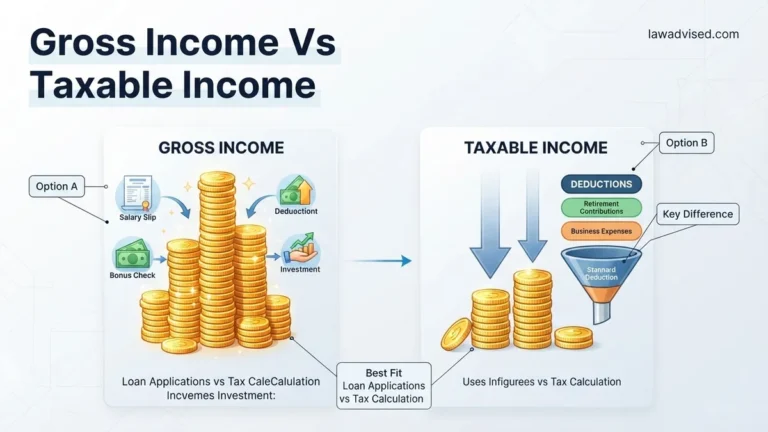
Figuring out if you must file requires comparing your total gross income against updated IRS thresholds. Gross income includes all income you receive in the form of money, goods, property, and services that is not exempt from tax.
Calculating Your Gross Income
You need to audit every dollar coming into your household to see if you cross the mandatory filing line. This calculation includes wages, tips, capital gains, unemployment benefits, and traditional business revenue.
- Add up all W-2 forms, 1099 statements, and cash earnings from the calendar year.
- Exclude tax-exempt income, such as certain types of veteran benefits or life insurance payouts.
- Compare this final gross income sum directly against the IRS standard deduction amounts for 2026.
Age and Dependency Status Exceptions
Your personal life stage and whether someone else claims you as a dependent completely alter your legal requirements. A college student working part-time faces very different rules than an independent adult.
- Dependents have much lower unearned and earned income thresholds before a tax return becomes mandatory.
- If you are blind or over age 65, your standard deduction increases, raising your filing threshold.
- Even if your income falls below the mandatory threshold, you should still file if your employer withheld federal income tax, as filing is the only way to get that money refunded.
Step-by-Step Guide to Claiming Your Refunds and Tax Credits
Maximizing your financial return in 2026 requires a systematic approach to filing. Tax authorities process millions of returns annually, making accuracy critical to avoid delays.
Gather Your Documentation
Precision begins with having all required financial documents ready before you log into tax software or sit down with an accountant. Missing a single form can trigger an IRS audit or automated correction notice.
- Collect all income statements including Form W-2s from employers and various 1099s from freelance or gig work.
- Compile documentation for major deductions, such as Form 1098 for mortgage interest and student loan interest statements.
- Locate receipts and tracking records for specialized credits like clean vehicle purchases or energy-efficient home upgrades.
Select Your Filing Method
Choosing the right platform or professional dictates how efficiently your data translates into money in your bank account. According to the IRS, electronic filing combined with direct deposit remains the fastest method for receipt.
- Utilize IRS Free File software if your adjusted gross income falls below the statutory threshold for the 2026 tax year.
- Opt for paid, trusted commercial tax preparation software if your situation involves investments, rental properties, or self-employment.
- Hire a Certified Public Accountant (CPA) or Enrolled Agent (EA) if your financial portfolio involves complex multi-state or corporate structures.
What If It Still Doesn’t Work and You Missed the Deadline?
Failing to file your return on time can feel overwhelming, but tax agencies provide structured pathways to resolve compliance issues. Ignoring the problem only accumulates steeper failure-to-file penalties and compounding interest charges.
- File immediately: Submit your delinquent return as soon as possible to stop the escalation of failure-to-file penalties, which accrue much faster than failure-to-pay penalties.
- Apply for penalty abatement: Request a first-time penalty abatement from the IRS if you have a clean compliance history for the preceding three tax years.
- Establish a payment agreement: Set up an online payment plan or an installment agreement if you owe money you cannot pay in a single lump sum.
- Seek professional intervention: Engage a licensed tax professional or Low Income Taxpayer Clinic (LITC) if you face severe collection actions, liens, or levies. Professional representation fees typically range from $300 to $1,500 depending on the complexity of back-tax resolution.
Conclusion
Filing a tax return is much more than a yearly administrative chore; it is your primary mechanism for unlocking financial benefits, proving income validity, and avoiding costly penalties. Whether you are claiming valuable federal credits or simply keeping your records legally compliant, taking prompt action safeguards your financial health. According to verified research and expert sources from the National Taxpayer Advocate, proactive filing remains the single most effective way to protect your hard-earned assets and prevent compounding debt. Take action today by gathering your 2026 documentation and selecting an authorized electronic filing method.
❓ Frequently Asked Questions
What are the exact income thresholds that require a tax return in 2026?
The IRS sets standard deduction limits that dictate filing requirements based on age and filing status. For single filers under 65, the threshold matches the standard deduction amount, while seniors and married couples have higher limits.
What is the Earned Income Tax Credit and why do I need to file for it?
The Earned Income Tax Credit is a financial benefit for low-to-moderate-income workers. You must file a formal tax return and complete Schedule EIC to claim and receive these funds.
Is it true that I lose my refund if I don’t file?
The IRS imposes a strict three-year statute of limitations on claiming tax refunds. If you fail to file a return within three years of the original deadline, the government keeps your money permanently.
What if I cannot afford to pay the taxes I owe?
You should still file your tax return on time to avoid steep failure-to-file penalties. The IRS offers various payment plans, installment agreements, and relief options for taxpayers experiencing financial hardship.
Do college students or dependents need to file a tax return?
Dependents must file a tax return if their unearned income, earned income, or gross income exceeds specific minimum thresholds set annually by the IRS. Even below these levels, filing is smart to recover withheld income taxes.
How far back can the IRS audit or penalize non-filers?
The IRS generally has a three-year window to audit filed returns, but there is no statute of limitations for failing to file a tax return. The IRS can assess taxes, penalties, and interest indefinitely for unfiled years.

Ismail Hossain is the founder of Law Advised. He is an Divorce, Separation, marriage lawyer. Follow him.