When Are Taxes Due in USA 2026 Expert Filing Guide
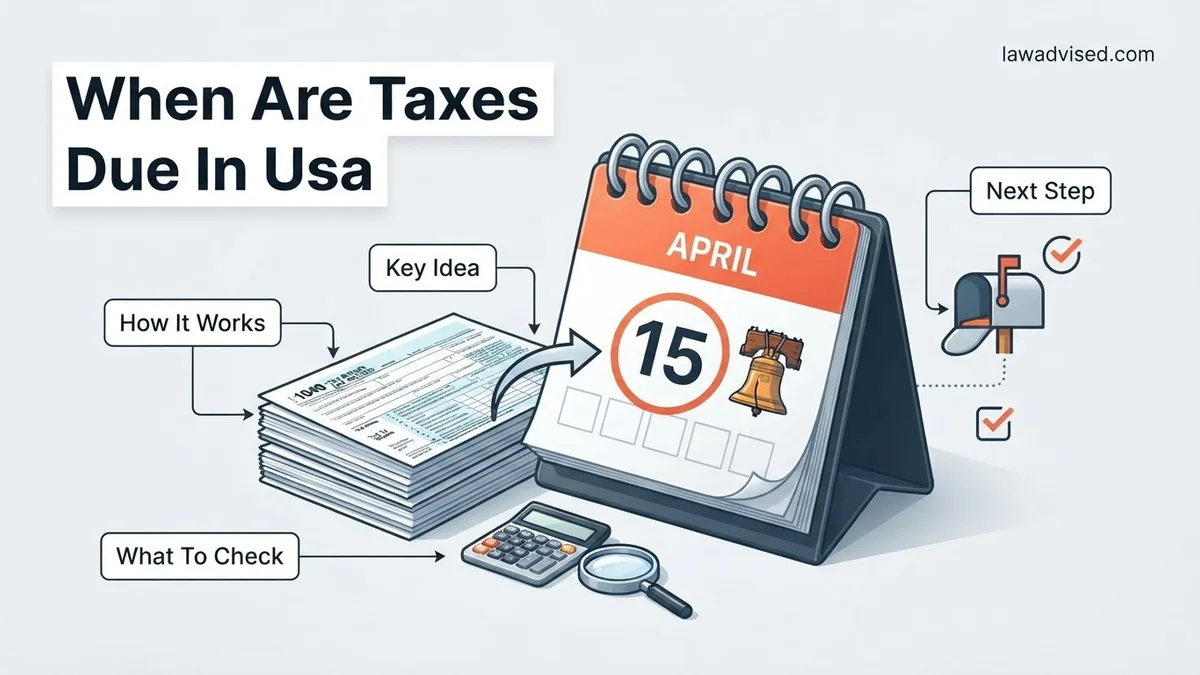
Federal income taxes in the USA are typically due on April 15 of each year. However, if that date falls on a weekend or a recognized holiday, the deadline shifts to the next business day. Taxpayers needing more time can apply for an extension to push the final submission deadline to October 15.
The standard federal income tax filing deadline for the 2025 tax year is April 15, 2026. If you are submitting your federal return electronically, you must complete your transmission by 11:59 p.m. in your local time zone on this date. Paper returns must be postmarked by midnight.
Missing this exact deadline without an approved extension triggers immediate financial penalties and interest charges from the IRS. Knowing the precise date allows you to avoid costly mistakes and ensures your refund arrives on schedule.
Key Takeaways
- The standard federal tax filing deadline is April 15, 2026.
- Weekends and holidays like Emancipation Day automatically push deadlines to the next business day.
- Filing for a tax extension moves your deadline to October 15.
- Most state tax deadlines align directly with the federal tax deadline.
- Estimated quarterly tax payments follow a different four-date annual schedule.
What Causes Tax Deadline Confusion and Rescheduling Rules
Weekend Shifts and Calendar Anomalies
The standard April 15 deadline does not always fall on a business day. When April 15 lands on a Saturday, Sunday, or a legal holiday, federal rules push the official filing deadline to the next chronological business day. For example, if the calendar places April 15 on a weekend, your new deadline becomes the following Monday. For the 2026 tax season covering the 2025 calendar year, April 15 falls on a Wednesday, meaning no weekend shift applies to the primary deadline.
Holiday Interferences in Washington D.C.
Local holidays can also disrupt standard federal tax timelines. Emancipation Day is a legal holiday in the District of Columbia. When April 15 falls on Emancipation Day, or when Emancipation Day is observed on April 15 due to weekend overlaps, federal tax deadlines shift nationwide by one additional weekday. This rule applies to all federal taxpayers regardless of where you live.
- Washington D.C. holidays directly impact nationwide IRS processing centers.
- District holidays can push the filing deadline to Thursday, April 16.
- State-specific holidays like Patriots’ Day in Maine and Massachusetts grant residents of those states an extra day to file.
How to Verify Your Exact Tax Filing and Extension Deadlines
Filing for an Automatic Extension
If you cannot finish your tax return by April 15, 2026, you can request an automatic six-month extension. Filing Form 4868 pushes your final submission deadline to October 15, 2026. You must submit this extension request on or before the original April deadline.
- An extension to file is not an extension to pay your taxes.
- You must estimate and pay any expected tax liability by April 15 to avoid interest and late-payment penalties.
- Electronic filing options through IRS Free File make submitting Form 4868 take only a few minutes.
Special Situations and Disaster Relief
Natural disasters and emergency declarations alter standard deadlines significantly. The IRS routinely grants automatic filing and payment extensions to residents living in federally declared disaster areas. If severe weather or other emergencies disrupt your region, check the official IRS tax relief news page for customized, extended due dates that often stretch out by several months.
What If It Still Doesn’t Work and You Miss the Deadline
Missing the April 15, 2026 tax filing deadline without securing an extension can lead to severe penalties from the IRS. According to the IRS compliance office, failing to file on time triggers a failure-to-file penalty of 5 percent of unpaid taxes per month. If you find yourself facing this stressful scenario, specific corrective steps can minimize your financial damage.
Immediate Recovery Steps for Late Filers
- File your return immediately: The failure-to-file penalty is ten times costlier than the failure-to-pay penalty. Submit your return as soon as possible to halt the accumulation of this specific fee, even if you cannot pay the full balance due.
- Apply for penalty abatement: If you missed the 2026 deadline due to circumstances beyond your control, such as a serious illness or natural disaster, request a first-time penalty abatement or reasonable cause relief through the IRS portal.
- Set up a formal payment agreement: Contact the IRS to establish a short-term payment plan or an installment agreement. This reduces your failure-to-pay penalty rate from 0.5 percent to 0.25 percent per month while you clear your debt.
- Engage a certified tax professional: When complications mount, hire a Certified Public Accountant or an Enrolled Agent to negotiate with tax authorities on your behalf. According to the National Society of Accountants, professional representation typically ranges from $300 to $1,000 depending on the complexity of back-tax negotiations.
Key Steps for Handling State and Quarterly Estimated Taxes
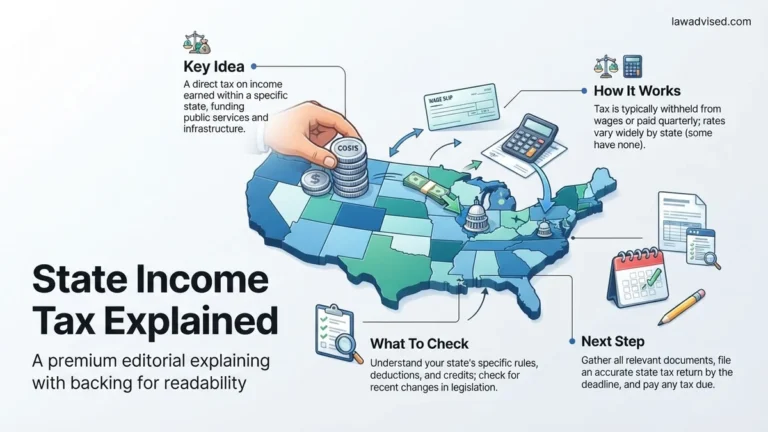
Managing federal deadlines is only part of your 2026 tax obligations. Most U.S. states with income taxes mirror the federal April 15 deadline, but variations exist. For instance, states like Delaware and Iowa operate under distinct schedules. Ignoring state filings leads to separate state-level penalties and interest charges that compound daily.
Managing Quarterly Estimates and State Obligations
- Sync your state calendar: Verify your state department of revenue website to confirm if your local filing deadline aligns with the April 15, 2026 federal cutoff or falls on an alternative date.
- Calculate quarterly milestones: If you are self-employed or earn non-wage income, mark the four federal estimated tax due dates for the 2026 tax year on your calendar: April 15, June 15, September 15, 2026, and January 15, 2027.
- Use the safe harbor rule: Pay at least 90 percent of your expected 2026 tax liability or 100 percent of your 2025 liability through quarterly installments to avoid underpayment penalties.
- Automate electronic payments: Enroll in the IRS Electronic Federal Tax Payment System (EFTPS) or state-equivalent portals to schedule recurring quarterly deductions, eliminating the risk of missed manual submissions.
Conclusion
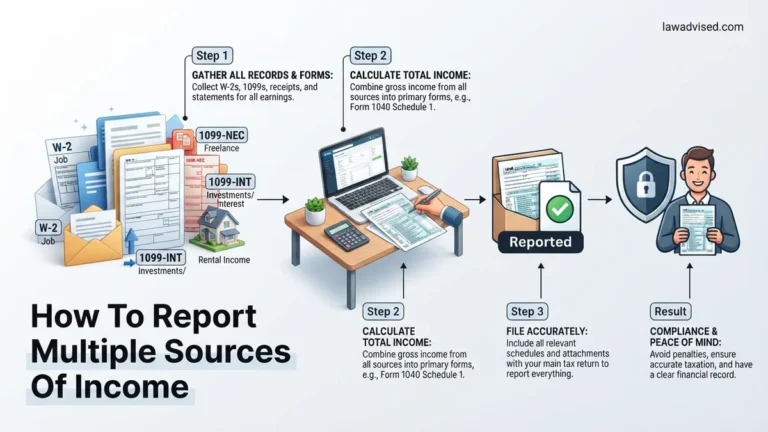
Navigating the complex maze of IRS and state tax deadlines for 2026 requires strict adherence to calendar milestones, accurate estimations, and prompt action if complications arise. According to verified research and expert sources from the American Institute of CPAs, proactive compliance significantly reduces the risk of costly audits and severe financial penalties. Your ultimate actionable next step for the 2026 tax season is to gather all necessary W-2 and 1099 forms today, log into an approved electronic filing software, and lock in your submission or extension well before the April 15 cutoff.
❓ Frequently Asked Questions
What is the exact deadline for filing 2025 taxes in 2026?
For the 2025 tax year, federal income tax returns are due on April 15, 2026, assuming no calendar shifts occur due to holidays or weekends.
How do weekends and holidays affect the tax deadline?
If April 15 falls on a Saturday, Sunday, or a legal holiday like Emancipation Day in Washington D.C., the deadline moves to the next immediate business day.
How do I request an automatic tax filing extension?
You can request a six-month extension by filing IRS Form 4868 electronically or by mail on or before the original April deadline.
What are the deadlines for estimated quarterly tax payments?
Quarterly estimated taxes are typically due four times a year: April 15, June 15, September 15, and January 15 of the following year.
Are deadlines different for Americans living abroad?
U.S. citizens and resident aliens living abroad receive an automatic two-month extension to June 15 to file their returns without requesting one.
What should I do if I cannot afford to pay my taxes on time?
You should still file your return or extension on time to avoid penalties, and apply for an IRS payment plan or installment agreement to manage payments.

Ismail Hossain is the founder of Law Advised. He is an Divorce, Separation, marriage lawyer. Follow him.