Employment Laws in South Carolina: Essential Guide for Employers
Are you working or planning to work in South Carolina? Understanding your rights and responsibilities under the state’s employment laws is crucial.
These laws affect everything from wages and hours to workplace safety and discrimination. Knowing how they apply to you can protect your job, your paycheck, and your future. Keep reading to learn the key facts about employment laws in South Carolina and how they impact your work life.
This knowledge puts you in control and helps you make smarter decisions every day.
Credit: cv.scbar.org
Key Employment Regulations
Understanding key employment regulations is vital for both employers and employees in South Carolina. These laws set clear rules for workplace behavior, pay, and safety. Knowing these rules helps prevent problems and ensures fair treatment at work.
State Vs Federal Laws
South Carolina follows both state and federal employment laws. Federal laws set broad standards that apply everywhere in the U.S. State laws add extra rules specific to South Carolina. Employers must follow the stricter rule if there is a difference. This dual system protects workers while allowing local flexibility.
Wage And Hour Rules
South Carolina uses the federal minimum wage of $7.25 per hour. Employers must pay at least this amount. Overtime pay is required for hours worked over 40 in a week. The rate is one and a half times the normal pay. These rules ensure workers receive fair compensation for their time.
Workplace Safety Standards
Workplace safety in South Carolina follows federal OSHA rules. Employers must keep workplaces free from serious hazards. They must provide safety training and proper equipment. Workers have the right to report unsafe conditions. These standards help reduce accidents and injuries at work.

Credit: www.laborlawcenter.com
Hiring And Termination Rules
Understanding hiring and termination rules in South Carolina helps both employers and employees. These rules set clear limits for fair treatment during hiring and firing. Knowing the laws can prevent legal trouble and promote respect at work. Employers must follow specific laws to avoid discrimination and wrongful termination claims. Employees should know their rights to ensure fair treatment.
Anti-discrimination Laws
South Carolina follows federal anti-discrimination laws. Employers cannot treat workers unfairly based on race, color, sex, religion, or national origin. Age and disability protections also apply. These laws cover hiring, promotions, pay, and firing. Employers must provide equal opportunities to all candidates. Discriminatory questions during interviews are illegal. Workers facing discrimination can file a complaint with the Equal Employment Opportunity Commission.
At-will Employment
Most jobs in South Carolina are “at-will.” This means employers can end employment at any time. Employees can also quit without giving a reason. No contract is needed to explain the end of work. Some exceptions exist if there is a written contract or specific laws protecting workers. At-will employment gives flexibility but also requires fairness. Employers should avoid firing for illegal reasons like discrimination or retaliation.
Termination Procedures
South Carolina does not require advance notice before firing. Employers do not need to give a reason for termination. Written warnings or meetings are not mandatory but are a good practice. Final paychecks must be given promptly, usually by the next payday. Employers should keep clear records of termination to avoid disputes. Employees should receive information about benefits or unemployment claims after leaving. Proper procedures help both sides move forward smoothly.
Employee Benefits And Leave
Employee benefits and leave policies are key parts of working in South Carolina. They help protect workers’ health, family life, and future. Understanding these benefits is important for both employers and employees.
South Carolina has specific rules about mandatory leaves, health insurance, and retirement benefits. These rules aim to support workers during important life events and after retirement.
Mandatory Leave Policies
South Carolina follows federal laws like the Family and Medical Leave Act (FMLA). It gives eligible employees up to 12 weeks of unpaid leave for serious health issues or family care. Employers with 50 or more workers must follow this law.
State laws also require leave for jury duty and military service. Workers cannot lose their jobs for taking these leaves. Some cities may have extra leave rules, so check local laws too.
Health Insurance Requirements
South Carolina does not require all employers to provide health insurance. But, companies with 50 or more full-time workers must offer coverage under the Affordable Care Act (ACA).
Employees can get health insurance through their employer or the state marketplace. Many workers use Medicaid or Medicare for health coverage.
Retirement Benefits
Employers in South Carolina are not required to offer retirement plans. Many still provide 401(k) plans or pensions to attract workers.
Workers can also save for retirement through personal accounts like IRAs. Social Security benefits are available to all who qualify.
Workplace Policies And Compliance
Workplace policies and compliance are key to running a smooth business in South Carolina. Clear rules help protect employees and employers. They create a safe and fair work environment. Every company should follow state and federal laws carefully.
Understanding workplace policies ensures your business stays legal. It also builds trust among staff. Employers must keep policies up to date and easy to understand. Training and consistent enforcement matter a lot. Let’s explore some important areas of workplace policies in South Carolina.
Employee Handbooks
Employee handbooks explain company rules and expectations. They include topics like work hours, pay, and behavior. In South Carolina, handbooks are not required by law. Yet, they help prevent confusion and disputes. A good handbook protects both workers and employers. Keep it clear, simple, and updated regularly. Make sure employees get a copy and understand it.
Drug Testing Laws
South Carolina allows drug testing but with rules. Employers can test before hiring or during work. Tests must be fair and consistent for everyone. Some jobs need drug tests by law. Employers must respect privacy and follow testing procedures. Positive tests may lead to job actions, but employers must comply with laws on discipline and rehiring.
Harassment Prevention
Harassment at work is illegal in South Carolina. This includes unwanted behavior based on race, gender, or age. Employers must stop harassment quickly and fairly. Training workers on respectful behavior is important. Clear complaint processes must be in place. Protecting employees creates a safe workplace and avoids legal problems.
Handling Disputes And Penalties
Disputes in the workplace can arise despite clear employment laws. South Carolina has specific rules for handling these conflicts. Understanding these rules helps employees and employers resolve issues fairly. The state offers steps from filing complaints to possible penalties for violations.
Filing Complaints
Employees who face unfair treatment can file complaints with state agencies. The South Carolina Department of Labor handles many workplace disputes. Complaints must be filed within a set time after the problem occurs. Clear details and evidence increase the chances of a fair review.
Mediation And Litigation
Mediation offers a way to solve disputes without going to court. A neutral mediator helps both sides reach an agreement. If mediation fails, litigation may follow. Court cases are longer and more formal. Legal advice is important in these situations.
Penalties For Violations
Employers who break employment laws face penalties in South Carolina. These penalties can include fines and orders to pay damages. Serious violations may lead to more severe consequences. Penalties aim to protect workers and ensure fair treatment.
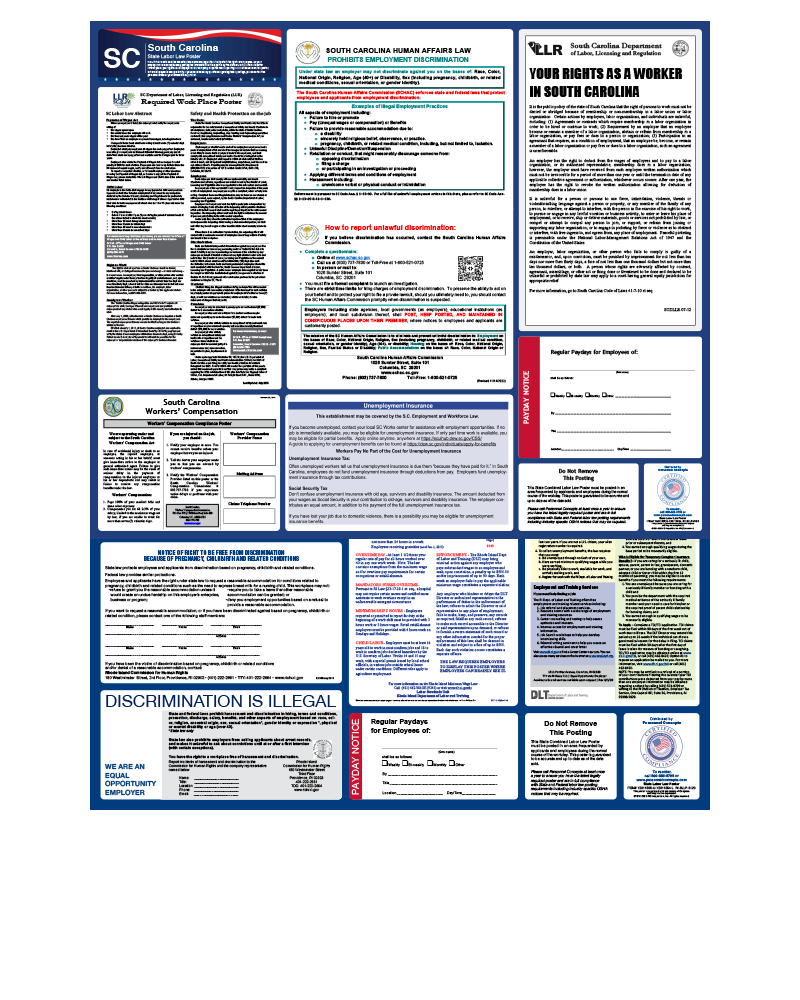
Credit: www.workwisecompliance.com
Frequently Asked Questions
What Are The Main Employment Laws In South Carolina?
South Carolina follows federal and state employment laws. These include wage rules, workplace safety, and anti-discrimination laws. Employers and employees must follow these rules to ensure fair work conditions.
How Does South Carolina Regulate Minimum Wage?
South Carolina follows the federal minimum wage, currently $7. 25 per hour. Some cities may have different rates, but state law sticks to the federal standard. Employers must pay at least this amount to most workers.
What Rights Do South Carolina Employees Have Against Discrimination?
Employees are protected from discrimination based on race, sex, age, and disability. South Carolina enforces federal laws like Title VII and the ADA. Workers can report unfair treatment to the Equal Employment Opportunity Commission (EEOC).
Can South Carolina Employers Fire Workers Without Cause?
South Carolina is an “at-will” state. This means employers can fire employees for any legal reason or none at all. Workers do not need a reason to be let go, but illegal firing is prohibited.
What Are South Carolina’s Rules On Employee Breaks And Overtime?
South Carolina does not require paid breaks by law. Overtime must be paid at 1. 5 times the regular wage for hours over 40 per week. These rules protect workers’ rights to fair pay.
How Does South Carolina Handle Workplace Safety Regulations?
The state follows federal OSHA standards for workplace safety. Employers must keep work areas safe and report hazards. Workers have the right to a safe and healthy workplace.
Conclusion
Understanding employment laws in South Carolina helps protect both workers and employers. These laws set clear rules about wages, hours, and workplace safety. Staying informed can prevent conflicts and legal trouble. Employers should follow the rules to create fair work environments.
Employees need to know their rights to speak up when needed. Simple knowledge can make work life safer and fairer for everyone. Keep learning about changes in the law to stay prepared. It’s a smart step toward better work relationships and peace of mind.

Ismail Hossain is the founder of Law Advised. He is an Divorce, Separation, marriage lawyer. Follow him.