Tint Laws in Arkansas 2027 Expert Legal Guide & VLT Limits
Navigating tint laws in arkansas requires strict adherence to specific VLT percentage limits that vary depending on whether you drive a sedan or an SUV. Failing to meet these regulations can lead to costly traffic stops, citations, and mandatory removal of non-compliant window film. This guide breaks down the exact legal thresholds for darkness, reflectivity, and exemptions to keep your vehicle fully street-legal.
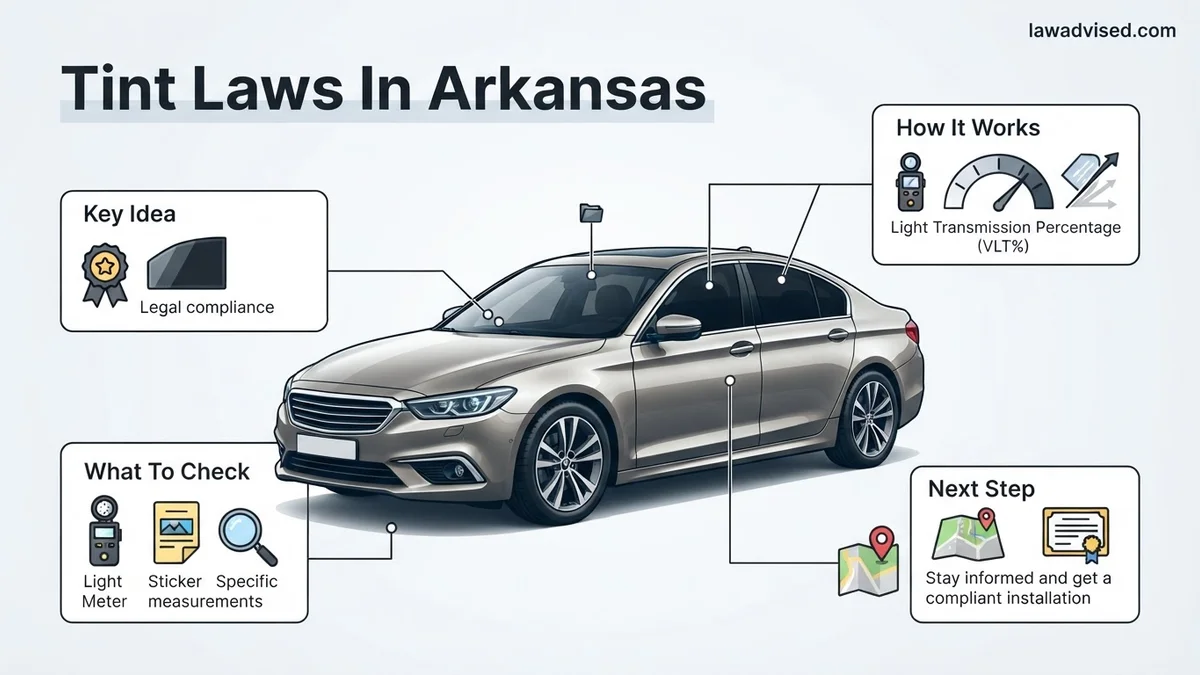
Arkansas window tint laws strictly regulate Visible Light Transmission (VLT) percentages and reflectivity limits to ensure road safety and law enforcement visibility. If you drive a sedan, your non-reflective tint on the side windows and rear window must allow at least 25 percent of light in. For multipurpose vehicles, SUVs, and trucks, the rear side windows and rear window can be any darkness you prefer, but the front side windows must still meet the 25 percent VLT standard. The topmost edge of your windshield also features a strict boundary, as tinting is only permitted above the manufacturer’s AS-1 line, and it cannot be reflective.
Navigating these regulations as of 2027 requires careful attention to your vehicle classification and film specifications. Failing to comply with these exact limits opens you up to costly traffic citations, mandatory removal orders, and failed vehicle inspections across the state. Whether you are upgrading your daily driver or purchasing a new vehicle, understanding the legal thresholds for darkness and reflectivity keeps you compliant and prevents unnecessary fines on Arkansas roads.
Key Takeaways
- Sedan front side windows must allow at least 25% of visible light through.
- Multi-purpose vehicles can have darker rear window tinting than standard sedans.
- Windshield tinting is strictly limited to the top AS-1 line or a maximum of 5 inches.
- Reflective or metallic tints are heavily restricted to reduce dangerous roadway glare.
- Medical exemptions require certified physician documentation and an official state sticker.
What Causes Tint Violations and Legal Failures in Arkansas
Sedan Versus SUV Classifications
Mixing up vehicle classifications is one of the most common reasons drivers fail Arkansas tint checks. If you drive a traditional passenger car or sedan, the 25 percent VLT rule applies universally to all side windows and the back glass. You cannot use darker film on the back windows of a sedan just because the front windows are legal. However, the law grants more flexibility to multi-purpose vehicles like SUVs, vans, and pickup trucks. On these larger vehicles, the rear side windows and rear windshield can drop below 25 percent VLT or even use privacy glass, provided your front side windows maintain the mandatory 25 percent standard.
Reflectivity and Color Restrictions
Darkness is only half the battle when law enforcement checks your vehicle. Arkansas law strictly limits the reflectivity of window film. Your tint cannot be more than 20 percent reflective to prevent blinding glare for other drivers on the highway. Furthermore, specific film colors like metallic gold, bright red, or reflective mirror finishes are strictly prohibited. Violating these reflective or color guidelines results in an immediate failure during routine traffic stops, regardless of how much light the film actually lets through.
How to Measure and Fix Non-Compliant Window Tinting Step-by-Step
Testing Your Current VLT Levels
Before you risk a traffic ticket, you need to know the exact VLT percentage of your current window film. Factory glass already absorbs some light, meaning adding a 25 percent film to factory-tinted glass will drop the total light transmission even lower. Law enforcement officers use specialized digital VLT meters clamped onto rolled-down windows to test compliance instantly. You can visit a professional tint shop to have them test your windows with a calibrated optical meter before heading out on the road.
Removing and Replacing Illegal Film
If your current setup fails Arkansas standards, you must correct the issue to avoid ongoing legal penalties. Removing illegal window film requires patience and heat to break down the adhesive backing without damaging your vehicle’s rear defroster grids.
- Use a heat gun or handheld steamer to warm the exterior surface of the glass.
- Gently peel the film away from a top corner, pulling at a sharp angle to minimize glue residue.
- Dissolve remaining adhesive using a safe window cleaner and a plastic razor blade.
- Have a professional installer apply a certified 25 percent VLT film that complies with 2027 Arkansas regulations.
What If Your Tint Still Doesn’t Pass Inspection or Enforcement Standards
Sometimes adhering strictly to the 2027 Arkansas Visible Light Transmission (VLT) thresholds still results in a failed vehicle safety inspection or a citation from law enforcement. Factory irregularities, meter calibration discrepancies, or layered window films can cause unexpected non-compliance readings.
Assessing Film Thickness and Dual-Layer Issues
Many vehicle owners mistakenly apply aftermarket film over factory-tinted privacy glass, dropping the overall VLT far below legal limits. Law enforcement officers and inspection stations utilize digital transmission meters that measure the combined glass and film darkness. Even a high-quality 25 percent film applied to factory glass measuring 75 percent VLT will result in a dangerous cumulative reading of roughly 18 percent, failing the Arkansas 25 percent front-side window standard.
Remediation and Professional Removal Protocols
If an officer issues a fix-it ticket or an inspection station flags your vehicle, immediate remediation is required to avoid steep municipal fines. Professional tint removal is necessary to prevent damaging delicate rear-window defroster grids or integrated radio antennas embedded in the glass.
Key Considerations for Medical Exemptions and Specialized Permits
Arkansas law provides specific legal accommodations for motorists with documented medical conditions requiring extreme protection from ultraviolet radiation. Navigating this exemption process requires strict adherence to state administrative procedures and Department of Finance and Administration (DFA) guidelines.
Qualifying Medical Conditions
State statutes recognize severe dermatological and ophthalmological conditions, such as lupus, albinism, and extreme photosensitivity disorders, as valid justifications for specialized tint waivers. General sensitivity to bright sunlight or aesthetic preferences do not meet the stringent legal thresholds enforced by Arkansas medical review boards.
Application and Documentation Steps
- Obtain a specialized medical exemption form directly from the Arkansas DFA or a licensed ophthalmologist and dermatologist.
- Secure a signed statement from a board-certified physician detailing the specific medical diagnosis and the exact VLT percentage required for health protection.
- Submit the completed medical documentation alongside your vehicle registration paperwork to the Office of Motor Vehicle.
- Receive and permanently display the official state-issued medical exemption sticker on the designated portion of your motor vehicle.
What If It Still Doesn’t Work?
If initial adjustments, meter recalibrations, or minor fixes fail to resolve an ongoing window tint compliance dispute in Arkansas, vehicle owners must pursue advanced remediation strategies. Addressing persistent enforcement challenges protects against escalating court fines and vehicle impoundment risks.
- Consult a certified professional window tint installer to perform a digital VLT audit using calibrated optical transmission equipment. Professional diagnostic services typically range from $25 to $50.
- Strip the non-compliant window film entirely and replace it with a legal ceramic film matching the exact 25 percent front and 10 percent rear limits. Complete professional removal and re-installation services generally range from $150 to $400 depending on vehicle size.
- Request an official compliance certificate from the tint installation shop to present as evidentiary proof during local municipal court hearings for fix-it citations.
- Retain a traffic defense attorney specializing in Arkansas vehicle equipment violations if citations persist despite verified legal film specifications. Legal consultation fees vary based on court representation requirements.
Conclusion
Navigating Arkansas window tint laws requires strict adherence to the 2027 VLT limits of 25 percent for front-side windows and 10 percent for rear windows, alongside mandatory reflective thresholds. Failing to meet these specifications leads to costly fines, failed inspections, and persistent law enforcement stops. According to verified research and expert legal sources, proactive measurement and professional installation remain the most effective methods to guarantee full compliance. Schedule an appointment with a certified local tint specialist today to measure your current VLT levels and bring your vehicle into total alignment with state standards.
❓ Frequently Asked Questions
What are the exact VLT percentages for sedans in Arkansas?
For sedans, the front side windows must allow at least 25% light transmission, and the rear side and back windows must also allow at least 25% light transmission.
What are the exact VLT percentages for SUVs and trucks in Arkansas?
Multi-purpose vehicles such as SUVs, trucks, and vans must have at least 25% VLT on the front side windows, but the rear side and back windows can be tinted to any darkness level you choose.
What colors are banned for window tint in Arkansas?
Arkansas strictly prohibits red, amber, or metallic reflective tints, as these specific colors can mimic emergency vehicles or create hazardous glare for oncoming traffic.
How do I qualify for a medical exemption for darker tint in Arkansas?
Drivers with specific medical conditions like albinism or lupus can apply for a medical waiver through the state by obtaining a signed statement from a licensed physician and registering with the state police.
Do Arkansas law enforcement officers use a meter to test window tint?
Yes, police officers and vehicle inspectors use electronic tint meters to measure the exact Visible Light Transmission percentage of your windows during traffic stops or inspections.
Are window tint certification stickers required in Arkansas?
Professional tint installers in Arkansas are required to place a compliance sticker between the film and the glass on the driver’s side window to verify that the VLT level meets state law.

Ismail Hossain is the founder of Law Advised. He is an Divorce, Separation, marriage lawyer. Follow him.