SALT Deduction Explained Expert 2026 Guide to the Cap
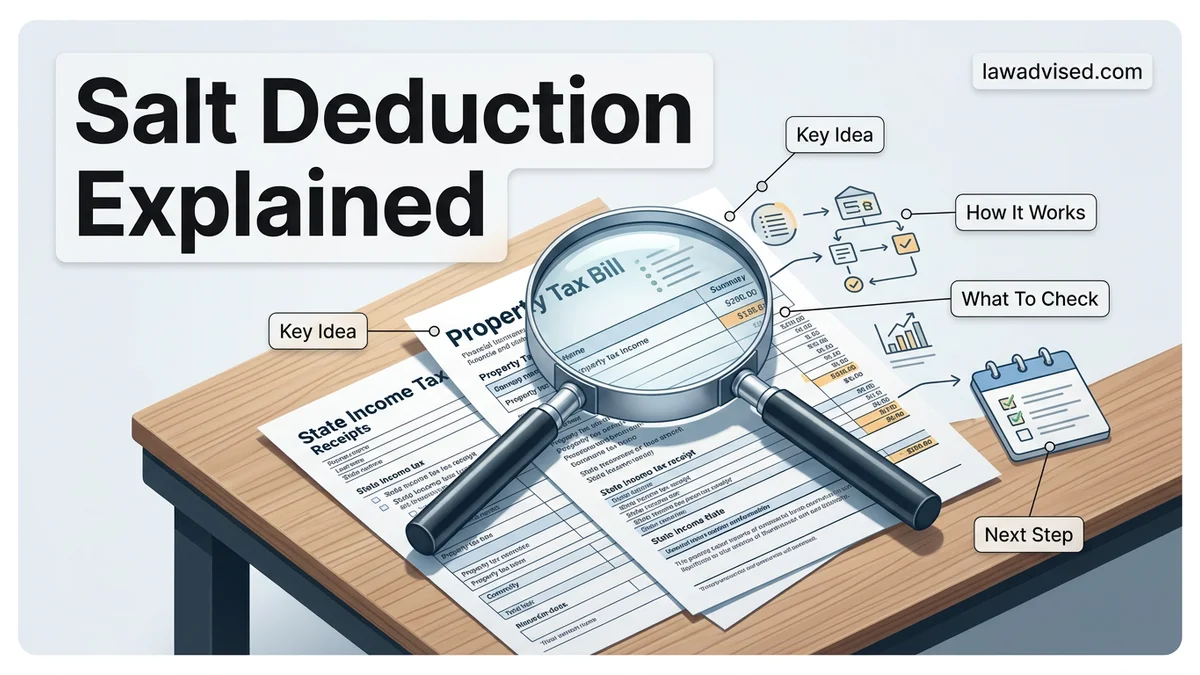
The State and Local Tax (SALT) deduction allows itemizing taxpayers to deduct up to $10,000 of state and local property and income or sales taxes on their federal returns. Enacted under the Tax Cuts and Jobs Act, this $10,000 cap heavily impacts residents of high-tax states. Taxpayers increasingly rely on pass-through entity taxes to bypass these federal limitations.
The SALT deduction allows you to deduct a portion of your state and local taxes from your federal taxable income. Under current 2026 federal tax rules, that deduction is strictly capped at $10,000 annually for most individual filers and married couples filing jointly.
This limitation directly reduces the tax savings you might expect if you live in an area with high property or income taxes. Understanding how this cap applies to your specific return helps you navigate your tax liability more effectively this year.
Key Takeaways
- The federal SALT deduction is strictly capped at $10,000 per year.
- Taxpayers can choose to deduct either state income taxes or state sales taxes.
- Local property taxes on real estate and personal property qualify for the deduction.
- High-income earners in states like New York and California feel the cap the most.
- Pass-through entity tax workarounds allow business owners to bypass the SALT limit legally.
What Causes the SALT Deduction Cap and How It Impacts High-Tax States
The Origins of the $10,000 Limit Under the TCJA
The federal SALT deduction cap stems directly from the Tax Cuts and Jobs Act of 2017. Before this legislation, you could deduct the entire amount of state and local taxes you paid without any ceiling. Lawmakers implemented the $10,000 federal limit to generate revenue that offset other tax cuts within the bill. As you file your taxes in 2026, this restriction remains a major financial hurdle if your local levies far exceed that threshold.
How Residents of High-Tax States Feel the Squeeze
If you reside in states like New York, New Jersey, California, or Illinois, you likely face heavy state income taxes and steep property assessments. Consider a homeowner in New Jersey paying $14,000 in property taxes and $8,000 in state income taxes. Your total SALT burden sits at $22,000. Because of the federal cap, you must forfeit $12,000 of deductible expenses.
- Federal deduction limit: Exactly $10,000
- Total hypothetical SALT paid: $22,000
- Disallowed deduction amount: $12,000
This dynamic creates what many taxpayers call double taxation on income already claimed by the state. High earners and middle-class homeowners alike see their federal itemized deductions severely compressed by this rule.
How to Identify Eligible State and Local Taxes for Your Return
Property Taxes and State Income Taxes
To maximize your $10,000 allotment, you need to know which levies qualify. You can combine different types of state and local taxes up to the maximum limit. Eligible expenses include:
- Real estate property taxes levied on your primary home or secondary properties
- Personal property taxes based on the value of items like registered vehicles
- State and local income taxes withheld from your paycheck or paid via estimated quarterly payments
You can also choose to deduct state and local general sales taxes instead of state income taxes. This alternative works best if you live in a state without a personal income tax, such as Texas or Florida, and you made major purchases like a vehicle or boat during the year.
Optimizing Your Deductible Mix Under the Cap
Since your total combined deduction cannot cross the $10,000 threshold, tracking your spending requires careful planning. If your property taxes alone reach $10,000, any additional state income taxes you paid yield zero extra federal tax benefit. Review your annual statements early to see which combination of property and income taxes brings you right up to the cap without wasted effort.
Step-by-Step Guide to Utilizing Pass-Through Entity Tax Workarounds
The Pass-Through Entity Tax (PTET) has become the leading legal workaround for small business owners facing the $10,000 SALT cap. By shifting the state and local tax burden from the individual level to the business entity, owners can deduct these payments at the federal level without limitation. As of 2026, over 35 states have enacted distinct PTET structures.
Executing the PTET Election
Implementing a pass-through entity tax strategy requires careful timing and coordination with state revenue departments. Business owners must follow strict procedural steps to ensure compliance and maximize federal deductions for the 2026 tax year.
- Verify Entity Eligibility: Confirm that your business operates as an S Corporation, partnership, or limited liability company taxed as a pass-through entity. Single-member LLCs filing on Schedule C face different rules and may require restructuring.
- Review State Deadlines: Check your specific state’s department of revenue website for PTET election deadlines, which frequently fall between March 15 and the extended filing dates in 2026. Missing this window invalidates the workaround for the current tax year.
- Submit the Election Form: File the formal PTET election through your state online tax portal. Most states require this step before you make the entity-level tax payments.
- Pay State Tax via the Business: Remit the state income tax payments directly from the business bank account rather than your personal funds. Retain confirmation receipts for your federal tax preparation.
- Claim the Credit on Personal Returns: Report the business-level tax payment and claim the corresponding state tax credit on your personal return, effectively bypassing the individual SALT limit.
What If Your SALT Deduction Still Exceeds the Federal Limit
Even after optimizing property taxes and implementing pass-through entity workarounds, high earners in high-tax states may find their SALT deductions still restricted by federal caps. When standard mitigation strategies fall short, taxpayers must pivot to advanced financial planning tools to reduce their adjusted gross income.
If you still face exposure to the SALT cap in 2026, consider these fallback steps:
- Maximize Retirement Contributions: Max out contributions to traditional 401(k) plans, IRAs, or health savings accounts to directly lower your federal taxable income, neutralizing the sting of lost SALT deductions.
- Accelerate Charitable Donations: Utilize donor-advised funds to bundle multiple years of charitable giving into a single tax year, generating large itemized deductions that easily clear the standard deduction threshold.
- Engage a Certified Tax Professional: Consult a CPA or tax attorney specializing in multi-state taxation and high-net-worth planning. Professional fees for complex SALT strategizing typically range from $1,500 to $5,000 depending on entity complexity.
Conclusion
Navigating the federal SALT deduction cap requires proactive planning, especially with evolving state laws and persistent legislative debates. By leveraging pass-through entity workarounds and optimizing entity structures, taxpayers can successfully reclaim thousands of dollars in lost deductions. According to verified research and expert tax sources, reviewing your entity election status early in the year remains the single most effective defense against the cap. Schedule a consultation with your tax advisor today to implement these strategies before upcoming filing deadlines.
❓ Frequently Asked Questions
What taxes are officially included in the SALT deduction?
The SALT deduction includes state and local income taxes, general sales taxes (as an alternative to income tax), and real estate or personal property taxes levied by local governments.
How did the Tax Cuts and Jobs Act change the SALT deduction?
The TCJA placed a temporary $10,000 aggregate cap on these deductions beginning in tax year 2018, significantly reducing the federal tax benefits for residents in high-tax states.
What is a pass-through entity tax (PTET) workaround?
A PTET workaround allows business owners to pay state income tax at the entity level rather than personally, effectively converting a capped individual tax into a fully deductible business expense.
Does the $10,000 SALT cap apply to married couples filing separately?
Yes, married individuals filing separate returns face a halved limit, meaning each spouse can only deduct up to $5,000.
Is the $10,000 SALT cap permanent?
The $10,000 cap was established under the TCJA and is currently scheduled to sunset after 2025 unless extended by Congress.
Can foreign property taxes be included in the SALT deduction?
No, foreign real property taxes are no longer deductible for individual federal income tax returns following the passage of the TCJA.

Ismail Hossain is the founder of Law Advised. He is an Divorce, Separation, marriage lawyer. Follow him.