Same Sex Marriage Laws in Virginia: What You Need to Know Today
Are you curious about the current status of same-sex marriage laws in Virginia? Whether you’re planning to get married, already married, or just want to understand your rights, knowing the legal landscape is essential.
Virginia has seen important changes and ongoing efforts related to marriage equality that could directly affect you and your loved ones. This article breaks down what the law means for same-sex couples, how it impacts your rights, and what recent developments you should be aware of.
Keep reading to get clear, straightforward answers about same-sex marriage laws in Virginia and what they mean for your future.

Credit: www.reddit.com
Current Legal Status
The current legal status of same-sex marriage in Virginia reflects significant progress. Same-sex marriages are fully recognized and protected under state law. Couples enjoy the same rights and responsibilities as opposite-sex couples. This legal recognition ensures access to important family law benefits, including divorce and spousal support.
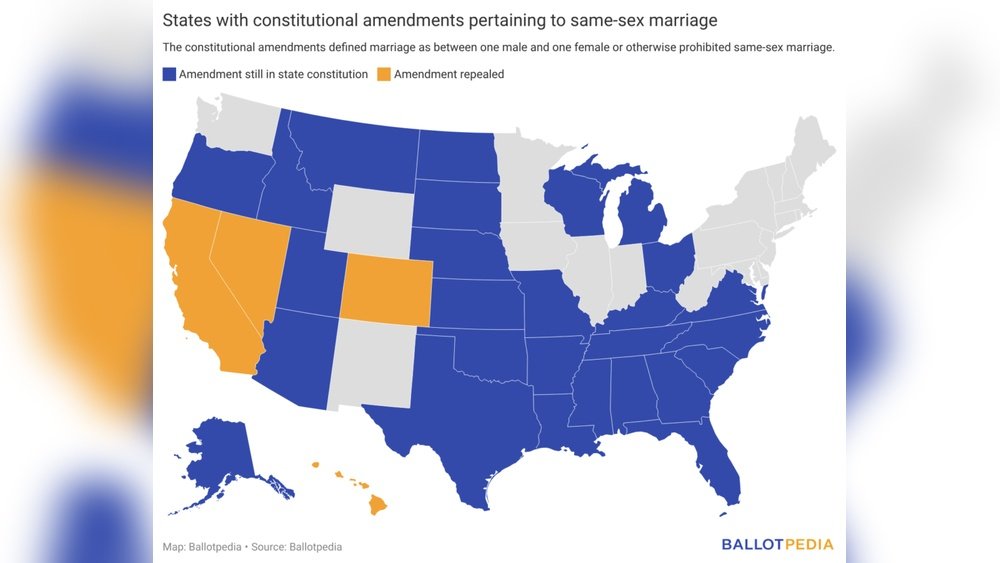
Despite past challenges, Virginia has moved toward equality. Several federal and state decisions shaped this progress. The state’s constitution still contains language banning same-sex marriage. However, legal rulings have overridden this provision, ensuring marriage equality in practice.
Marriage Recognition
Virginia recognizes same-sex marriages performed within its borders. Marriages legally performed in other states receive full recognition. This status grants couples access to family law protections. They can file for divorce, adopt children, and receive spousal benefits. State agencies treat same-sex couples equally under the law.
Impact Of Federal Rulings
Federal court decisions played a crucial role in Virginia. The Supreme Court’s 2015 ruling in Obergefell v. Hodges legalized same-sex marriage nationwide. Virginia must comply with this decision. It invalidated any state laws banning same-sex marriage. Federal rulings ensure consistent marriage rights across all states.
State Constitutional Provisions
Virginia’s constitution includes a ban on same-sex marriage. This ban was approved by voters in 2006. Court rulings have declared the ban unenforceable. Efforts to repeal the ban through amendments continue. Removing this language would align the constitution with current law. The state legislature supports protecting marriage equality in Virginia.
Family Law Rights
Family law rights are crucial for same-sex couples in Virginia. These rights ensure legal recognition and protection in key areas of family life. Virginia fully recognizes same-sex marriages, granting couples access to important legal benefits.
Understanding these rights helps couples navigate legal matters confidently. The state treats same-sex couples equally under family law. This includes divorce, spousal support, and parental rights.
Divorce And Separation
Same-sex couples in Virginia can file for divorce just like opposite-sex couples. The state courts handle these cases without discrimination. Legal separation and property division follow the same rules. This ensures fair treatment during the end of a marriage.
Spousal Support And Benefits
Virginia law allows spousal support for same-sex couples after divorce. Courts consider factors like income and marriage length. Same-sex spouses have access to benefits such as health insurance and inheritance rights. These rights protect financial stability during and after marriage.
Adoption And Parental Rights
Same-sex couples can adopt children jointly in Virginia. The state recognizes both parents legally, ensuring full parental rights. This includes decision-making and custody in family matters. Adoption laws protect the family unit regardless of the parents’ gender.
Recent Legislative Changes
Virginia has seen important changes in laws about same-sex marriage recently. These changes reflect growing support for equal marriage rights in the state. Lawmakers and citizens have pushed for updates to ensure fairness and recognition for all couples.
These new laws help remove past barriers and protect marriage equality. The state now moves closer to full acceptance and legal protection for same-sex couples. Several key actions and campaigns have driven these changes forward.
Removal Of Marriage Ban
Virginia removed its ban on same-sex marriage from the state constitution. This ban once prevented same-sex couples from marrying legally. The removal means that same-sex marriages are now fully recognized in Virginia. Couples can marry, divorce, and receive the same legal benefits as opposite-sex couples. This change was a major step toward fairness and equal rights.
Marriage Equality Campaigns
Groups like Virginians for Marriage Equality led efforts to change the law. They organized campaigns to educate voters and lawmakers. Their goal was to protect and support same-sex marriage rights. These campaigns helped raise awareness and gather public support. They also encouraged voters to approve measures ending the marriage ban. The success of these campaigns showed strong community backing for equality.
Key Political Figures And Actions
Several politicians played roles in advancing marriage equality in Virginia. Some lawmakers introduced bills to remove discriminatory laws. Others publicly supported marriage rights and helped build consensus. The governor signed important measures protecting same-sex marriage. These political actions helped secure legal changes quickly. Leadership from elected officials made a clear difference in achieving progress.
Credit: prri.org
Ongoing Challenges
Same sex marriage in Virginia faces ongoing challenges despite legal progress. Social attitudes and political debates continue to shape the landscape. Legal hurdles still affect many couples seeking full equality. Understanding these challenges helps reveal the road ahead for marriage rights.
Opposition And Legal Battles
Some groups oppose same sex marriage on religious or cultural grounds. They file lawsuits to challenge marriage equality laws. Courts have mostly upheld the right to marry, but cases persist. These legal fights delay protections and create uncertainty for couples.
Public Opinion Trends
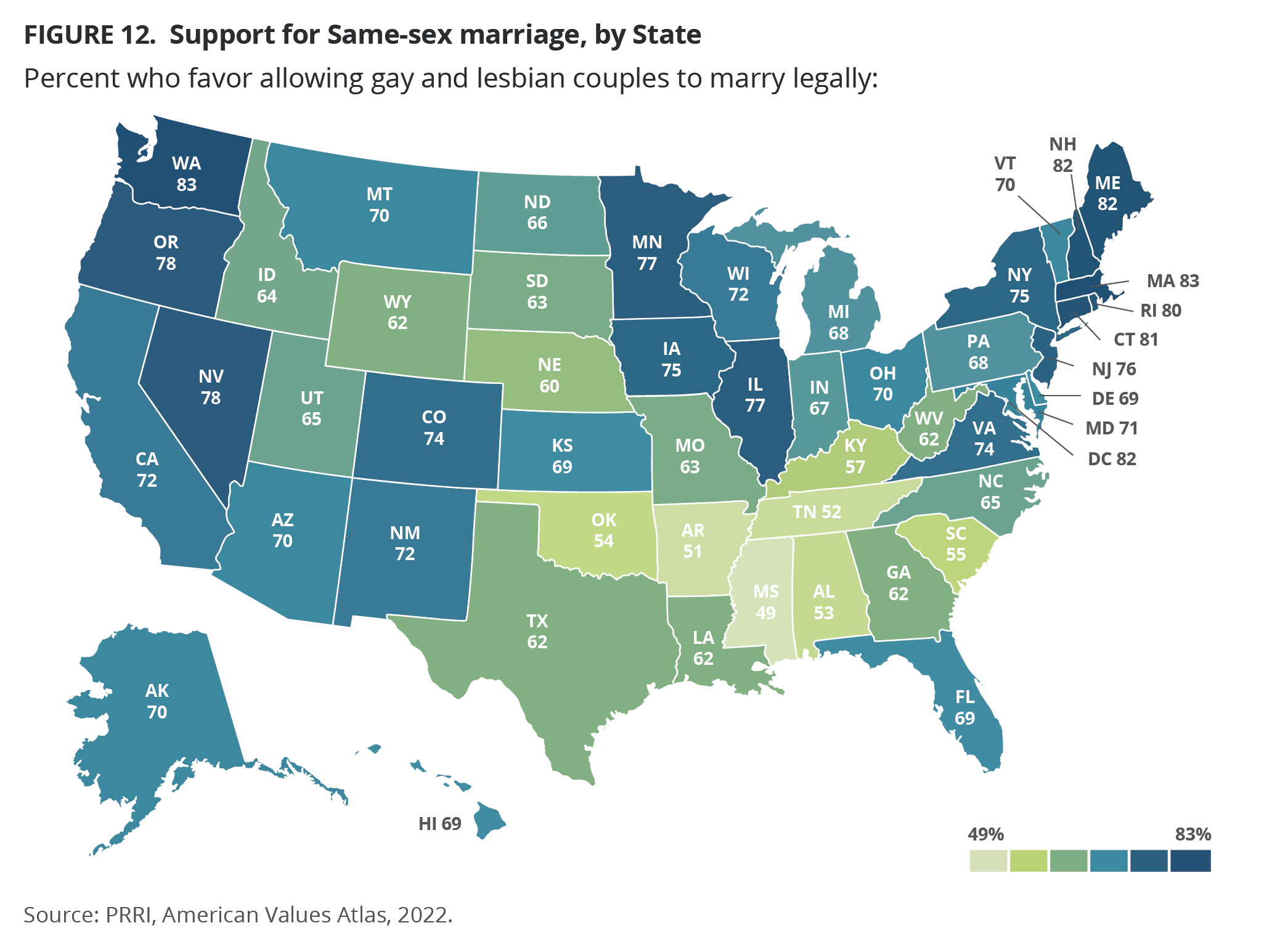
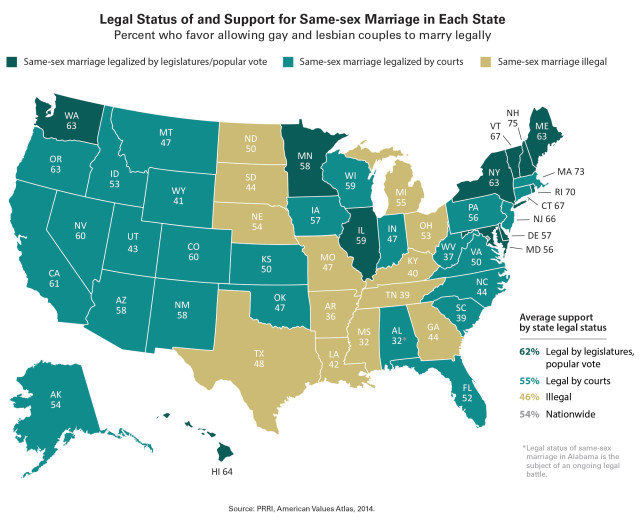
Public support for same sex marriage in Virginia grows steadily. Younger generations show higher acceptance rates than older ones. Despite progress, some communities remain divided on the issue. Shifting opinions influence lawmakers and election outcomes across the state.
Future Policy Outlook
Virginia may see new laws to strengthen marriage protections. Lawmakers consider removing outdated bans from the state constitution. Advocacy groups push for clearer rights and anti-discrimination measures. The future depends on political will and continued public support.
Credit: prri.org
Frequently Asked Questions
Is Virginia Banning Same-sex Marriage?
Virginia is not banning same-sex marriage. Same-sex marriage is legal and recognized statewide despite the constitutional ban. Efforts continue to repeal the ban.
Can Lesbians Get Married In Virginia?
Lesbians can legally marry in Virginia. The state recognizes same-sex marriages and issues marriage licenses regardless of gender.
What Are The New Laws In Virginia Starting July 1st, 2026?
Starting July 1, 2026, Virginia will enforce new data privacy laws and update traffic safety regulations.
What Rights Do Same-sex Couples Have In Va?
Same-sex marriage is legal in Virginia. Couples have full family law rights, including marriage recognition, divorce, and spousal support. The state recognizes marriages from other jurisdictions equally.
Conclusion
Same-sex marriage is legal and recognized in Virginia. Couples enjoy equal rights under state law. They can marry, divorce, and access family benefits. Efforts continue to remove old bans from the constitution. Public support plays a key role in protecting these rights.
Virginia moves toward full equality for all couples. Understanding these laws helps couples know their rights. The journey toward fairness and acceptance is ongoing.

Ismail Hossain is the founder of Law Advised. He is an Divorce, Separation, marriage lawyer. Follow him.