Sex Offender Laws in Georgia: What You Need to Know Now
Sex offender laws in Georgia are some of the strictest in the United States. These laws are designed to protect communities and help law enforcement track offenders. But the rules are complex, and the consequences for breaking them are serious.
If you or someone you know wants to understand how these laws work, this guide will explain the key points in simple terms.
Who Qualifies As A Sex Offender In Georgia
Georgia law requires anyone convicted of certain sex crimes to register as a sex offender. This includes offenses like:
- Rape
- Sexual battery
- Child molestation
- Aggravated sexual battery
- Enticing a child for indecent purposes
Even some crimes outside Georgia can lead to registration if they would be considered sex offenses under Georgia law.
Not all people convicted of a sex crime must register for life. However, most are required to register for at least 10 years, and some must do so for life, depending on the offense and other factors.
The Sex Offender Registry
The Georgia Sex Offender Registry is a public database. It lists personal information about registered offenders, including:
- Name and aliases
- Home address
- Place of employment
- Offense details
- Physical description (height, weight, etc.)
- Vehicle information
This registry is updated by local law enforcement and is available for anyone to search online.
What Information Is Collected?
| Data Collected | Purpose |
|---|---|
| Photo and fingerprints | Identification and tracking |
| Address and employment | Monitoring living and working locations |
| Vehicle details | Vehicle tracking |
| Conviction information | Public safety awareness |

Credit: grishamandpoole.com
Registration Process And Requirements
Anyone required to register must do so within 72 hours of:
- Release from jail or prison
- Entering Georgia from another state
- Moving to a new address
They must register with the sheriff’s office in the county where they live.
Ongoing Reporting
Sex offenders must verify their information every year, or every six months for some high-risk offenders. They must also update their registration if any major life changes occur, such as:
- Moving to a new home
- Changing jobs
- Buying a new vehicle
Failure to keep information up to date is a felony in Georgia.
Restrictions For Registered Offenders
Georgia sets strict limits on where sex offenders can live, work, and visit. These residency and employment restrictions apply to most registered offenders.
Residency Restrictions
Offenders cannot live within 1,000 feet of:
- Schools
- Child care centers
- School bus stops
- Churches
- Playgrounds
This distance is measured in a straight line from the property lines.
Employment Restrictions
Most offenders cannot work at places involving children, like:
- Schools
- Child care facilities
- Amusement parks
Some restrictions also apply to volunteering.
Loitering And Other Limits
It is illegal for registered offenders to loiter within 1,000 feet of restricted zones. This includes waiting or lingering in parks, near schools, or other places where children gather.
Here’s a quick look at key restrictions:
| Restriction Type | Distance/Rule | Exceptions |
|---|---|---|
| Residency | 1,000 feet from schools, etc. | Existing home before law change |
| Employment | No child-related jobs | None for most offenders |
| Loitering | 1,000 feet from restricted zones | Emergency situations |
Penalties For Violations
Violating any sex offender law in Georgia is a serious crime. The most common violations include:
- Failing to register on time
- Giving false information
- Living or working in a restricted area
Penalties can include:
- Prison time: Up to 30 years for repeat offenses
- Fines: Amounts vary by offense
- Extended registration: More years added to registry time
Even a small mistake, like forgetting to update an address, can lead to arrest.
Removal From The Registry
Some offenders may ask to be removed from the registry after a set period—usually 10 years—if they meet strict requirements. A judge will look at:
- The type of offense
- The age of the victim
- The offender’s behavior since conviction
Not all requests are approved. Some offenses require lifetime registration, with no possibility for removal.

Credit: kicklighterlaw.com
Non-obvious Insights About Georgia Sex Offender Laws
- Out-of-state offenders: If you move to Georgia and were required to register in another state, you must also register here—even if your offense is not a registerable crime in Georgia. This surprises many newcomers.
- School bus stops: The list of school bus stops can change each year. Offenders must check for updates, or they might break the law without realizing it.
- Homeless offenders: Even if you are homeless, you must register your sleeping location every week with the sheriff’s office.
How Georgia Compares To Other States
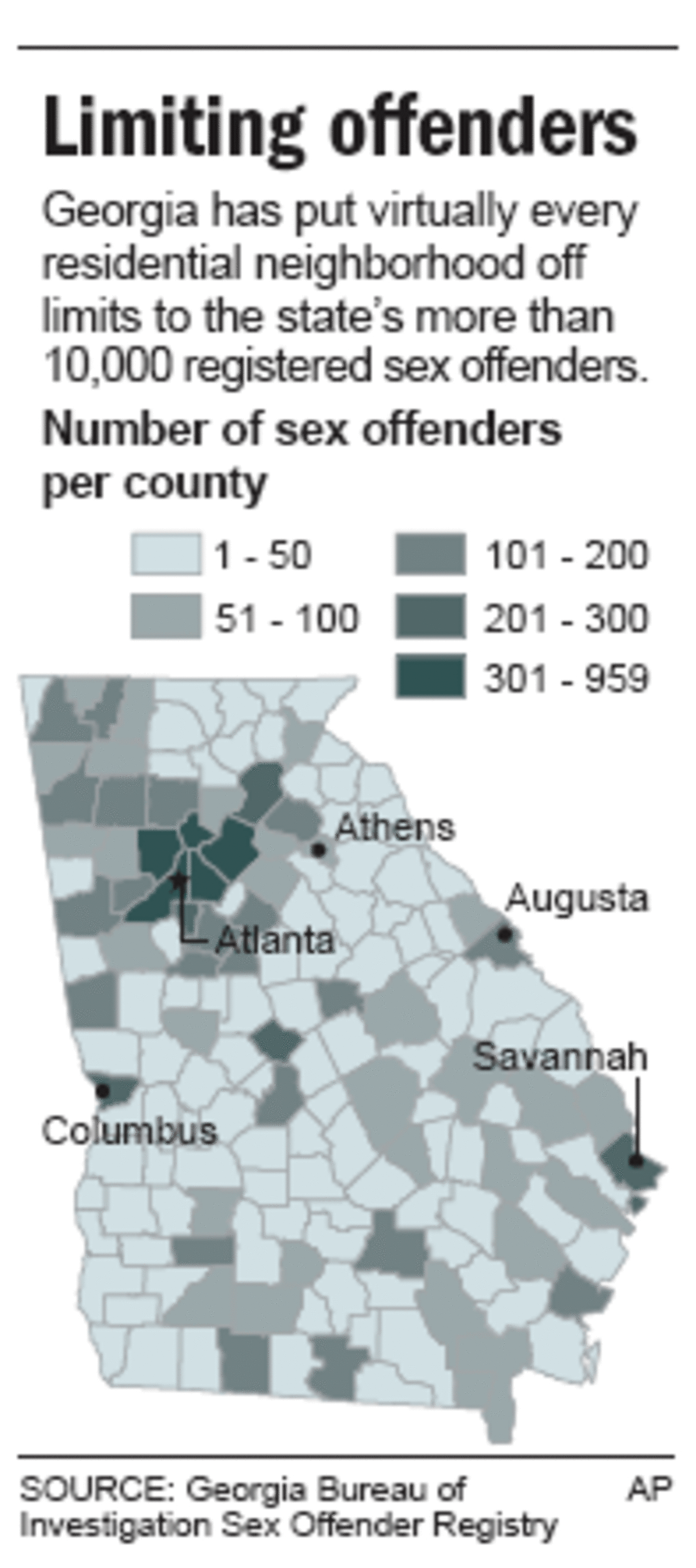
Georgia’s laws are known for being among the toughest. For example, the 1,000-foot restriction is broader than in many states.
| State | Residency Restriction | Public Registry Access |
|---|---|---|
| Georgia | 1,000 feet | Yes, full |
| Florida | 1,000 feet | Yes, full |
| California | Varies (often 2,000 feet) | Yes, with some limits |
| New York | 1,000 feet | Yes, with some limits |
Credit: www.nbcnews.com
Frequently Asked Questions
Who Can See The Georgia Sex Offender Registry?
Anyone can search the online registry. It is designed for public safety and helps people know if offenders live nearby.
Can A Sex Offender Live With Family?
Yes, but the home must not be within 1,000 feet of restricted areas, and all laws must be followed.
What Happens If An Offender Moves To Georgia From Another State?
They must register with the local sheriff’s office within 72 hours of arriving, even if they were not required to register in their old state.
Are Juvenile Offenders Listed On The Public Registry?
Some juveniles may be required to register, but their details are usually not available to the public unless ordered by a judge.
Can Offenders Travel Or Move Freely Within Georgia?
Offenders can move, but they must update their address and follow all restrictions. Travel to certain locations, like near schools or playgrounds, is limited.
Understanding sex offender laws in Georgia is vital for anyone affected by them. The rules are strict, and the penalties for mistakes are severe. Always check for updates and seek legal advice if you are unsure. For more details or to search for offenders, visit the official Georgia Bureau of Investigation site. Staying informed can help you avoid serious legal trouble and keep your community safe.

Ismail Hossain is the founder of Law Advised. He is an Divorce, Separation, marriage lawyer. Follow him.