Taxes for DoorDash Drivers 2026 Step-by-Step Guide
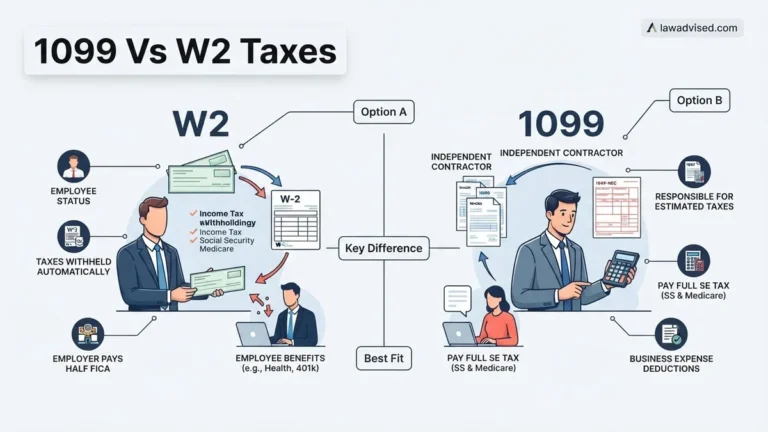
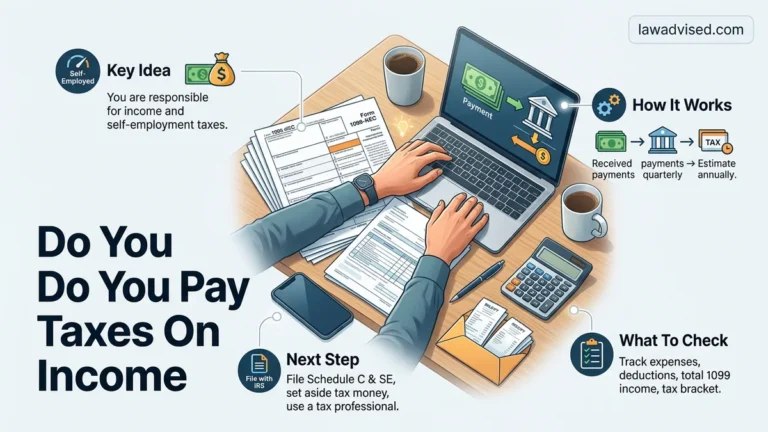
As an independent contractor for DoorDash, you are responsible for withholding your own income and self-employment taxes throughout the year. DoorDash does not automatically deduct taxes from your weekly payouts, making proper expense tracking and quarterly filings essential. Failing to prepare for these obligations can result in unexpected IRS penalties and a surprisingly large tax bill.
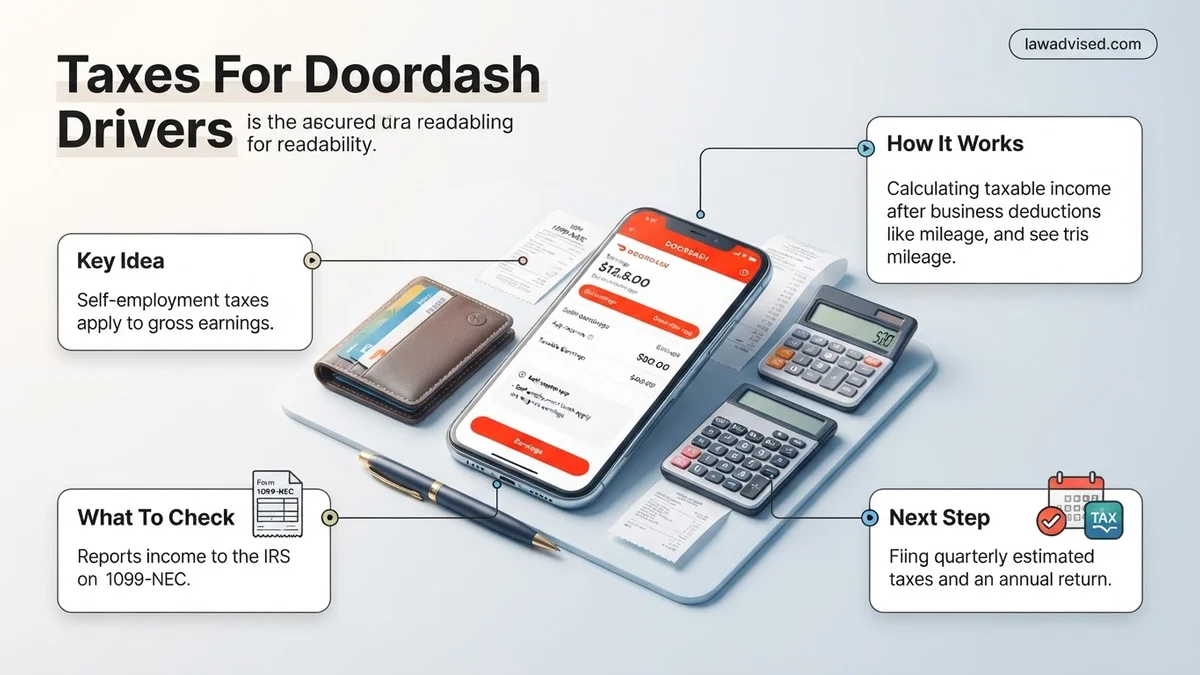
As a DoorDash driver in 2026, you are classified as an independent contractor, meaning taxes are not automatically withheld from your weekly payouts. You must file a Schedule C to report your self-employment income, pay both federal income tax and a 15.3% self-employment tax, and potentially make quarterly estimated payments to avoid IRS penalties.
Managing your delivery earnings requires a completely different approach than a traditional W-2 job. Because your gross pay arrives untaxed, proactive tracking of your mileage and business expenses is the only way to prevent a massive, unexpected tax bill when April rolls around.
Key Takeaways
- DoorDash drivers are independent contractors, meaning taxes are not automatically withheld from earnings.
- Track every business mile using the standard mileage rate to significantly lower taxable income.
- File Schedule C to report business income and deductible expenses accurately.
- Pay quarterly estimated taxes to the IRS to avoid underpayment penalties.
- Keep detailed records of phone bills, hot bags, and supplies used for deliveries.
What Causes High Tax Bills for DoorDash Drivers
Failing to Track Every Delivery Mile
The single biggest reason Dashers overpay on their taxes is poor mileage tracking. When you log miles from the moment you leave your house to accept orders until your last drop-off, you create a massive deduction that directly lowers your taxable income. For the 2026 tax year, failing to capture these miles means leaving thousands of dollars in legally owed tax savings on the table.
Ignoring Self-Employment Tax Obligations
Many new drivers budget only for federal income tax and completely forget about the self-employment tax. This covers your contributions to Social Security and Medicare:
- The flat rate is 15.3% of your net self-employment earnings.
- This is in addition to your standard federal and state income tax brackets.
- Failing to account for this extra percentage triggers painful IRS bills and interest charges.
How to Fix Your Self-Employed Tax Setup Step-by-Step
Establish a Separate Business System
Stop mixing your personal finances with your DoorDash income immediately. Open a dedicated checking account strictly for your delivery payouts and business purchases. This clean separation makes tracking your true profit effortless when it is time to file.
Automate Your Mileage and Expense Logs
Relying on memory or paper logs at the end of the year leads to missed deductions and audit risks. Implement a reliable digital tracking habit right now:
- Download a dedicated GPS mileage tracker to automatically log every delivery trip in 2026.
- Save digital receipts for phone bills, insulated hot bags, and car maintenance used for dashing.
- Compare the standard mileage rate against actual vehicle expenses to determine your largest write-off.
What If You Missed Quarterly Estimated Tax Payments
As a 1099 independent contractor driving for DoorDash in 2026, the IRS expects you to pay taxes on your earnings four times a year. Missing these deadlines is a common issue for gig workers, but it does not mean you cannot fix the problem before filing your annual return.
Understanding IRS Underpayment Penalties
According to IRS guidelines, if you owe more than $1,000 when you file your annual return and failed to make estimated payments, you may face an underpayment penalty. The IRS calculates this penalty based on current interest rates, which fluctuate annually. To minimize these fees, experts recommend taking corrective action immediately rather than waiting until the April filing deadline.
Steps to Catch Up on Missed Payments
If you realize you missed one or more quarterly payments, follow this step-by-step recovery process:
- Calculate your total net earnings and tax liability for the missed quarters using Schedule C and Schedule SE forms.
- Make a catch-up estimated tax payment as soon as possible through the official IRS Direct Pay portal to stop additional penalty interest from accumulating.
- File IRS Form 2210 (Underpayment of Estimated Tax by Individuals, Estates, and Trusts) with your 2026 tax return to calculate any mandatory penalties.
- Adjust your remaining estimated payments for the current year to cover any shortfalls and prevent future penalties.
What If It Still Doesn’t Work?
Navigating self-employment taxes as a DoorDash driver can quickly become overwhelming, especially if you have multiple income streams, substantial vehicle expenses, or complex prior-year liabilities. If DIY tax software fails to resolve your calculation errors or you face an IRS notice regarding missed payments, fallback measures are necessary.
Consider the following steps when basic filing methods fall short:
- Double-check all mileage logs and vehicle expense receipts against your 1099-NEC forms to ensure your data entry is completely accurate.
- Utilize dedicated gig-economy tax software or specialized accounting platforms designed specifically for independent contractors.
- Consult a Certified Public Accountant (CPA) or an Enrolled Agent (EA) who specializes in freelance and gig-economy taxation. According to industry data from the National Society of Accountants, hiring a professional for small business tax preparation typically ranges from $250 to $600 depending on complexity.
- Contact the IRS directly or set up an online account to review your current balance, payment history, and any active penalty assessments.
Conclusion
Managing taxes as a DoorDash driver in 2026 requires diligence, accurate mileage tracking, and a clear understanding of quarterly payment obligations. By deducting operational expenses and utilizing the standard IRS mileage rate, you can significantly lower your taxable income and avoid costly underpayment penalties. According to verified research and tax expert sources, proactive organization is the single most effective way to protect your earnings. Your actionable next step is to log into your Dasher portal to download your 1099 form and organize your vehicle expense records today.
❓ Frequently Asked Questions
What is the difference between a 1099-NEC and a 1099-K for DoorDash drivers?
A 1099-NEC reports non-employee compensation for your delivery earnings, while a 1099-K tracks third-party payment network transactions. Depending on IRS thresholds and state laws, you may receive one or both forms detailing your gross annual payout.
Can I deduct my cell phone bill as a DoorDash expense?
Yes, you can deduct the business-use percentage of your monthly cell phone bill, data plan, and necessary equipment like phone mounts. You must calculate the exact percentage of time the phone is used strictly for deliveries versus personal use.
What expenses are fully deductible for delivery drivers?
Beyond mileage or vehicle upkeep, you can deduct insulated hot bags, parking fees, tolls incurred during deliveries, and a portion of your mobile phone expenses. Keep every receipt and digital log to substantiate these deductions during tax season.
How do I calculate self-employment tax on my DoorDash earnings?
Self-employment tax covers Social Security and Medicare at a rate of 15.3% on your net self-employment earnings. You calculate this using Schedule SE, and you are allowed to deduct half of your self-employment tax from your adjusted gross income.
What happens if I don’t pay quarterly estimated taxes?
If you owe more than $1,000 in taxes at the end of the year and failed to make quarterly payments, the IRS may assess underpayment penalties and interest. Paying quarterly helps break up your total liability and avoids these extra fees.
Should I use the standard mileage rate or actual expenses?
The standard mileage rate is usually easier and often provides a larger deduction by factoring in gas, maintenance, and depreciation per mile driven. Actual expenses require tracking every individual gas receipt, oil change, insurance payment, and repair bill to calculate the business-use percentage.

Ismail Hossain is the founder of Law Advised. He is an Divorce, Separation, marriage lawyer. Follow him.