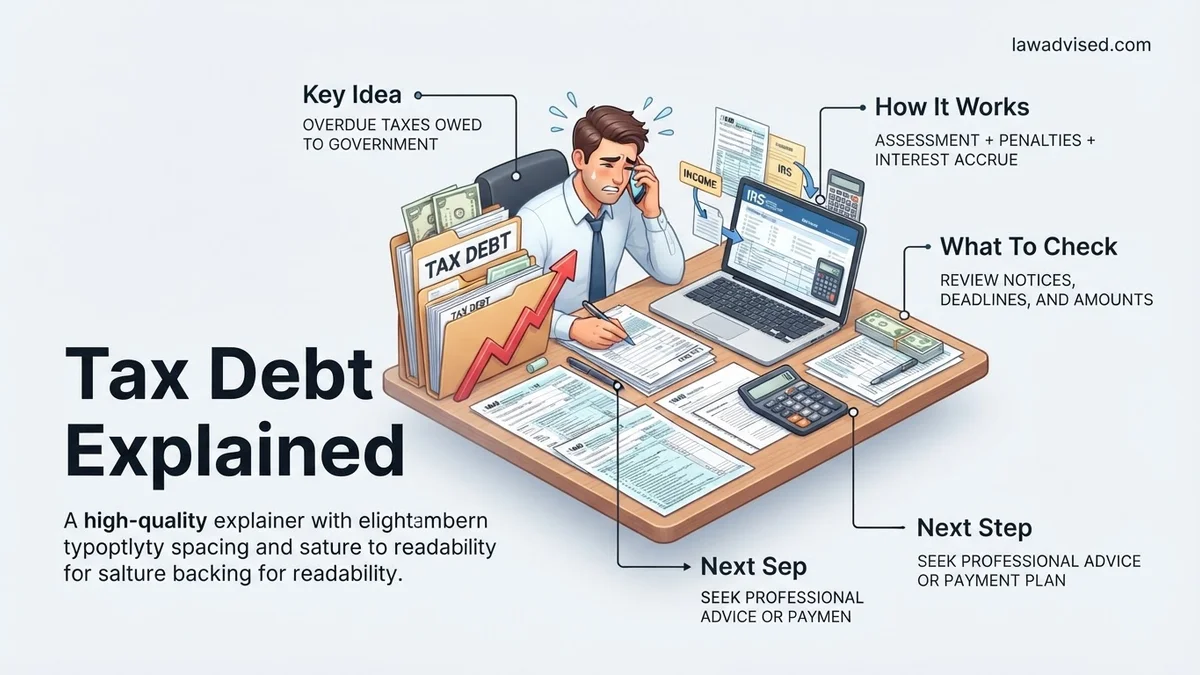
Tax Debt Explained 2026 A Step-by-Step Guide to Fix It
Tax debt occurs when you owe money to the IRS or a state tax agency due to unfiled returns, underpayment, or self-employment taxes. Ignoring tax debt leads to compounding penalties, interest, and aggressive collection actions like liens and levies. Fortunately, several structured relief programs exist to help you resolve your balance and regain financial stability.
Tax debt happens when you owe money to the government for unpaid income taxes, self-employment taxes, or payroll obligations, often compounded by accumulating interest and failure-to-file penalties. In 2026, navigating tax debt requires immediate action because the IRS and state agencies have ramped up automated collection systems, meaning balances escalate faster than ever through daily compounding interest.
Ignoring what you owe leads to aggressive enforcement actions like wage garnishments, bank levies, and federal tax liens that destroy your credit score. Resolving this financial burden requires understanding how the debt formed, checking your exact balance, and utilizing official relief programs to settle or structure what you owe before enforcement hits your bank account.
Key Takeaways
- Tax debt accumulates quickly due to mounting failure-to-file penalties, late payment penalties, and daily compounding interest.
- Verify your exact balance by accessing your official IRS or state tax online account immediately.
- Short-term payment plans and long-term installment agreements offer predictable monthly options to pay off what you owe.
- An Offer in Compromise allows qualifying taxpayers to settle their total tax liability for a lower amount.
- Currently Not Collectible status temporarily halts IRS collection efforts if you face severe financial hardship.
What Causes Tax Debt and How It Accumulates
Common Triggers For Tax Balances
Tax debt rarely happens overnight. It typically stems from a few specific miscalculations or life changes:
- Under-withholding on W-2 income: Your employer did not deduct enough taxes from your paycheck throughout the year.
- Unpaid self-employment taxes: Independent contractors and freelancers often fail to make required quarterly estimated payments.
- Failing to file a return: Even if you cannot pay, failing to file triggers a steep failure-to-file penalty that is much higher than simply failing to pay.
- Tax audit adjustments: The IRS rechecks a previous return and finds discrepancies, resulting in a sudden, unexpected bill.
The Cost Of Waiting
Once a balance is assessed, the financial penalty structure works against you quickly. The standard failure-to-pay penalty is 0.5 percent of your unpaid taxes per month. Meanwhile, interest compounds daily on the unpaid tax and existing penalties combined. In 2026, interest rates fluctuate based on federal short-term rates, making delayed action an expensive mistake. Letting a balance sit for just twelve months can easily inflate your original liability by 10 to 15 percent in combined penalties and interest alone.
Step-by-Step Guide to Check Your Balance and Contact Tax Agencies
Pulling Your Official Account Transcript
Before you can fix tax debt, you need to know the exact numbers the government has on file. Guessing your balance leads to rejected payment proposals and continued collection actions.
- Access your online account: Log into the official IRS website using your secure identity verification credentials.
- View your tax transcript: Navigate to the records section to pull your Account Transcript for the specific tax years you owe.
- Check for unfiled returns: Ensure all past-due returns are actually processed, as the IRS cannot set up a formal payment plan until all required returns are filed.
- Review state liabilities: Remember that federal debt is separate from state tax debt. Check your state department of revenue portal to capture the full picture of your liability.
Initiating Contact Strategically
Once you have your numbers, reaching out to the tax agency stops the progression of automated notices. If you received a final notice of intent to levy, you have a strict 30-day window to request a Collection Due Process hearing. When you call, be prepared to state your financial reality clearly. Having your income figures, monthly living expenses, and asset information ready allows you to immediately transition from a general inquiry into discussing specific relief programs.
How to Fix Tax Debt Using Payment Plans and Settlement Options
Resolving tax debt requires choosing the right resolution track based on your current financial capacity. The IRS and state tax agencies provide several structured programs to help taxpayers clear their liabilities without facing aggressive collection actions.
Applying for an Installment Agreement
An installment agreement allows you to pay your tax debt over time through monthly payments. According to IRS compliance guidelines, taxpayers who owe $50,000 or less in combined tax, penalties, and interest can often set up a streamlined payment plan lasting up to 72 months.
- Log into your online tax account via the official agency portal to view your exact balance.
- Select the payment plan option that matches your monthly budget and total debt amount.
- Set up automatic direct debit payments to reduce user setup fees and maintain program compliance.
Negotiating an Offer in Compromise
An Offer in Compromise (OIC) lets qualified taxpayers resolve their tax liability with the government for a lower amount than what they originally owed. According to data from the National Taxpayer Advocate, the IRS accepts roughly one-third of all submitted OIC applications.
- Use the online OIC pre-qualifier tool to check your eligibility before submitting formal paperwork.
- Complete Form 656 and Form 433-A (OIC) to document your precise income, expenses, and asset equity.
- Submit the mandatory application fee of $205 along with your initial proposed settlement payment.
What If It Still Doesn’t Work?
When standard payment plans and settlement offers are denied or fail to fit your financial situation, alternative fallback strategies become necessary. Facing mounting levies or continuous tax liens requires advanced intervention measures.
Advanced Fallback Steps
- Request Currently Not Collectible (CNC) status to temporarily halt wage garnishments and bank levies due to verified financial hardship.
- File for innocent spouse relief if the tax debt stems entirely from erroneous reporting on a joint tax return by a former partner.
- Consult a qualified tax professional such as a Certified Public Accountant (CPA), Enrolled Agent (EA), or tax attorney. Professional representation fees typically range from $1,500 to $5,000 depending on the complexity of your case.
- Contact the Taxpayer Advocate Service (TAS) for independent assistance if you experience systemic delays or severe economic hardship.
Conclusion
Tax debt left unaddressed can trigger severe financial consequences, including frozen bank accounts, seized property, and damaged credit ratings. Fortunately, structured options like installment agreements and hardship provisions offer a clear path back to compliance. According to verified research and expert sources from financial regulatory bodies, taking proactive steps early dramatically reduces the total cost of penalties and interest. Your actionable next step is to log into the official IRS online portal today to review your exact balance and select a viable resolution track.
❓ Frequently Asked Questions
How does tax debt impact my credit score?
Tax debt itself does not directly appear on your credit report or affect your credit score because credit bureaus no longer include standard tax liens. However, a federal tax lien is public record and can still make it difficult to secure loans, mortgages, or lines of credit.
What is the difference between a tax lien and a tax levy?
A federal tax lien is a legal claim against all your current and future property to secure your debt to the government. A tax levy, on the other hand, is an actual seizure of your assets, such as wage garnishments, bank account freezes, or property confiscation to pay off the tax debt.
How far back can the IRS audit and collect back taxes?
Generally, the IRS has three years from the date you filed your return to audit it, but there is no time limit if you failed to file a return or filed a fraudulent one. For collection, the IRS generally has a 10-year statute of limitations from the date the tax was assessed to collect the debt.
Can I qualify for penalty relief on my tax debt?
Yes, the IRS offers First-Time Penalty Abatement for taxpayers who have a clean compliance history for the previous three tax years. You may also qualify for penalty relief if you can prove reasonable cause, such as a serious illness, natural disaster, or other verifiable hardships.
What does Currently Not Collectible status mean?
Currently Not Collectible status means the IRS agrees you cannot afford to pay your taxes and basic living expenses simultaneously. While this status is active, the IRS temporarily halts all enforcement and collection actions, though interest and penalties continue to accrue.
Should I hire a professional to help resolve my tax debt?
If you owe a large sum, face complex business taxes, or are dealing with active IRS collection notices like levies, hiring a licensed tax professional like a CPA, enrolled agent, or tax attorney can protect your rights and negotiate better terms on your behalf.

Ismail Hossain is the founder of Law Advised. He is an Divorce, Separation, marriage lawyer. Follow him.