Babysitting Laws in California Expert 2027
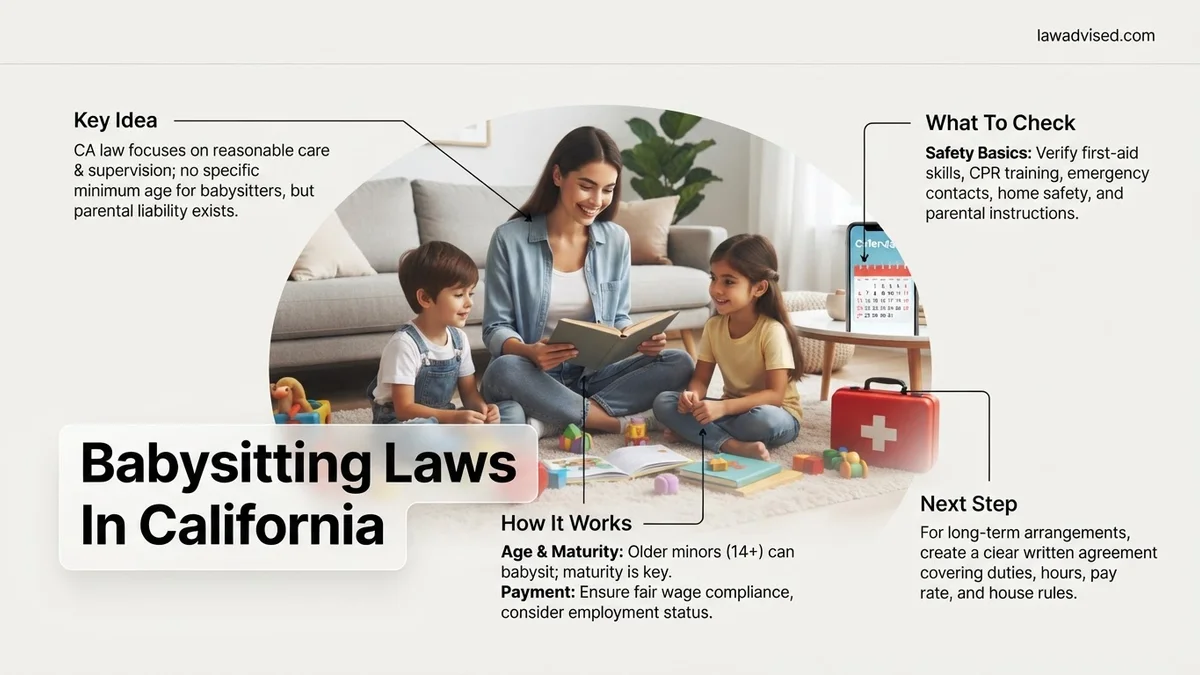
California does not have a statutory minimum age for babysitters, but child welfare guidelines evaluate maturity and supervision carefully. State laws strictly regulate working hours and permits for minor sitters under 18. Parents and sitters must understand abandonment thresholds, labor restrictions, and liability rules to stay compliant.
California does not have a strict statutory minimum age for babysitters, which surprises many parents and teen workers alike. However, state law heavily penalizes child neglect, meaning that placing a child under the supervision of someone too young or immature can lead to severe legal consequences for parents under California Penal Code 273a.
As of 2027, navigating these regulations requires understanding the fine line between general supervision guidelines, minor labor laws, and criminal negligence. Whether you are a parent hiring care or a teen looking for work, knowing the exact boundaries prevents costly legal liabilities.
Key Takeaways
- California law sets no absolute minimum age requirement for hiring or working as a babysitter.
- Minor babysitters under 18 must follow strict state child labor laws regarding school hours and permits.
- Leaving a child under 12 unattended can trigger local neglect investigations and legal penalties.
- Parents maintain ultimate legal liability for the safety and well-being of their children.
- Understanding mandatory reporting laws is crucial for anyone supervising minors in California.
What Causes Legal Liability Issues Under California Babysitting Laws
Legal liability usually stems from a failure to assess maturity versus age. While the state leaves the exact babysitting age open to interpretation, child welfare statutes set clear boundaries regarding abandonment and neglect.
The Myth of the Magic Age Limit
Many people assume a 12-year-old can legally babysit because they can legally stay home alone. California law actually has no fixed minimum age for a child to supervise younger siblings or other children. This creates a trap for parents.
If an accident occurs while an underage or unprepared sitter is in charge, law enforcement evaluates the situation based on the child’s actual capability. Key factors determining if negligence occurred include:
- The physical and mental maturity of the babysitter
- The specific hazards present in the home environment
- The duration of the time children are left unattended
- The accessibility of emergency communication
Child Neglect Statutes and Unattended Children
Leaving children with a babysitter who lacks the capacity to handle emergencies can trigger investigations by Child Protective Services. California courts look at whether a reasonable person would trust the designated caregiver with the physical safety of the minor.
If a young sitter panics during a kitchen fire or medical emergency, the legal fallout hits the parents first. Prosecutors can file misdemeanor or felony child endangerment charges if willful harm or unjustifiable pain is permitted to occur due to negligent supervision choices.
How to Fix Minor Labor Law Compliance and Supervision Standards
When hiring or working as a teenage babysitter under the age of 18, California labor laws apply strictly. Ignoring these rules exposes employers to heavy fines from the Department of Industrial Relations.
Working Hours and School Night Restrictions
Minors aged 14 and 15 face tight scheduling caps, even in domestic babysitting roles. During regular school weeks, minor sitters cannot work during school hours or past certain evening limits.
To stay fully compliant with 2027 labor guidelines, keep these restrictions in mind:
- Minors aged 14-15 may only work until 7:00 PM on evenings preceding school days.
- During school breaks, working hours extend to 9:00 PM for younger teens.
- 16 and 17-year-olds face fewer hour caps, but still require proper rest periods between shifts.
- Maximum weekly hours apply if the minor is still enrolled in high school.
Permits and Exemption Rules for Domestic Work
Babysitting often falls under casual domestic service exemptions, but formal employment arrangements change the requirements. If a teenager works regular, scheduled hours for the same family, standard employment standards act.
Minors under 18 generally need a work permit issued by their school district unless they have graduated high school or turned 18. Parents must also ensure that agreed-upon wages meet or exceed current California minimum wage thresholds for domestic employees, factoring in overtime rules if live-in or long-shift arrangements are established.
What If Age Limits and Unattended Child Guidelines Remain Unclear
California law notoriously lacks a hard statutory age limit for leaving children home alone or hiring a babysitter. This leaves many parents and caregivers guessing about legal thresholds in 2027. When state statutes remain ambiguous, navigating liability requires looking to child welfare agency guidelines and social service recommendations.
Child welfare experts and county social services departments provide practical benchmarks that courts often reference during negligence evaluations. Understanding these unofficial standards protects both the family and the teenage caregiver from legal complications.
Applying County Child Welfare Benchmarks
County-level social services across California generally advise that children under the age of six should never be left unattended or under the supervision of another minor. For older children, agencies rely on developmental maturity rather than a strict chronological number.
- Evaluate the child’s ability to respond appropriately to emergencies, fires, and medical crises without panicking.
- Ensure the teenage babysitter possesses current CPR and basic first aid certifications recognized by the American Red Cross.
- Verify that the designated caregiver has reliable emergency communication tools, such as a charged mobile phone with local emergency contacts pre-programmed.
- Review the home environment to eliminate accessible hazards like unsecured swimming pools, firearms, or toxic household cleaning agents.
According to child safety researchers, failing to account for a minor’s emotional maturity can trigger investigations under California Penal Code Section 273a for child endangerment. Consulting municipal safety codes ensures full compliance even in the absence of a universal state age mandate.
What If It Still Doesn’t Work?
If uncertainties persist regarding your specific childcare arrangement or local municipal ordinances, standard DIY research may not be enough. Take these fallback steps to ensure absolute legal compliance in 2027:
- Contact your local California county child welfare or social services department to inquire about specific regional guidelines for unattended minors.
- Consult with a qualified family law attorney or legal aid clinic to review liability waivers and employment contracts for live-in or regular babysitters.
- Hire a certified professional nanny or licensed childcare placement agency that strictly adheres to state labor laws and background check requirements.
- Schedule a family safety consultation with local law enforcement community liaisons to evaluate your home security and emergency preparedness plan.
Seeking professional legal counsel typically incurs an estimated cost range of $200 to $400 per consultation, while specialized agency placement fees vary based on service levels. Investing in expert guidance prevents costly legal penalties and guarantees the safety of the children in your care.
Conclusion
Navigating babysitting laws in California requires balancing labor regulations, wage requirements, and child supervision standards. By verifying age maturity benchmarks, complying with minimum wage mandates, and securing proper tax documentation, parents and caregivers can avoid severe legal liabilities. Take your next actionable step today by auditing your current babysitting arrangement against 2027 state labor thresholds and local welfare guidelines. According to verified research and expert legal sources, proactive compliance remains the most effective defense against child neglect allegations and labor disputes.
❓ Frequently Asked Questions
What happens if a parent leaves a young child home alone in California?
California Child Abuse and Neglect Reporting Act guidelines do not name a strict numeric age, but leaving young children unattended for extended periods can result in child endangerment or neglect charges.
Are babysitters required by law to have CPR or First Aid certification in California?
California state law does not mandate CPR or First Aid certification for casual or independent babysitters, though many parents and agencies require it for safety.
How do California labor laws apply to live-in nannies versus casual babysitters?
Live-in nannies and regular domestic workers are subject to California’s household domestic service wage, overtime, and minimum wage laws, whereas casual babysitters are often exempt.
Can a 14-year-old babysit past 10 PM in California?
No, labor laws prohibit minors aged 14 and 15 from working past 7 PM during the school year and past 9 PM during school summer vacations.
Who is liable if an injury occurs while a minor is babysitting?
Parents retain primary legal responsibility for their children, but a minor sitter or their guardians could face civil liability if gross negligence or intentional misconduct is proven.
Do background checks have to be performed on California babysitters?
State law does not mandate background checks for private, independently hired babysitters, but structured childcare agencies and platforms often require TrustLine registry checks.

Ismail Hossain is the founder of Law Advised. He is an Divorce, Separation, marriage lawyer. Follow him.