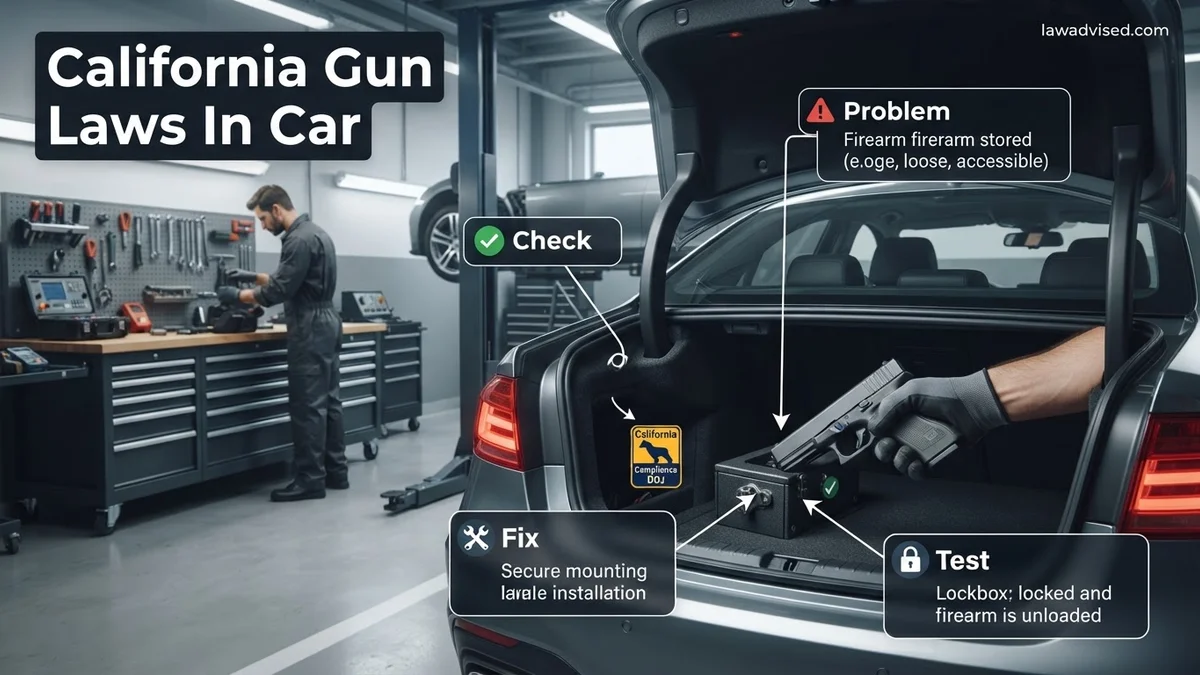
California Gun Laws in Car 2027 Expert Transport Guide
Transporting a firearm in a vehicle in California requires strict adherence to state regulations. All firearms must be completely unloaded and stored securely in a locked container, strictly excluding the glove box or center console.
Transporting a firearm in your vehicle in California requires strict adherence to state laws to avoid severe criminal penalties. To legally transport any firearm in a car under 2027 regulations, the weapon must be completely unloaded and secured inside a locked container, which explicitly excludes the glove box or center console.
Navigating California’s vehicle transport laws can be stressful for lawful gun owners. A simple misunderstanding of what constitutes a legal “locked container” can turn a routine traffic stop into a felony weapons charge. Knowing the precise legal standards before you hit the road protects your rights and your freedom.
Key Takeaways
- All firearms transported in vehicles must be unloaded at all times.
- Glove boxes and center consoles do not count as legal locked containers.
- Handguns must be stored in a locked container separate from ammunition access.
- CCW permit holders must follow specific issuing agency restrictions while driving.
- Long guns do not strictly require a locked case by state law, but must be unloaded.
The Legal Risks of Improper Firearm Transport in California
Criminal Penalties for Non-Compliance
Transporting a loaded firearm, or an unsecured unloaded firearm, in your vehicle is generally classified as a misdemeanor or even a felony depending on the specific circumstances. Under California Penal Code 25400, carrying a concealed firearm in a vehicle without a valid permit is a wobbler offense. This means prosecutors can charge the violation as a misdemeanor carrying up to one year in county jail, or elevate it to a felony with significant prison time.
Transporting Handguns Versus Long Guns
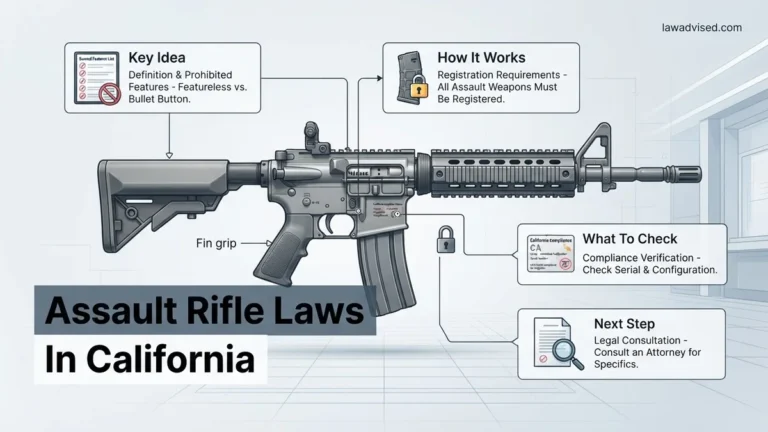
The legal requirements differ slightly in application, but the core safety standard remains rigid. When transporting firearms in your vehicle, observe these baseline rules:
- Handguns: Must be unloaded and locked securely in the trunk of the vehicle or inside a locked container that is not the glove box or console.
- Long Guns (Rifles and Shotguns): By strict state law, long guns do not legally have to be locked in a container unless you are in specific school zones or certain restricted public areas. However, transporting long guns unloaded is mandatory, and keeping them in a locked case is the best practice to prevent accidental violations.
- Ammunition: While ammunition can technically be transported in the same container as the firearm in 2027, the firearm itself must have an empty chamber and magazine well.
Why Common Vehicle Storage Methods Fail State Law
The Glove Box and Console Trap
Many drivers assume that placing a handgun inside the glove box or the center console of their car constitutes secure storage. Under California law, this is a dangerous misconception. Law enforcement and courts explicitly define glove boxes and center consoles as unlocked compartments accessible to the driver or passengers. Stashing a firearm in either location—even if it is unloaded—will likely result in immediate criminal charges for carrying a concealed weapon in a vehicle.
Inadequate Container Standards
Using the wrong type of container can also invalidate your compliance during a traffic stop. To meet California legal standards, your locked container must resist simple prying or unauthorized access. Common failures include:
- Using zippered soft-sided pouches that lack integrated locking mechanisms or can be easily torn open.
- Placing a firearm in a factory cardboard or plastic gun box that does not feature a dedicated padlock.
- Leaving a container unlocked while sitting on the vehicle seat or floorboards.
- Storing the container in an area of the vehicle where passengers have immediate, unrestricted access while the vehicle is in motion.
Step-by-Step Guide to Legally Transporting Firearms in Your Car
Transporting firearms legally in California requires precise adherence to state statutes to avoid severe felony charges. Whether you are heading to a shooting range or relocating, following a strict procedure ensures compliance with 2027 legal standards.
Step 1: Unload the Firearm Completely
According to California Penal Code enforcement guidelines, the weapon must be completely unloaded. This means removing all ammunition from the magazine and the internal chamber of the firearm.
Step 2: Secure Inside a Locked Container
Place the unloaded firearm inside a locked container. California law explicitly defines a locked container as a secure enclosure that is fully enclosed and locked by a padlock, keylock, combination lock, or similar device. The factory-issued cardboard box or a soft sleeve without a lock does not qualify.
Step 3: Storing the Container Properly
The locked container must not be stored in the glove compartment or the center console, both of which are strictly illegal under California law. Instead, place the locked container in the trunk of the vehicle. If your vehicle lacks a trunk, such as an SUV or hatchback, the locked container must be stored out of plain view within the passenger compartment.
- Verify that the firearm contains zero rounds of ammunition in the chamber or magazine.
- Encase the firearm securely in a dedicated, heavy-duty locked container.
- Stow the locked container deep within the vehicle trunk or entirely out of sight inside the main cabin.
- Keep separate ammunition stored away from the firearm container to demonstrate maximum compliance.
What to Do If Stopped by Law Enforcement with Firearms
A traffic stop while transporting firearms requires absolute composure and strict adherence to protocol. California law enforcement agencies train officers to approach vehicle stops with heightened caution when firearms are declared or suspected.
Immediate Communication Protocols
If you hold a valid Concealed Carry Weapon (CCW) permit, California law generally requires you to immediately inform the law enforcement officer that you are carrying a concealed firearm. For non-CCW holders transporting standard firearms in the trunk, immediate disclosure is dictated by the specific context of the stop, though honesty remains paramount if questioned directly by the officer.
Officer Safety and Compliance Steps
Always keep your hands visible on the steering wheel as the officer approaches. Never make sudden movements toward the glove box, center console, or trunk where a firearm or container might be located.
- Keep both hands clearly visible on top of the steering wheel at all times.
- Announce clearly and calmly if you are transporting firearms or possess a CCW permit before reaching for documents.
- Inform the officer of the exact physical location of the locked container within the vehicle.
- Obtain explicit permission from the officer before retrieving your driver license, registration, or proof of insurance if those items are near the firearm container.
What If Your Transport Setup Fails Inspection?
If a roadside inspection or legal self-audit reveals that your vehicle transport setup fails to meet California standards, immediate corrective action is necessary to prevent criminal liability.
- Cease travel immediately and pull over in a safe, legal location to rectify any storage vulnerabilities.
- Upgrade substandard storage gear by purchasing a Department of Justice-approved locked steel lockbox immediately from a licensed firearms dealer.
- Ensure ammunition is separated entirely from the primary firearm enclosure, moving loose rounds to a distinct area of the vehicle.
- Consult with a licensed firearms attorney or local law enforcement public information officer if ambiguities persist regarding your specific vehicle model configuration.
- Professional legal consultations regarding California firearm transportation compliance generally range from $250 to $500 per hour depending on specialist expertise.
Conclusion
Navigating California gun laws in a car demands unwavering precision, strict adherence to locked container mandates, and absolute separation of ammunition. Failing to comply can result in devastating misdemeanor or felony charges under 2027 state statutes. The most reliable next step is to audit your current vehicle transport setup today, ensuring every firearm is unloaded and secured in a DOJ-compliant lockbox. According to verified research and expert legal sources, proactive compliance remains the single most effective defense against inadvertent statutory violations during transit.
❓ Frequently Asked Questions
What specifically qualifies as a legal locked container under California law?
A locked container is defined as a secure enclosure that is fully enclosed and locked by a padlock, key lock, combination lock, or similar device. Factory hard-sided storage cases and dedicated vehicle lockboxes bolted to the frame satisfy this requirement, while soft luggage, glove boxes, and center consoles do not.
Can I transport a firearm in the passenger area of my car?
Yes, firearms may be transported in the passenger compartment as long as they are completely unloaded and secured inside a legal locked container. However, storing them out of reach in the trunk is a safer practice to prevent accessibility concerns.
How does California law define an unloaded firearm?
A firearm is considered unloaded in California when there is no ammunition in the chamber, cylinder, or attached magazine. If a detachable magazine containing ammunition is inserted into the firearm or kept attached to it, the weapon is legally considered loaded.
Are there exemptions for rifle and shotgun transport during hunting seasons?
Hunters must still transport long guns unloaded inside vehicles. While some specific exemptions apply to older or antique firearms, modern rifles and shotguns must follow standard state transit rules unless actively participating in specific exempted activities.
What happens if law enforcement finds an improperly stored gun in my vehicle?
Transporting a loaded or improperly secured firearm in a vehicle is generally charged as a misdemeanor, which can carry steep fines and potential jail time. In certain circumstances or with prior convictions, it can be elevated to a felony offense.
Do I need to inform a police officer immediately if I have a gun in the car?
California law does not explicitly require you to volunteer that you have a firearm unless asked, but standard safety protocol and many local jurisdictions recommend notifying the officer immediately if you are stopped while carrying or transporting firearms.

Ismail Hossain is the founder of Law Advised. He is an Divorce, Separation, marriage lawyer. Follow him.