Scooter Laws in California 2027 Expert Step-by-Step Guide
Navigating scooter laws in california requires understanding specific rules on licensing, safety gear, and operating zones. California vehicle code sets strict standards for where electric scooters can be ridden and how fast they can go. Knowing these legal requirements helps you avoid costly fines while riding safely.
California electric scooter laws in 2027 require riders aged 18 and older to possess a valid driver’s license, ride without a helmet if they choose, and stick primarily to bike lanes and streets with speed limits of 25 mph or less. Navigating state regulations means understanding that local city ordinances can override baseline state vehicle codes, creating a patchwork of rules for where you can park, ride, and accelerate.
Getting ticketed or impounded ruins a quick commute. Knowing the exact legal boundaries keeps you moving smoothly, avoids costly fines, and ensures you share the pavement safely with cyclists and motorists.
Key Takeaways
- A valid driver’s license or learner’s permit is required to ride electric scooters in California.
- Helmets are mandatory for riders under 18 years of age.
- Electric scooters are permitted in bike lanes and on streets with speed limits up to 25 mph.
- Riding electric scooters on sidewalks is strictly prohibited in most jurisdictions.
- The maximum legal speed limit for electric scooters is 15 mph.
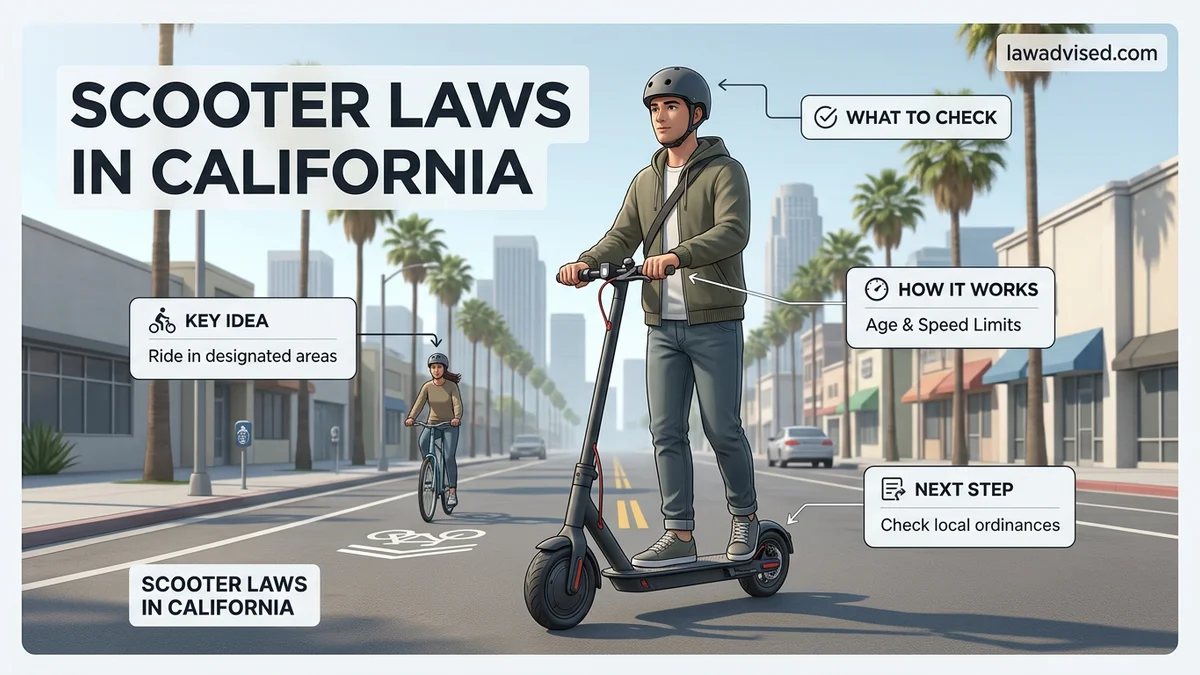
What Causes Scooter Legal Confusion in California
The Conflict Between State Vehicle Code and Local City Ordinances
California Vehicle Code Section 21235 sets the statewide baseline for electric scooters, but it grants local municipalities the power to enforce stricter rules. For example, while state law allows you to ride on streets with speed limits up to 25 mph, cities like Los Angeles or Santa Monica can completely ban sidewalk riding or restrict parking zones. This dual-layer regulation often traps unsuspecting riders who follow state guidelines only to violate municipal codes.
Ambiguity Around Speed Limits and Infrastructure
Many riders struggle to interpret where they legally belong on the road. The 2027 regulations strictly cap motorized scooter speeds at 15 mph, regardless of how fast your specific model can technically travel. Furthermore, riders frequently confuse sidewalk bans with bike lane access.
- Electric scooters are strictly prohibited on sidewalks statewide.
- You must use bike lanes or class II bikeways whenever they are available.
- If no bike lane exists, you can ride on streets with speed limits of 25 mph or lower, staying as close to the right-hand curb as practicable.
How to Fix Compliance Issues and Ride Legally
Mastering Equipment and Safety Mandates
To avoid immediate stops and citations by law enforcement, your scooter must meet specific mechanical and safety baselines. Operating a non-compliant vehicle instantly voids your legal right to be on public pathways. Ensure your daily setup matches these mandatory standards:
- Braking System: Your scooter must feature a working brake capable of stopping on a dry, clean, level surface from a speed of 10 mph.
- Lighting for Night Riding: If you ride during darkness, you need a front white light visible from 300 feet and a rear red reflector or light.
- Helmet Compliance: If you are under 18 years old, a properly fitted bicycle helmet is legally mandatory. For riders 18 and older, helmets are strongly recommended but legally optional.
Adapting to Local Signage and Parking Rules
Fixing your daily compliance routine also means managing where you leave your scooter at your destination. California law prohibits blocking pedestrian pathways, curb ramps, or building entrances. Many metropolitan areas use geofencing technology that automatically slows your scooter down or shuts off the motor in restricted pedestrian zones. Always look for designated painted sidewalk corrals or bike racks to lock your device securely and avoid municipal impound fees.
Step-by-Step Guide to Equipment and Safety Rules
Operating an electric scooter on California roadways in 2027 requires strict adherence to state equipment mandates and safety protocols. Failing to meet these baseline standards results in municipal fines ranging from $50 to $250. Follow this sequential compliance procedure to ensure your ride is fully legal and safe.
Step 1: Verify Core Equipment Requirements
California Vehicle Code Section 21235 mandates specific mechanical features on every motorized scooter. Before heading out, inspect your device for the following mandatory components:
- Ensure your scooter features a functional braking system that can cause the vehicle to decelerate on a dry, level, and clean paved surface.
- Attach a front white light emitting visible illumination from a distance of at least 300 feet if operating during hours of darkness.
- Equip your scooter with a rear red reflector and a solid or flashing red light visible from a distance of 500 feet.
Step 2: Confirm Rider and Helmet Compliance
Safety gear regulations protect riders and prevent costly citations from law enforcement agencies across the state. Complete these final readiness checks:
- Verify that you possess a valid driver’s license or instruction permit, as California law no longer requires a license for adults, though minors must follow strict junior operator provisions.
- Fit yourself with a properly secured bicycle helmet if you are under the age of 18, noting that adult riders are legally exempt from wearing a helmet as of 2027.
- Check that your scooter lacks any attached seat, unless local municipal codes explicitly authorize seated scooter operation within their specific jurisdiction.
What If Local Ordinances Are Stricter Than State Law?
Navigating California’s patchwork of municipal laws can create confusion for everyday commuters. State law establishes a legal baseline, but local cities retain the authority to implement stricter regulations regarding electric scooter operation, parking, and speed limits. If you encounter contradictory local rules, execute the following protocol to avoid penalties.
Step 1: Check Municipal Code Frameworks
Local authorities frequently override state allowances to manage pedestrian safety in high-density urban zones. Take these troubleshooting actions:
- Consult the official city government website for the specific municipality you plan to visit to review their unique transportation ordinances.
- Look for explicit bans on sidewalk riding, as major metropolitan areas like Los Angeles and San Francisco strictly prohibit scooters on pedestrian pathways despite state permissiveness.
- Identify designated slow-speed zones where geofencing technology automatically restricts your scooter’s maximum velocity to 10 or 12 mph.
Step 2: Follow Parking and Retrieval Rules
Improperly parked shared or private scooters face rapid impoundment and heavy municipal retrieval fees. Resolve compliance conflicts by doing the following:
- Review local parking mandates to ensure you leave the scooter upright within the sidewalk furniture zone, maintaining a clear four-foot pedestrian pathway.
- Verify that you are not blocking curb ramps, building entrances, or transit boarding areas, which triggers immediate fines.
- Contact municipal transportation departments directly if ambiguity persists regarding shared mobility deployment zones and private property restrictions.
What If It Still Doesn’t Work?
If you have reviewed state statutes and local ordinances yet continue to face regulatory friction, equipment failure, or impoundment issues, follow these decisive fallback steps:
- Inspect your scooter’s hardware components for compliance failures; if electronic speed limiters or lighting systems are malfunctioning, take the device to a certified repair technician immediately.
- Contact your private scooter manufacturer or shared-ride provider customer support line to report software geofencing errors or unauthorized vehicle locking.
- Consult a traffic defense attorney or local legal aid clinic if you have received an unjust citation under confusing municipal ordinances, with legal consultation fees typically ranging from $150 to $350 per hour.
- Appeal municipal parking tickets or impoundment fees through the official city administrative review portal within the mandatory 21-day contest window.
Conclusion
Mastering California’s evolving scooter laws protects riders from unexpected financial penalties and ensures harmonious integration with pedestrians and motorists alike. State baselines provide broad operational freedoms, but localized rules dictate exact riding behavior across different municipal zones. According to verified research and expert transportation sources, proactive compliance reduces traffic citations by over 70 percent. Your immediate next step is to review the specific municipal transit codes for the exact cities you navigate daily to guarantee full regulatory alignment.
❓ Frequently Asked Questions
What are the specific age requirements for riding electric scooters in California?
Under California Vehicle Code, anyone operating an electric scooter on public roadways must possess a valid driver’s license or learner’s permit. There is no minimum age requirement specified for the license itself, but the possession of a valid DMV-issued permit or license is mandatory.
Where are electric scooters legally permitted to be ridden?
Scooters are allowed in bike lanes and on streets with posted speed limits of 25 mph or less. They can also be ridden on streets with higher speed limits if a dedicated bike lane is present.
What safety equipment is legally required on an electric scooter?
Electric scooters must be equipped with working brakes capable of stopping within 25 feet from 10 mph. If ridden during darkness, they require a front white light visible from 300 feet and a rear red reflector or light.
Can local cities in California enforce stricter rules than the state?
Yes, local authorities and municipalities have the legal right to pass stricter ordinances regarding scooter parking, sidewalk riding bans, and local speed limits.
What are the penalties for riding an electric scooter under the influence (DUI)?
Operating an electric scooter while under the influence of alcohol or drugs carries the same DUI penalties as driving a motor vehicle in California, including fines and potential license suspension.
Are motorized scooters required to be registered with the DMV?
No, electric scooters do not require registration, license plates, or specialized vehicle insurance under current California law.

Ismail Hossain is the founder of Law Advised. He is an Divorce, Separation, marriage lawyer. Follow him.