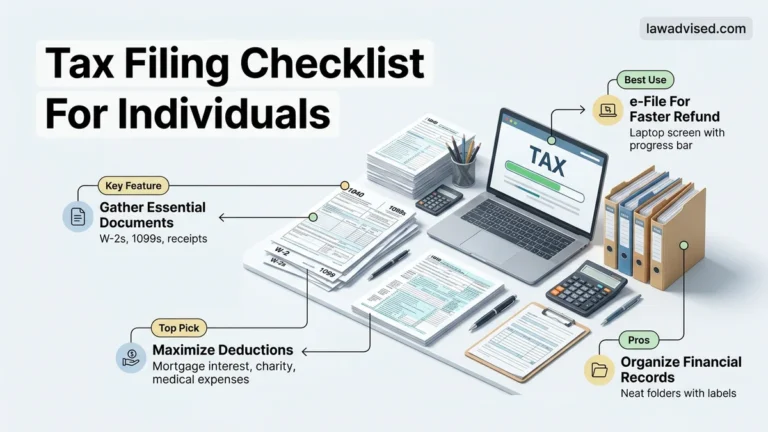
Minimum Income for 1099 Taxes 2026 A Step-by-Step Guide
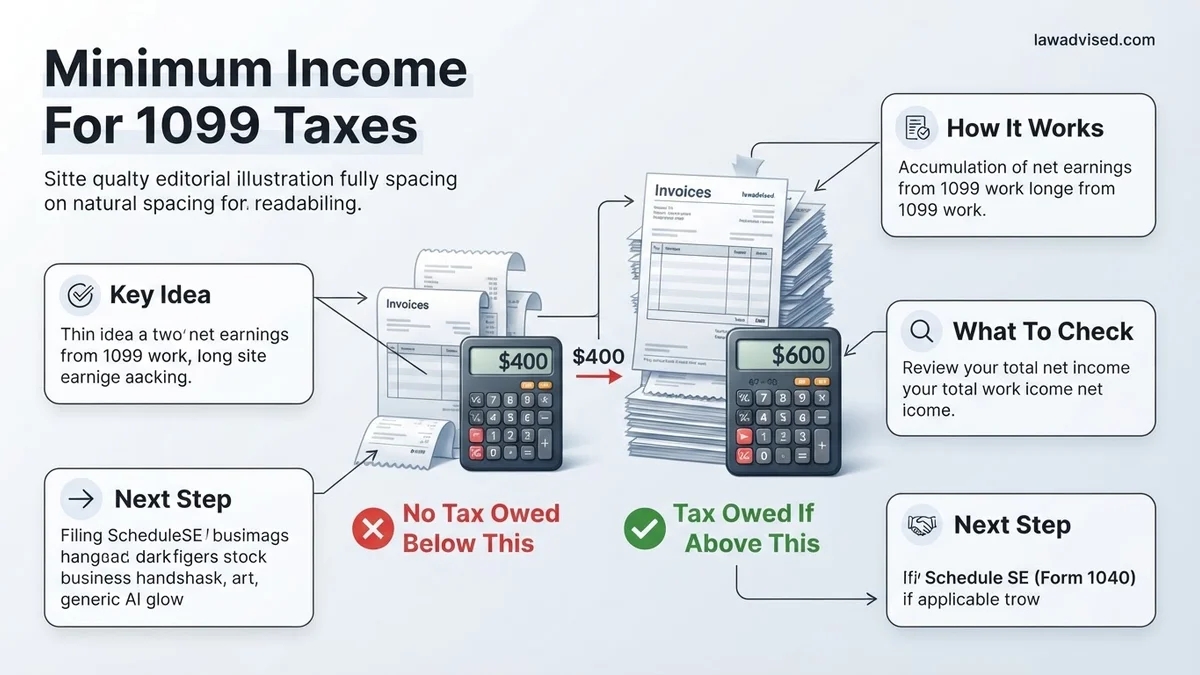
The absolute minimum income threshold for 1099 taxes is $400 in net earnings, which triggers the requirement to file a tax return and pay self-employment tax. Independent contractors must carefully distinguish between gross income and net business profits when evaluating federal tax obligations.
If you earned money as an independent contractor in 2026, the absolute minimum income required to trigger a federal tax filing is just $400 in net earnings. If your net profit from self-employment hits or exceeds this exact threshold, you must file a tax return and pay self-employment tax, even if your total overall income falls below the standard deduction.
Many freelancers assume that independent contractor rules mirror traditional W-2 jobs, where you can earn thousands before filing. However, the IRS treats 1099 workers like business owners, subjecting you to distinct rules regarding self-employment tax and gross income thresholds that you need to calculate carefully.
Key Takeaways
- Net earnings of $400 or more from self-employment trigger mandatory federal tax filing.
- Self-employment tax covers Social Security and Medicare at a rate of 15.3%.
- IRS gross income filing thresholds depend strictly on your official filing status.
- Net income is calculated by subtracting ordinary business expenses from gross revenue.
- State and local tax obligations may apply even if federal income thresholds are not met.
What Causes 1099 Tax Filing Requirements and the $400 Rule
The Self-Employment Tax Threshold
The primary driver behind the 1099 filing requirement is Schedule SE. The IRS mandates that if your net self-employment earnings reach $400 or more, you owe Social Security and Medicare taxes. This rule applies regardless of your age, your filing status, or whether you have other W-2 income.
- Net earnings are your gross 1099 income minus your ordinary and necessary business expenses.
- The self-employment tax rate sits at a flat 15.3 percent on your net earnings up to the annual wage base limit for 2026.
- Hitting the $400 mark means you must file Form 1040 and attach Schedule SE, even if you owe zero federal income tax.
Federal Income Tax Filing Thresholds
While the $400 rule forces you to pay self-employment tax, your requirement to pay regular income tax depends on your total gross income and filing status for 2026. If your overall income exceeds the standard deduction, you owe federal income tax on top of your self-employment tax.
- For single filers in 2026, the standard deduction acts as the baseline for when income tax kicks in.
- Married filing jointly couples face a higher combined gross income threshold before income taxes apply.
- If you earned $5,000 in 1099 income and had no other jobs, you will not owe income tax, but you will owe self-employment tax because you cleared the $400 net profit hurdle.
How to Calculate Net Income and Verify Your 1099 Tax Threshold
Subtracting Business Expenses from Gross Revenue
To figure out if you crossed the 2026 tax threshold, you must look at your net income, not your gross payouts. Every dollar you legitimately spend to run your freelance business reduces your taxable profit and keeps you further away from that $400 trigger.
- Add up all payments listed on your Form 1099-NEC, plus any cash, check, or digital platform payments you received without a 1099.
- Deduct standard business expenses like software subscriptions, home office use, equipment, and professional services.
- If your gross 1099 income was $2,000, but you spent $1,700 on direct business expenses, your net profit is $300. Because this is under $400, you escape the mandatory self-employment tax filing trigger.
Combining Multiple Income Streams
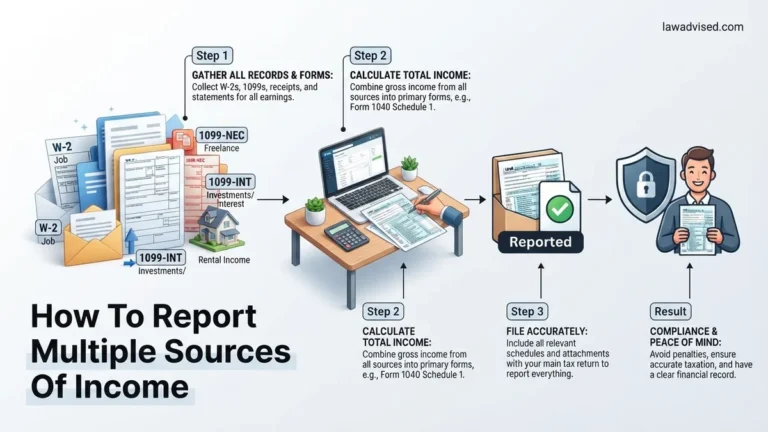
The IRS looks at your total net self-employment earnings in aggregate, not per individual 1099 client. You cannot hide behind the threshold by splitting small projects across five different companies.
- Client A pays you $200 in net profit.
- Client B pays you $250 in net profit.
- Your combined net earnings equal $450, which legally crosses the 2026 threshold and requires you to file Schedule C and Schedule SE.
Step-by-Step Guide to Filing Your Independent Contractor Taxes
Navigating independent contractor taxes requires a structured approach to ensure compliance with the IRS. Following a precise methodology prevents costly calculation errors and missed deductions.
Step 1: Gather Your Income and Expense Records
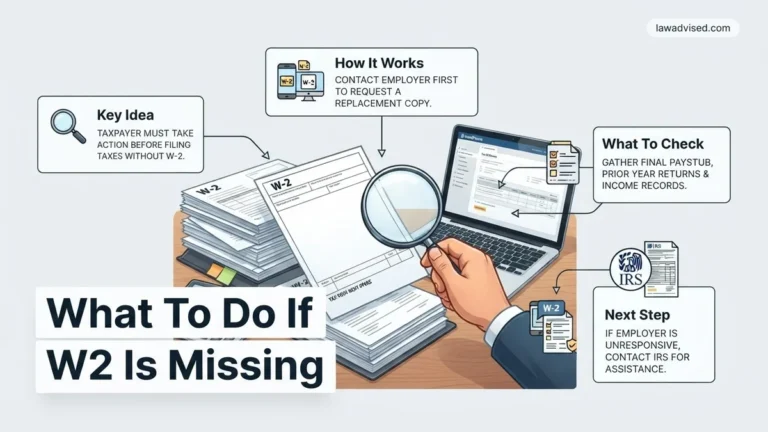
Collect all 1099-NEC forms, digital payment platform summaries, and bank statements detailing your gross receipts for 2026. Simultaneously, compile receipts for all ordinary and necessary business expenses incurred during the year.
Step 2: Calculate Your Net Self-Employment Earnings
Subtract your total deductible business expenses from your gross income to determine your net profit. This exact figure dictates your final tax liability and confirms whether you meet the 400 dollar net threshold.
Step 3: Complete Schedule C and Schedule SE
Use IRS Schedule C to report your profit or loss from business operations. Next, transfer your net earnings to Schedule SE to compute your self-employment tax obligations for Social Security and Medicare.
Step 4: File State and Federal Returns
Integrate your self-employment schedules into your primary Form 1040 federal tax return. Ensure you also check state-specific filing thresholds, as many state revenue departments enforce different rules for independent contractors.
What If Your Net Income Falls Below the Threshold But You Still Owe Taxes
Many independent contractors misunderstand the tax rules and assume earning under 400 dollars net means complete tax immunity. According to the IRS, even if your self-employment net income is under 400 dollars, you may still owe income tax if you have other household earnings. Furthermore, you might want to file a return to claim refundable tax credits like the Earned Income Tax Credit.
If you made estimated tax overpayments or had withholding from a secondary W-2 job, filing a return is the only way to secure a refund. Do not neglect reporting small amounts of self-employment income, as automated IRS matching programs cross-reference bank deposits and payment apps against submitted returns.
What If It Still Doesn’t Work?
If calculating your 2026 1099 tax liability remains confusing or your automated software rejects your entries, consider these targeted fallback steps:
- Verify Form 1099 Accuracy: Contact your clients immediately if the earnings reported on your 1099-NEC forms do not match your actual bank deposits.
- Consult IRS Interactive Tax Assistant: Utilize official IRS online tools designed to clarify filing requirements for self-employed individuals based on exact income tiers.
- Hire a Qualified Tax Professional: Engage a Certified Public Accountant or Enrolled Agent who specializes in freelance and contractor taxation. According to the National Society of Accountants, professional preparation for a standard Schedule C return typically ranges from 250 to 500 dollars.
- Request a Filing Extension: File IRS Form 4868 before the April 2026 deadline to secure an automatic six-month extension, preventing late-filing penalties while you resolve complex calculations.
Conclusion
Mastering the minimum income thresholds for 1099 taxes in 2026 protects independent contractors from unexpected IRS penalties and interest charges. Always evaluate both your gross 1099-NEC tracking requirements and your critical 400 dollar net self-employment limit. According to verified research and expert sources from the IRS and leading tax authorities, proactive recordkeeping remains the most effective defense against compliance errors. Take action today by organizing your 2026 income and expense receipts into a dedicated digital ledger before tax season peaks.
❓ Frequently Asked Questions
What is the difference between the $400 rule and the standard deduction?
The $400 rule determines whether you must pay self-employment tax (Social Security and Medicare) and file a return. The standard deduction determines whether you owe federal income tax on your overall taxable income after deductions.
Can I deduct my business expenses to lower my net income below $400?
Yes, you can deduct ordinary and necessary business expenses related to your freelance work. If your gross revenue was $1,000 but you had $700 in legitimate expenses, your net income is $300, keeping you below the self-employment tax threshold.
What happens if I receive multiple 1099 forms from different clients?
You must combine the net earnings from all of your independent contracting gigs. If the combined net total equals or exceeds $400, you are legally required to file Schedule C and Schedule SE.
Do I have to pay quarterly estimated taxes if I meet the minimum income?
The IRS requires you to pay estimated quarterly taxes if you expect to owe $1,000 or more in taxes when you file your annual return, helping you avoid underpayment penalties.
Are state tax filing thresholds different from federal 1099 rules?
Yes, individual states establish their own gross income and filing thresholds. You may be required to file a state tax return even if your federal self-employment earnings fall below the federal guidelines.
Is W-2 income combined with 1099 income for the $400 threshold?
No, the $400 rule applies strictly to net self-employment earnings. However, your total combined household income from all sources will be evaluated to determine your final federal income tax bracket and overall filing requirement.

Ismail Hossain is the founder of Law Advised. He is an Divorce, Separation, marriage lawyer. Follow him.