Dividend Income Tax Explained A Proven 2026 Guide
Understanding dividend income tax is essential for maximizing your investment returns and avoiding unexpected IRS bills. Dividends are generally categorized as either qualified or ordinary, each subject to drastically different tax rate schedules based on your income level and holding period.
Dividend taxes depend entirely on whether your payouts are classified as qualified or ordinary. If you hold your stocks long enough, you pay a maximum federal rate of 0 percent, 15 percent, or 20 percent in 2026. If you fail to meet the holding requirements, those same payouts face ordinary income tax rates as high as 37 percent.
Understanding this distinction is the single most important factor in keeping more of your investment returns. When you build a dividend portfolio in 2026, tax strategy dictates your actual net yield. Let us break down how the IRS categorizes these payouts and how you can optimize your tax bracket.
Key Takeaways
- Qualified dividends benefit from lower capital gains tax rates of 0%, 15%, or 20%.
- Ordinary dividends are taxed at standard federal income tax rates based on your bracket.
- You must satisfy the 61-day holding period rule to qualify for lower tax rates.
- High earners may owe an additional 3.8% Net Investment Income Tax.
- Form 1099-DIV reports your exact dividend earnings and tax classifications to the IRS.

What Causes High Taxes on Dividends: Ordinary vs. Qualified Distinctions
The IRS splits investment payouts into two distinct buckets. Knowing which bucket your cash falls into determines your tax liability.
Ordinary Dividends and Your Tax Bracket
Ordinary dividends (also called taxable dividends) are taxed at your marginal income tax rate. These payouts come from real estate investment trusts, master limited partnerships, or short-term stock holdings. If you sit in the 24 percent or 32 percent federal tax bracket in 2026, your dividend income faces that exact same bite. You lose a massive chunk of your passive income stream right off the top.
Qualified Dividends and Preferential Rates
Qualified dividends receive preferential tax treatment. Instead of ordinary income rates, the IRS taxes them at capital gains rates:
- 0 Percent Rate: For single filers with taxable income up to $48,350 in 2026 (or $96,700 for married filing jointly).
- 15 Percent Rate: For the vast middle-income bracket spanning up to $533,400 for singles.
- 20 Percent Rate: For high earners exceeding those thresholds.
Paying 15 percent instead of 35 percent saves you thousands of dollars on a healthy dividend portfolio.
How to Fix Your Tax Strategy: Step-by-Step Guide to Meeting the 61-Day Holding Period
To turn ordinary dividends into qualified dividends, you cannot just buy a stock the day before the ex-dividend date. The IRS enforces strict holding period rules.
Mastering the 61-Day Rule
To qualify for the lower tax rates, you must hold the underlying stock for more than 60 days during a specific 121-day window. This window begins 60 days before the stock goes ex-dividend. If you sell the asset too quickly, the IRS reclassifies your payout as ordinary income.
- The Core Requirement: Own the stock for at least 61 unhedged days.
- The Timeline: The 121-day window spans from 60 days before the ex-date to 60 days after.
- Risk Reduction: Any time you hold short positions against the stock, your day count pauses.
Practical Application for Investors
Imagine you purchase shares of a stable utility company on January 10, 2026. The ex-dividend date arrives on February 1. You hold the shares straight through April, easily clearing the 61-day hurdle.
When tax season rolls around, those distributions qualify for the 0, 15, or 20 percent rates. If you had panicked and sold on February 5, you would have triggered ordinary income tax rates on the exact same cash payout. Tracking your trade dates protects your yield.
What If It Still Doesn’t Work: Managing Ordinary Dividends and High-Earner Surcharges
Sometimes strategic portfolio positioning fails to eliminate unexpected tax liabilities, particularly for high-income earners navigating complex investment income thresholds in 2026. If optimal asset allocation still results in an unmanageable tax burden from ordinary dividends or capital gains distributions, targeted remediation steps are necessary. According to financial planning standards set by the Certified Financial Planner Board of Standards, systematic adjustments can mitigate ongoing tax leakage.
Advanced Remediation Steps
- Audit your asset location strategy: Shift high-yielding, non-qualified dividend assets—such as REITs, bond funds, and high-turnover mutual funds—out of taxable brokerage accounts and into tax-advantaged retirement vehicles like Traditional or Roth IRAs.
- Implement tax-loss harvesting: Offset ordinary income and taxable dividend obligations by realizing capital losses in your taxable portfolios before the end of the 2026 tax year, keeping in mind the standard $3,000 ordinary income deduction limit.
- Evaluate the Net Investment Income Tax (NIIT) threshold: Monitor your Modified Adjusted Gross Income (MAGI) against the 3.8% NIIT threshold ($250,000 for married filing jointly, $200,000 for single filers) to determine if additional deductions are required to lower your baseline.
- Engage a Certified Public Accountant (CPA): Consult a licensed tax professional if your dividend income pushes you into unexpected high-earner surtax brackets. Professional tax advisory services for complex investment portfolios typically cost between $400 and $1,200 depending on filing complexity.
State Taxes and Form 1099-DIV: Final Steps for Accurate Filing
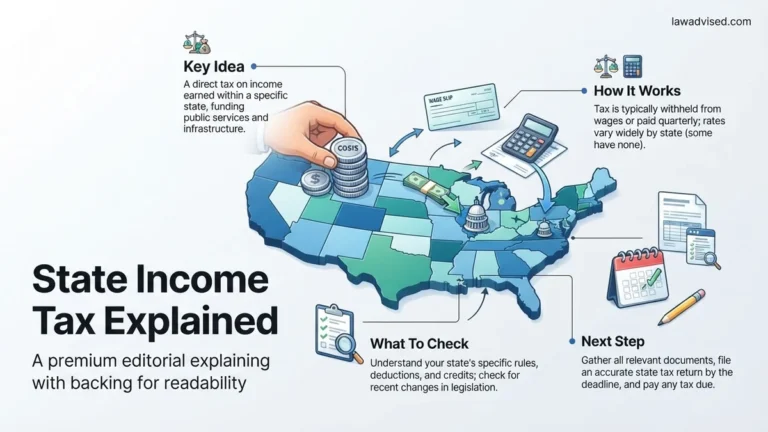
Federal tax calculations represent only part of the equation when processing dividend income in 2026. State-level taxation varies wildly; states like Florida and Texas impose zero state income tax on dividends, whereas California treats all dividends as ordinary income, subjecting them to top marginal rates reaching 13.3% or higher. Understanding your local state obligations prevents costly surprises during annual filing season.
State Compliance and Document Execution
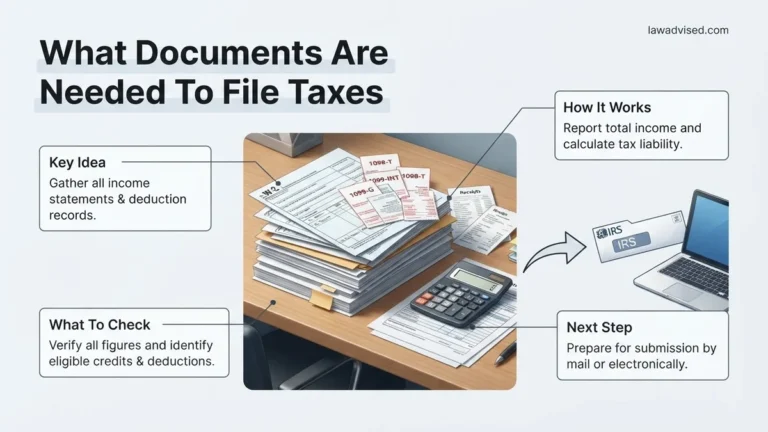
- Gather and reconcile Form 1099-DIV: Review every 1099-DIV issued by your brokerages by mid-February 2026, ensuring that figures in Box 1a (Total Ordinary Dividends) and Box 1b (Qualified Dividends) match your personal trade confirmations.
- Calculate state-specific exclusions: Review supplemental tax statements provided by your brokerage to identify dividends derived from U.S. Treasury obligations, which are generally exempt from state and local income taxes.
- Complete Schedule B: If your total taxable dividend income exceeds $1,500 for the 2026 tax year, attach IRS Schedule B to your Form 1040 to properly report individual payer names and amounts.
- Submit electronic filings: Utilize IRS-approved e-file software to securely transmit your federal and state returns, reducing processing errors and accelerating potential refunds.
Conclusion
Mastering dividend income tax in 2026 requires understanding the crucial distinction between lower-taxed qualified dividends and higher-taxed ordinary distributions, alongside careful state-level planning. By strategically locating assets and accurately reporting figures via Form 1099-DIV, investors can significantly reduce their overall tax liability. According to verified research and expert sources from leading financial institutions, proactive portfolio structuring remains the most effective defense against unnecessary taxation. Review your current brokerage statements today to optimize your asset placement before the next distribution cycle.
❓ Frequently Asked Questions
How can I check if a specific stock’s payout qualifies for the lower tax rate?
You must verify that you met the holding period requirement and check the classification on your year-end Form 1099-DIV provided by your brokerage firm.
Do dividends inside a Roth IRA or traditional IRA incur income taxes?
No, dividends generated within tax-advantaged accounts like IRAs or 401(k)s are not taxed when distributed or reinvested inside the account.
Are foreign dividends eligible for the qualified dividend tax rates?
Some foreign dividends qualify if the issuing company is incorporated in a U.S. possession or eligible for a comprehensive U.S. income tax treaty.
What happens if I sell the stock before meeting the 61-day holding period?
If you fail to meet the holding period, the dividends reclassify as ordinary income and are taxed at your marginal income tax rate.
Does state income tax apply to dividend payments?
Yes, most U.S. states tax dividend income as ordinary state income, though a few states like Texas and Florida do not levy state income tax.
Can I use capital losses to offset my dividend income taxes?
Capital losses can offset taxable capital gains and up to $3,000 of ordinary income, but ordinary dividends are classified as ordinary income for this limit.

Ismail Hossain is the founder of Law Advised. He is an Divorce, Separation, marriage lawyer. Follow him.