Month-To-Month Lease Laws in Texas: Essential Tenant Rights Guide
Are you thinking about renting a place in Texas but worried about the fine print in your lease? Understanding month-to-month lease laws can save you from unexpected surprises and protect your rights as a tenant or landlord.
Whether you want flexibility or are unsure how these leases work, knowing the rules can give you peace of mind. Keep reading to discover what you need to know about month-to-month lease laws in Texas—and how they can impact your next rental agreement.
Credit: rentalleaseagreements.com
Basics Of Month-to-month Leases
Month-to-month leases offer flexibility for both landlords and tenants. They are simple agreements that continue until either party ends the lease. These leases differ from fixed-term leases, which last for a set time. Understanding the basics helps renters and property owners make informed decisions.
Definition And Features
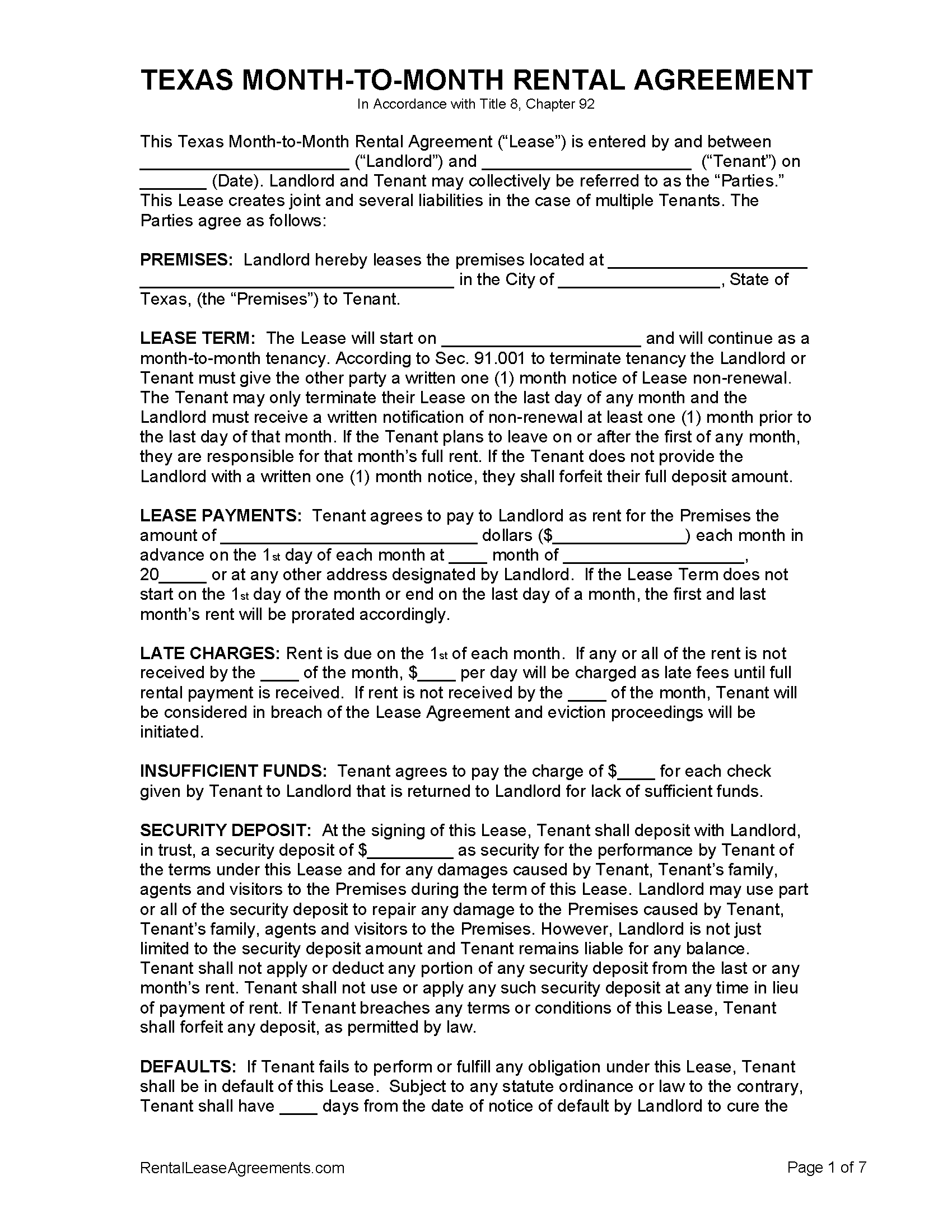
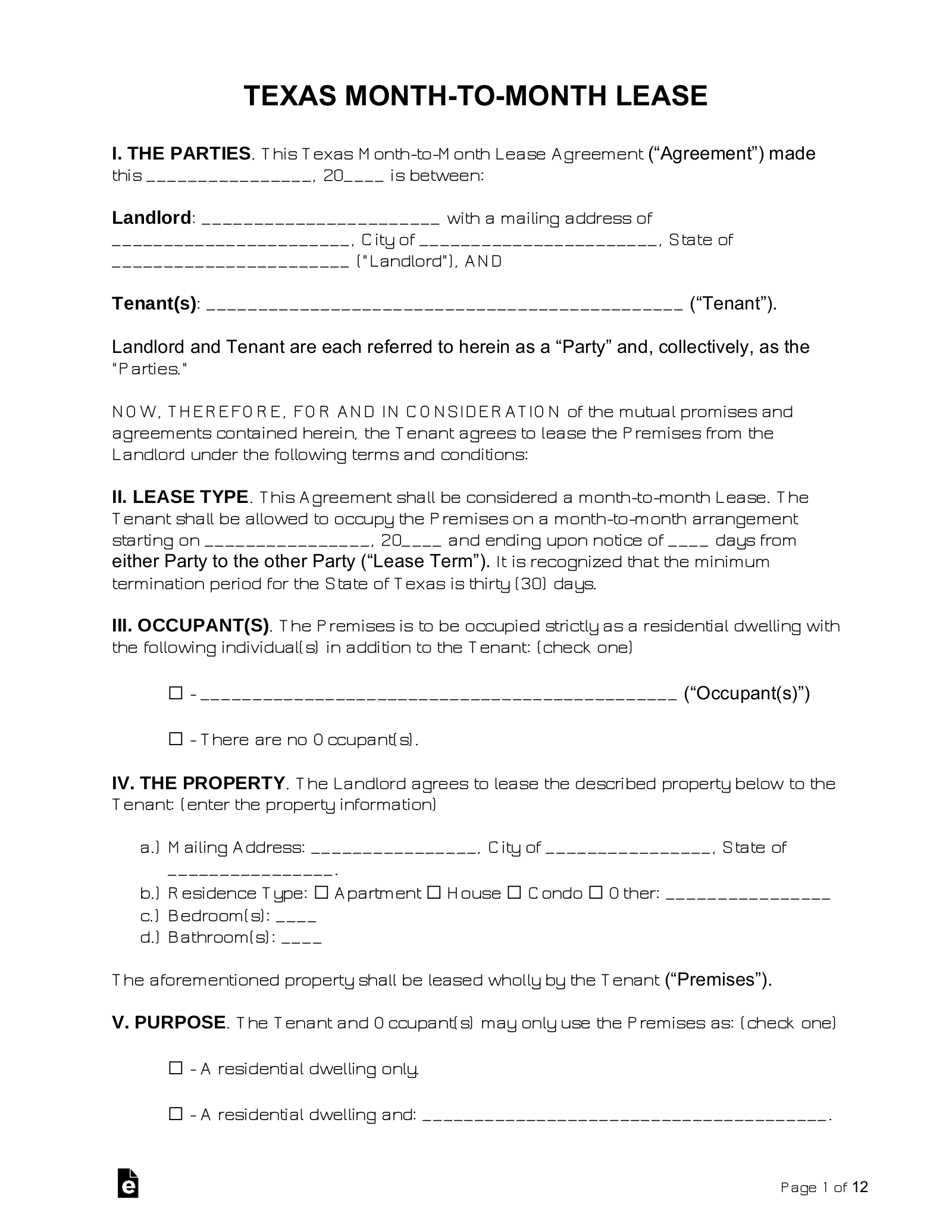
A month-to-month lease is a rental agreement that renews every month. Either party can end the lease with proper notice, usually 30 days. This type of lease does not have a fixed end date. Rent payments and lease terms remain the same each month unless changed with notice.
Month-to-month leases allow easy changes to rental terms. They offer flexibility for tenants who need short stays. Landlords can adjust rent or end the lease with notice. This lease type provides a simple, ongoing rental arrangement.
Common Uses In Texas
Many renters in Texas choose month-to-month leases for short stays. Students, temporary workers, and people relocating often prefer this option. Landlords use these leases to keep rental units flexible.
Month-to-month leases suit situations where long-term commitment is not possible. They help landlords avoid long vacancies. Tenants benefit from the ability to move quickly without penalties.
Credit: eforms.com
Tenant Rights And Responsibilities
Tenants in Texas have specific rights and responsibilities under month-to-month leases. These rules protect both tenants and landlords. Knowing these rights helps tenants avoid problems. It also ensures they meet their duties as renters. Understanding the law makes renting smoother and fairer for everyone.
Notice Requirements For Termination
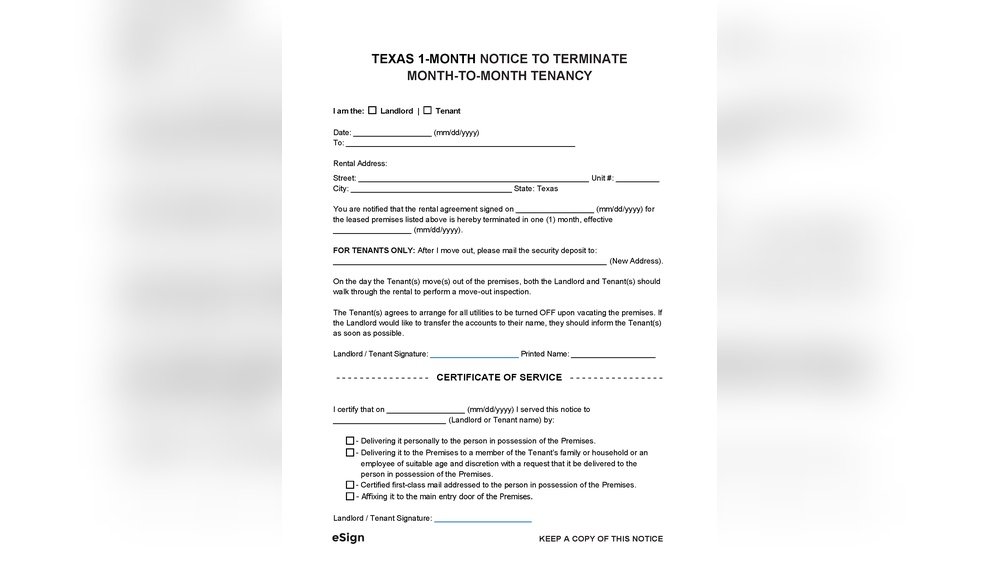
Tenants must give a written notice to end a month-to-month lease. Texas law requires at least 30 days’ notice before moving out. The notice must state the move-out date clearly. Landlords also must give tenants 30 days’ notice to end the lease. This rule applies whether the lease ends or changes.
Rent Payment And Increases
Tenants must pay rent on time every month. The lease sets the payment due date and amount. Landlords can raise rent with proper notice. Texas law requires a 30-day notice before any rent increase. Tenants should receive this notice in writing. Paying rent late can lead to fees or eviction.
Landlord Obligations
Landlords in Texas have clear duties under month-to-month lease laws. These rules protect tenants and keep rental homes safe and livable. Landlords must follow specific laws about maintenance and tenant privacy. Understanding these obligations helps both landlords and tenants avoid problems.
Maintenance And Repairs
Landlords must keep rental properties in good condition. They must fix problems that affect health and safety. This includes plumbing, heating, and electrical issues. Repairs should happen quickly after tenants report them. Landlords cannot ignore serious problems or delay fixes.
Regular maintenance is also required. Landlords should check smoke detectors and other safety equipment. They must provide clean and safe living spaces. This helps tenants feel comfortable and secure in their homes.
Privacy And Entry Rules
Texas landlords cannot enter a tenant’s home without notice. They must give reasonable notice before visiting. Usually, this means at least 24 hours. Landlords can enter for repairs, inspections, or emergencies only.
Unannounced visits can violate tenant privacy rights. Landlords must respect tenants’ quiet enjoyment of the property. Following these rules builds trust and avoids legal issues.
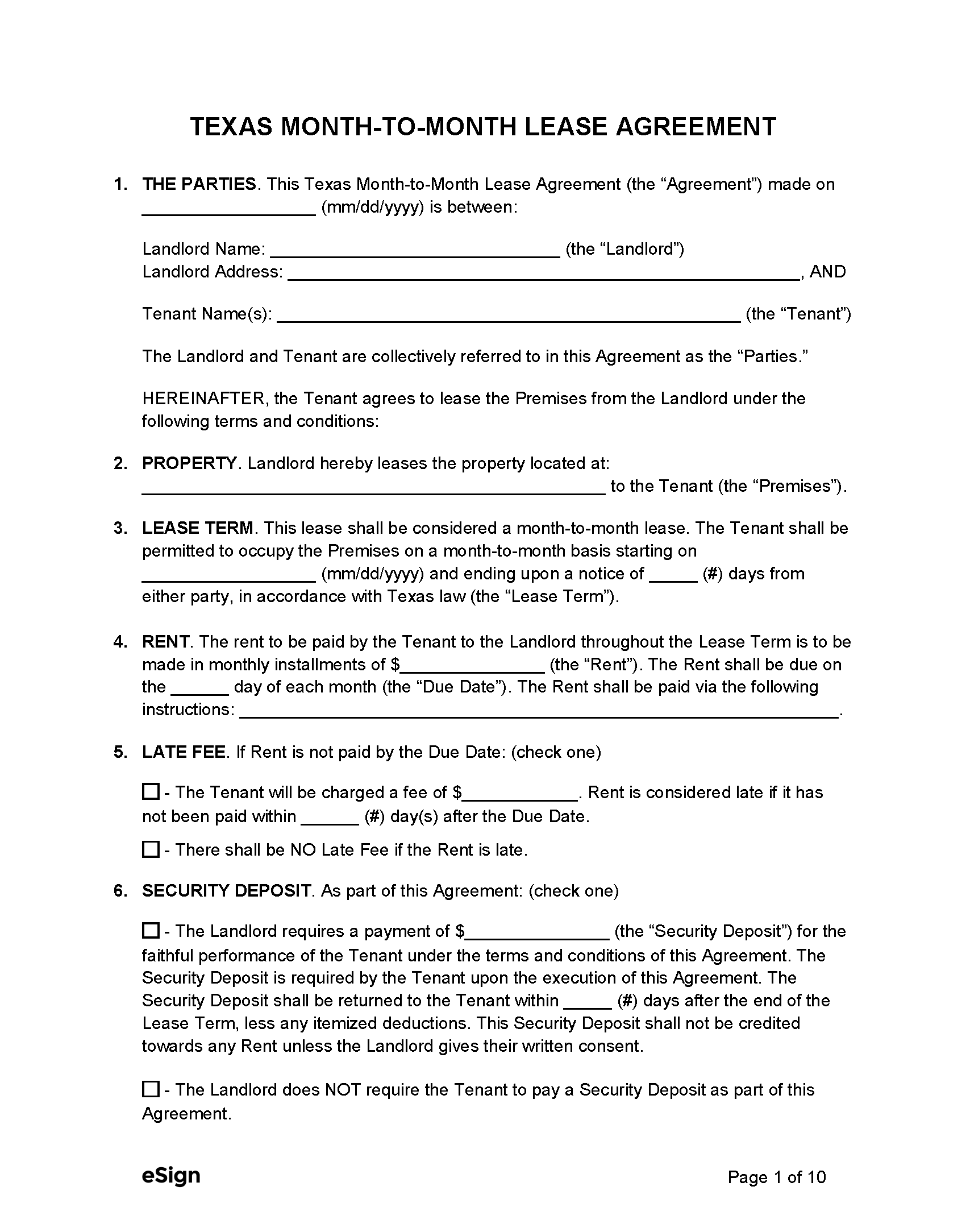
Credit: esign.com
Resolving Disputes And Legal Remedies
Disputes can arise between tenants and landlords during a month-to-month lease in Texas. Knowing how to resolve these issues is important. The law provides clear paths for tenants and landlords to seek help and solutions. Understanding these options helps protect your rights and interests.
Filing Complaints
Tenants can file complaints if landlords break lease rules. Common problems include failure to repair or illegal eviction. Complaints can be made to local housing authorities or tenant protection offices. These agencies review complaints and may investigate the landlord’s actions. Filing a complaint starts a formal process to address the issue.
Mediation And Court Actions
Mediation offers a chance to settle disputes without court. A neutral mediator helps both sides find a fair solution. This option is faster and less costly than a lawsuit. If mediation fails, tenants can take legal action. Texas courts handle landlord-tenant disputes, including lease violations and deposit returns. Court decisions enforce rights and may order compensation.
Frequently Asked Questions
What Is A Month-to-month Lease In Texas?
A month-to-month lease lets tenants rent by the month without a long contract. It offers flexibility to end or change the lease with proper notice.
How Much Notice Is Required To End A Month-to-month Lease?
Texas law requires a 30-day written notice from either tenant or landlord. This notice gives time to prepare for moving out or finding a new tenant.
Can Landlords Raise Rent Anytime In A Month-to-month Lease?
Landlords can increase rent but must give a 30-day written notice before the change. Rent changes cannot happen without proper advance notice.
What Tenant Rights Exist In A Texas Month-to-month Lease?
Tenants have the right to proper notice before lease changes or termination. They can live without harassment and must follow lease terms during tenancy.
Conclusion
Month-to-month leases in Texas offer flexibility for both tenants and landlords. Tenants can move with a short notice, usually 30 days. Landlords must follow state laws to end or renew leases properly. Knowing these rules helps avoid misunderstandings and legal problems.
Always read your lease carefully and ask questions if unsure. Staying informed makes renting easier and safer for everyone involved.

Ismail Hossain is the founder of Law Advised. He is an Divorce, Separation, marriage lawyer. Follow him.