Shotgun Laws in California Real Rules & 2027
Navigating shotgun laws in California requires strict adherence to state-specific purchasing mandates, background checks, and transport regulations. Failing to follow age limits, registration requirements, and magazine capacity rules can result in severe legal penalties. This guide breaks down exactly what you need to legally own and transport a shotgun.
Navigating California shotgun laws in 2027 requires strict adherence to statewide licensing, background checks, and physical configuration limits. Unlike handguns, traditional long guns face fewer strict roster constraints, but they are subject to strict assault weapon definitions, mandatory ten-day waiting periods, and strict transport mandates. To legally purchase and possess a shotgun in the state, you must pass a background check, possess a valid Firearm Safety Certificate (FSC), and comply with all local and state registration frameworks.
Failing to understand these legal hurdles can result in felony charges, unintended contraband possession, and the immediate confiscation of your property. Whether you are adding a home defense tactical shotgun or a traditional waterfowl hunting piece to your collection, knowing the exact 2027 compliance parameters keeps you out of legal jeopardy.
Key Takeaways
- Buyers must be at least 21 years old and pass a background check.
- A valid Firearm Safety Certificate (FSC) is legally required for all purchases.
- All shotgun transfers must go through a licensed California firearms dealer.
- Transport requires the firearm to be unloaded and stored securely in a locked container.
- Certain semi-automatic shotguns fall under California’s assault weapon restrictions.
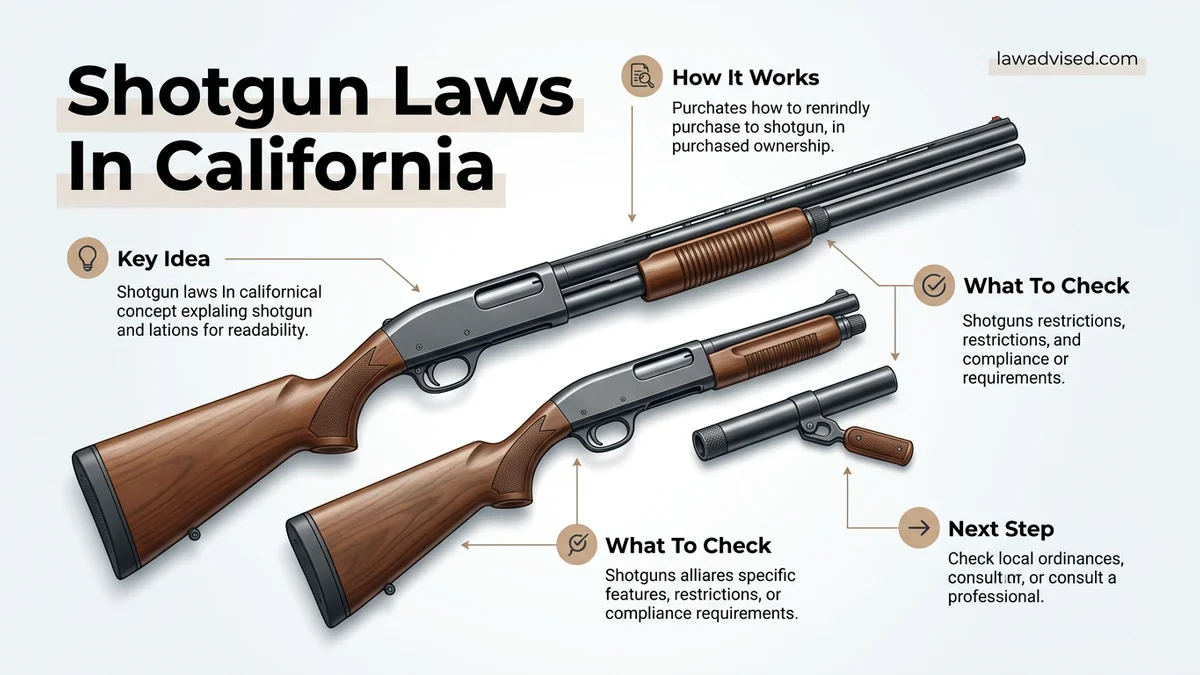
What Causes Compliance Failures Under California Shotgun Laws
Feature-Based Assault Weapon Violations
The most common compliance failure happens when gun owners accidentally configure a semi-automatic shotgun into a prohibited assault weapon. California penal code outlines specific features that instantly reclassify a legal semi-automatic shotgun into an illegal firearm.
- Possessing a semi-automatic shotgun with a folding or telescoping stock
- Using a pistol grip that protrudes conspicuously beneath the action of the weapon
- Having a thumbhole stock or a fixed magazine with a capacity exceeding statutory limits
- Featuring a revolving cylinder on a shotgun design
Transport and Magazine Capacity Errors
Transporting your shotgun incorrectly is another frequent pitfall for California residents. State law mandates that all firearms must be unloaded during transport. Furthermore, while pump-action shotguns generally escape magazine restrictions, semi-automatic shotguns with fixed magazines cannot hold more than 10 shells. Traveling with loose ammunition improperly stored alongside the firearm can also trigger a citation during a routine traffic stop.
How to Fix Purchasing and Registration Errors Step-by-Step
Correcting Deferred Background Checks and FSC Issues
If your shotgun purchase is delayed or denied at the gun counter, you must act quickly to resolve the discrepancy in the Armed Persons System (APS) or the Automated Firearms System (AFS). Follow these steps to correct processing errors:
- Request the specific reason for the delay or denial from your Federal Firearms Licensee (FFL).
- Obtain your personal firearms record from the California Department of Justice (CA DOJ) to check for outdated arrest records or clerical identity errors.
- Submit a Firearms Eligibility Application and Specified Purpose clearance request if your denial stems from an old out-of-state conviction that has since been dismissed or expunged.
- Ensure your Firearm Safety Certificate is completely active, unexpired, and matches your current government-issued Real ID address perfectly.
Resolving Inherited or Out-of-State Registration Lapses
If you recently moved to California or inherited a shotgun from a relative, failing to register the firearm within the statutory window is a major liability. As of 2027, you must report all personal firearm importations or intra-familial transfers directly to the state through the California Firearms Application Reporting System (CFARS). Log into your CFARS account, submit the New Resident or Intra-Familial Firearm Transaction report, pay the nominal processing fee, and upload clear serial number photographs to bring your historic or inherited shotguns into full compliance.
What If It Still Doesn’t Work: Handling Denied Background Checks and Transfers
Navigating the complex landscape of California firearm purchases can sometimes lead to unexpected roadblocks. If your background check is delayed, flagged, or outright denied by the California Department of Justice (DOJ), specific statutory procedures dictate your next steps. According to California firearms compliance data, delays often stem from clerical errors in personal identification data or incomplete criminal history records.
Recommended Resolution Steps
- Request the Denial Reason: File a Personal Firearms Records Request or contact the firearms dealer to obtain the specific transaction number and reason for the delay or denial from the DOJ Bureau of Firearms.
- Correct Clerical Discrepancies: Verify that your full legal name, current address, and demographic information match your California Real ID or Driver’s License exactly. Address discrepancies are a leading cause of delayed background checks.
- Initiate a Personal Firearms Eligibility Check (PFEC): If you suspect past legal issues might impact your status, submit a PFEC application to the DOJ for a fee of $20 to clarify your current eligibility before attempting another purchase.
- Consult a Firearms Attorney: For permanent denials resulting from historical records or mental health reporting errors, seek professional legal counsel specializing in California Second Amendment law. Legal remediation services typically range from $1,500 to $4,000 depending on court petition complexities.
Best Practices for Safe Transport and Home Storage Compliance
California imposes strict statutory mandates regarding how shotguns must be transported in vehicles and stored within residential properties. Under Penal Code requirements, transporting a long gun requires that the firearm be unloaded. While traditional California law did not strictly mandate locked containers for non-concealed long guns during transport, local ordinances and safety best practices strongly favor secure, locked cases.
Storage and Transport Protocols
- Utilize Hard-Sided Locked Cases: Store your shotgun in a DOJ-approved locked container during vehicle transit to maintain absolute compliance with evolving municipal ordinances and general safety standards.
- Implement Child Access Prevention (CAP) Standards: Under California Penal Code Section 25100, storing a loaded firearm where a minor is likely to gain access carries severe criminal liabilities. Always utilize trigger locks, cable locks, or biometric safes.
- Separate Ammunition Storage: Store shotgun shells in a separate locked container away from the firearm to minimize unauthorized use risks and meet rigorous insurance liability guidelines.
- Verify Roster and Feature Compliance: Ensure your shotgun configuration—whether pump-action, semi-automatic, or tactical—strictly adheres to current 2027 assault weapon definitions and magazine capacity limits.
Conclusion
Complying with California shotgun laws requires strict adherence to background checks, DROS waiting periods, safe transport mandates, and secure home storage protocols. Failing to follow these rigorous state regulations can result in severe legal penalties and delayed firearm transfers. According to verified research and expert sources from the California Department of Justice Bureau of Firearms, staying fully informed on current statutory updates is the most effective way to ensure lawful ownership. The next essential step is to consult an authorized local Federal Firearms Licensee (FFL) to review your specific purchase timeline and compliance checklist before initiating your next transaction.
❓ Frequently Asked Questions
What documents do I need to purchase a shotgun in California?
You need a valid California Driver’s License or ID, proof of residency if your ID does not have your current address, a valid Firearm Safety Certificate (FSC), and passing background check credentials.
Are pump-action shotguns restricted by California assault weapon laws?
No, manually operated shotguns like pump-action models are generally exempt from assault weapon features bans, though barrel length restrictions still apply.
What are the legal barrel length minimums for shotguns in California?
Under state and federal law, a shotgun barrel must be at least 18 inches long, and the overall minimum length of the firearm must be at least 26 inches.
How must a shotgun be transported legally in a vehicle?
The shotgun must be completely unloaded and stored securely inside a locked container, such as a hard-sided gun case, distinct from the utility or passenger compartment.
Can out-of-state residents bring a shotgun into California?
Visitors can bring legal shotguns into the state temporarily for lawful purposes like hunting or competitions, but bringing them in to permanently relocate requires specific import and registration steps.
What happens if my background check is delayed or denied?
If delayed, dealers must wait for a clear response or the expiration of the statutory waiting period. If denied, you will receive a notice detailing the reason and instructions on how to appeal.

Ismail Hossain is the founder of Law Advised. He is an Divorce, Separation, marriage lawyer. Follow him.