Retirement Tax Planning Basics A Proven 2026 Guide
Many retirees face unexpectedly high tax bills because they lack a strategy for managing different types of retirement accounts. Retirement tax planning basics involve understanding how tax-deferred, tax-exempt, and taxable accounts interact during your withdrawal phase. Implementing proactive strategies like strategic withdrawal sequencing and Roth conversions can significantly lower your overall tax liability.
Minimizing taxes on your retirement income requires managing how you withdraw money from three distinct account types: tax-deferred, tax-exempt, and taxable accounts. By orchestrating which bucket you pull funds from each year, you can control your adjusted gross income and keep more of your hard-earned savings.
Failing to plan for retirement taxes often results in losing a massive chunk of your nest egg to avoidable IRS bills. In 2026, tax brackets remain a primary hurdle, but new rules around required distributions and senior deductions make strategic withdrawal planning more critical than ever.
Key Takeaways
- Distinguish between tax-deferred, tax-exempt, and taxable account taxation rules.
- Plan for Required Minimum Distributions to avoid heavy tax penalties.
- Utilize strategic withdrawal sequencing to manage your annual tax bracket.
- Consider Roth conversions during lower-income years before RMDs begin.
- Factor in how up to 85% of Social Security benefits can become taxable.

What Causes High Taxes in Retirement Without Proper Planning
Many retirees assume their tax rate will automatically drop when they stop working. In reality, poor structural planning often pushes them into the same or even higher tax brackets they faced during their working years.
The Tax-Deferred Time Bomb
Traditional 401(k) and IRA accounts let you defer taxes on your contributions, but that deferred tax bill comes due upon withdrawal. Every dollar you pull out counts as ordinary income. If you let these accounts grow untouched until age 73 or 75 under 2026 rules, your Required Minimum Distributions (RMDs) can force you into a higher tax bracket than you expected.
The Social Security Surprise
Many retirees are shocked to learn that up to 85 percent of their Social Security benefits are taxable. This happens when your combined income—which includes your adjusted gross income, nontaxable interest, and half of your Social Security benefits—crosses specific IRS thresholds. Without planning, pulling large sums from traditional retirement accounts triggers this hidden tax penalty.
How to Fix Your Retirement Tax Burden Step-by-Step
You do not have to leave your post-retirement tax bill to chance. Fixing your retirement tax burden requires a deliberate sequence of actions designed to lower your taxable income across multiple years.
Diversify Your Tax Buckets Now
You need exposure to three distinct tax buckets to control your annual liability in 2026:
- Tax-Deferred: Traditional IRAs and 401(k)s (taxed on withdrawal).
- Tax-Exempt: Roth IRAs and Roth 401(k)s (withdrawals are completely tax-free).
- Taxable: Brokerage accounts and savings (taxed at lower capital gains rates).
Balancing these accounts gives you the flexibility to take large sums in a single year without skyrocketing your tax rate.
Execute Strategic Roth Conversions
If most of your wealth sits in tax-deferred accounts, look for low-income years—such as the gap between stopping work and claiming Social Security—to convert traditional funds into Roth accounts. You pay taxes on the conversion amount at today’s rates, but all future growth and withdrawals become permanently tax-free, neutralizing future RMD spikes.
What to Do If RMDs and Social Security Push You Into Higher Brackets
For many retirees in 2026, the collision of Required Minimum Distributions (RMDs) and taxable Social Security benefits creates an unexpected tax trap. Once you reach age 73, RMDs force taxable withdrawals from traditional IRAs, which can simultaneously push up to 85 percent of your Social Security benefits into the taxable income zone. According to retirement tax analysts, this stacking effect often bumps retirees into a higher marginal tax bracket than they experienced during their peak earning years.
Proactive Mitigation Tactics
To counteract bracket creep caused by RMDs and Social Security, consider implementing these structured approaches:
- Execute systematic Roth conversions during your early retirement gap years, specifically between the date you stop working and the year you turn 73. This shrinks your traditional IRA balance well before mandatory withdrawals begin.
- Utilize Qualified Charitable Distributions (QCDs) starting at age 70½ to transfer up to $105,000 annually directly from your traditional IRA to a qualified charity, satisfying RMD rules while bypassing adjusted gross income calculations.
- Allocate a portion of your portfolio to tax-efficient investment vehicles, such as municipal bonds or cash-value life insurance, which generate income that does not count toward provisional income thresholds.
How to Maintain a Tax-Efficient Withdrawal Strategy Long-Term
Sustaining tax efficiency throughout a multi-decade retirement requires dynamic sequencing rather than a static plan. Financial planning research demonstrates that the order in which you draw from taxable, tax-deferred, and tax-free accounts heavily dictates how long your nest egg survives. Without a deliberate withdrawal cascade, you risk accelerating portfolio depletion through unnecessary annual tax friction.
The Optimal Asset Liquidation Sequence
To preserve long-term capital and minimize lifetime tax liability, follow this structured withdrawal order:
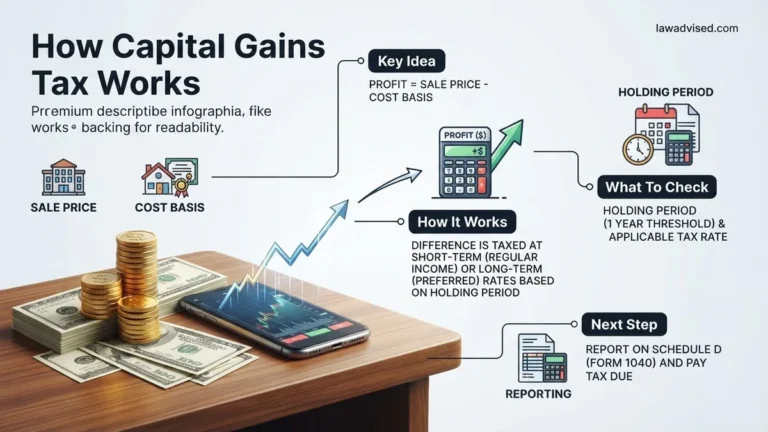
- Draw down taxable brokerage accounts first, utilizing long-term capital gains tax rates, which remain more favorable than ordinary income tax brackets for most retirees.
- Tap tax-deferred accounts next, withdrawing only enough to fill your current tax bracket before spilling over into the next tier.
- Preserve Roth accounts for the final years of retirement, allowing tax-free compounding to benefit your estate beneficiaries or fund late-life long-term care expenses.
What If It Still Doesn’t Work?
If your DIY tax minimization strategy fails to lower your bracket or you find the rules too complex to navigate alone, fallback measures are necessary. According to industry surveys, proactive intervention prevents costly compliance errors and keeps retirement income optimized. Consider these troubleshooting steps:
- Audit your provisional income calculations to ensure Social Security taxation thresholds are accounted for accurately across all income sources.
- Review your portfolio asset location to confirm that high-yielding fixed-income assets sit primarily inside tax-sheltered accounts.
- Engage a Certified Financial Planner (CFP) or a Certified Public Accountant (CPA) who specializes in retirement income planning. Professional fiduciary services typically cost between $1,500 and $3,500 for a comprehensive tax-reduction and withdrawal blueprint, or 1 percent of assets under management for ongoing portfolio supervision.
- Implement tax software explicitly built for multi-year retirement projections to model the exact impact of future legislative updates.
Conclusion
Managing retirement taxes is an ongoing process that requires anticipating RMDs, mastering withdrawal sequencing, and protecting Social Security benefits from aggressive taxation. Left unmanaged, preventable bracket creep can erode decades of diligent savings. According to verified research and expert financial sources, retirees who actively manage their tax distribution sequence preserve significantly more wealth over a 30-year retirement horizon. Your immediate next step is to calculate your projected provisional income for 2026 to identify whether you are currently at risk of crossing into a higher marginal tax bracket.
❓ Frequently Asked Questions
How do tax brackets work in retirement compared to working years?
Retirement tax brackets use the same progressive federal income tax rates as working years, but your income sources change. Instead of a salary, your income comes from pensions, Social Security, and portfolio withdrawals, which you can actively manage to stay in a lower bracket.
What is withdrawal sequencing and why is it important?
Withdrawal sequencing is the order in which you draw income from your taxable, tax-deferred, and tax-exempt accounts. A strategic sequence helps smooth out your tax liability, prevents unnecessary tax bracket spikes, and preserves your wealth longer.
How can I avoid the RMD tax trap?
You can mitigate future RMDs by executing Roth conversions during the gap years between your retirement and the start of RMDs. This moves money from tax-deferred accounts to tax-exempt Roth accounts at a lower tax rate.
What qualifies as taxable income in retirement?
Taxable income includes traditional IRA and 401(k) distributions, pension payments, traditional annuity payouts, a portion of Social Security benefits, taxable interest, dividends, and capital gains from brokerage accounts.
Do seniors get an extra standard deduction?
Yes, taxpayers aged 65 or older are eligible for an additional standard deduction on their federal income tax return, which lowers their overall taxable income.

Ismail Hossain is the founder of Law Advised. He is an Divorce, Separation, marriage lawyer. Follow him.